





Spotlights
Creative Director, Associate Creative Director, Senior Art Director, Junior Art Director, Design Director, Visual Director, Creative Lead, Art Editor, Photo Director, Brand Art Director, Digital Art Director, Executive Art Director
That billboard that made you laugh on the way to school, the magazine cover you couldn't stop staring at, the opening scene of a streaming series that made the whole world feel real, and the app whose colors and buttons just feel right all have one thing in common. Someone decided exactly how they should look and feel, and then led a whole team to make it happen. That someone is an Art Director, the person who turns an idea into a look the world can see, remember, and talk about!
Art Directors are the visual leaders of creative projects. They team up with writers, designers, photographers, illustrators, animators, producers, and clients to decide the overall style of an advertising campaign, a magazine issue, a film set, a video game promotion, a product launch, or a website. One day they might be pitching a bold campaign idea to a client with a mood board and a handful of sketches. The next, they are on a photo shoot directing the lighting, wardrobe, and props, or sitting with a designer to adjust the spacing on a layout until it feels exactly right. They do not just make things pretty. They make sure every image, color, font, and frame works together to tell one clear story and make the audience feel something.
To bring a vision to life, Art Directors use tools like Adobe Photoshop, Illustrator, InDesign, After Effects, and Figma, along with sketching, storyboards, photo and video references, and presentation decks that sell an idea before a single dollar is spent on production. They guide creative teams, give feedback that makes good work great, manage budgets and deadlines, and protect the quality of the final product from first sketch to finished launch. Every brand people trust, every ad that sticks in their memory, and every story that pulls them in visually depends on an Art Director who had the taste, the leadership, and the nerve to make a strong creative choice.
“Every day will be different. Some days will be meeting heavy, other days I will forget to stand up away from my computer. I concept advertising campaigns, create outdoor boards, design print ads, books, websites, web banners and everything else in between. “ Vikki McDonald, Freelance Graphic Designer and Art Director
- Seeing your ideas appear in the real world, from billboards and magazine covers to film sets, websites, and product packaging that millions of people notice
- Leading a team of talented designers, photographers, and artists and watching their best work rise because of your direction
- Getting paid to use your creativity, taste, and storytelling instincts, with every new client or project bringing a fresh visual challenge
- Moving between worlds, from fashion shoots to tech launches to entertainment campaigns, so the work rarely gets boring
“Seeing my work out in the open and knowing other people can see it. It's like your mum putting your drawing on the fridge but a thousand times better. “ Vikki McDonald, Freelance Graphic Designer and Art Director
Working Schedule
Most Art Directors work full-time, and many put in more than 40 hours a week when a big pitch, photo shoot, or launch is approaching. Advertising agencies, design studios, magazines, film and television productions, and in-house brand teams all have their own rhythms. In an agency, the week may revolve around client meetings, internal creative reviews, and tight presentation deadlines. In publishing, schedules follow print and digital issue cycles. On a film or commercial set, days can be long and start before sunrise. Many Art Directors split their time between a desk, a conference room, and locations or studios for shoots, and remote and hybrid work is common for digital and brand teams. Some experienced Art Directors freelance, taking on projects for several clients, which brings flexibility along with the work of finding new jobs and handling their own business side. Staff positions are more common early in a career because they offer mentors, steady pay, and a team to learn from.
Typical Duties
- Developing the overall visual concept and style for a campaign, publication, film set, website, or product launch
- Translating a creative brief into sketches, mood boards, and visual treatments that guide the team
- Presenting ideas to clients, executives, directors, and editors, and explaining the thinking behind creative choices
- Leading and giving feedback to graphic designers, illustrators, photographers, animators, and production artists
- Partnering with copywriters and writers so words and visuals work together as one idea
- Directing photo and video shoots, including casting, locations, wardrobe, props, lighting, and set design
- Reviewing layouts, designs, edits, and final files to make sure they match the approved creative vision
- Selecting typography, color palettes, imagery, and illustration styles that fit the brand or story
- Creating and maintaining brand guidelines so every piece of work looks consistent across print, web, social, and video
- Managing budgets and timelines for creative production, and hiring freelancers, vendors, and studios
- Working with producers, account managers, and project managers to keep projects on schedule
- Approving final artwork before it goes to print, broadcast, or launch, and catching mistakes before they go public
Additional Responsibilities
- Interviewing and hiring designers and artists, and building a team with complementary strengths
- Mentoring junior designers and helping them grow their portfolios and confidence
- Pitching for new business by creating creative presentations that win clients for an agency or studio
- Staying on top of visual trends, new tools, and cultural shifts so the work always feels fresh
- Entering award shows and building the team's reputation through standout work
- Researching audiences to understand what they like, what they ignore, and what makes them take action
- Negotiating with clients over creative changes and defending ideas when they are the right call
- Keeping up with legal needs such as image licensing, usage rights, and talent releases
An Art Director's morning often begins with a quick team check-in to review what is due today, what is waiting on client feedback, and who needs help. Over coffee, they may scan the latest design inspiration, review overnight work from a designer in another time zone, or look at proofs from a printer. The first hours of the day are often reserved for focused creative thinking: sketching ideas for a new campaign, building a mood board of colors, textures, and photographs, or working out how a series of ads or a magazine spread should flow from one page to the next.
Midday is when collaboration takes over. An Art Director might sit with a copywriter to work out how a headline and an image can click together, review designs with a team member and offer specific, constructive notes, or run a casting session for a photo shoot. On a shoot day, they are on set making dozens of quick decisions about framing, props, lighting, and wardrobe, collaborating with the photographer or director of photography while keeping one eye on the clock and the budget. In a digital or product setting, they might review prototypes in Figma with designers and developers and make sure the visual style stays consistent across every screen.
Afternoons and evenings are often about presenting, refining, and delivering. Art Directors present concepts to clients or executives, listen carefully to feedback, and decide which notes make the work stronger and which would weaken the idea. They follow up with their team about revisions, approve final files for print or launch, and send updates to producers so the schedule stays on track. Before heading out, many sketch or collect references for tomorrow's problem, because ideas rarely wait until the next work day.
Soft Skills
- Strong visual taste and a sense of what makes an image, layout, or scene work
- Creative problem solving and the ability to come up with multiple ideas on demand
- Leadership and the ability to motivate a creative team without crushing their ideas
- Persuasive communication and presentation skills for selling ideas to clients and executives
- Giving and receiving feedback gracefully, including criticism of your own work
- Storytelling instincts that connect visuals with emotion and meaning
- Collaboration with writers, producers, developers, photographers, and clients
- Time management and the ability to hit deadlines with several projects in motion
- Adaptability when a client changes direction or a budget gets cut
- Curiosity about culture, art, film, fashion, technology, and what people care about
- Attention to detail down to spacing, color shades, and the edges of an image
- Resilience when ideas are rejected, since even great concepts hit "no" along the way
Technical Skills
- Adobe Creative Cloud, especially Photoshop, Illustrator, InDesign, After Effects, and Premiere Pro
- Digital design and prototyping tools such as Figma and Sketch
- Typography, color theory, layout, and composition fundamentals
- Photography and videography basics, including lighting, framing, and retouching standards
- Storyboarding, sketching, and visual communication, by hand and on a tablet
- Motion graphics and basic video editing for social, broadcast, and web content
- Print production knowledge, including color profiles, paper stocks, and printing methods
- Brand identity systems and style guide creation
- Presentation software such as Keynote, PowerPoint, and Google Slides for pitching concepts
- Project and budget management, including estimating production costs and tracking schedules
- Advertising Art Director: Works with a copywriter to create campaigns for TV, print, outdoor, social, and digital, usually at an ad agency or in-house brand team
- Magazine and Editorial Art Director: Sets the look of a magazine, newspaper, or online publication, from cover design to photography and page layouts
- Film and Television Art Director: Leads the art department on a set, managing set designers, builders, and decorators under a production designer to bring the look of a story to life
- Digital and Web Art Director: Shapes the visual style of websites, apps, and online campaigns, working closely with UX designers and developers
- Packaging and Brand Art Director: Directs the look of products, packaging, and brand identities that must stand out on a crowded shelf
- Video Game Art Director: Leads the artists who create the characters, environments, and overall visual style of a game
- Fashion and Beauty Art Director: Directs photo shoots, lookbooks, and campaigns for fashion houses, cosmetics brands, and retail
- Music and Entertainment Art Director: Creates album art, tour visuals, posters, and promotional campaigns for artists, studios, and streaming platforms
- Advertising agencies, from global networks to small independent shops
- Magazines, newspapers, and digital publishers
- Film and television production companies and streaming studios
- Video game studios
- In-house creative teams at brands such as sports, fashion, food, and consumer companies
- Design and branding studios
- Technology companies and app developers
- Marketing and public relations firms
- Record labels and music companies
- Retail and e-commerce companies
- Universities, museums, and cultural institutions
- Nonprofit organizations and public agencies
Art Directors are paid for their creative judgment, which means their ideas are constantly on display and constantly judged. Clients, executives, and teammates will give feedback, and some of it will be tough. A concept you love may be rejected, and a piece you worked on all week may be rewritten overnight. Learning to separate your identity from any single idea and to bounce back quickly is one of the most important skills in this career. At the same time, you are expected to defend your vision when it matters, which takes confidence and good listening.
The hours can be demanding, especially in advertising, film, and entertainment. Late nights before pitches, early mornings on location, and weekends spent finishing a launch are common. Budgets and timelines are tight, and last-minute changes often arrive just when you thought the work was finished. Art Directors have to juggle creative ambition with practical limits, which means making smart trade-offs without losing the heart of the idea.
Leadership adds another layer. Art Directors are responsible not only for their own work but for the output and morale of their team. They must give honest feedback, balance competing opinions, and sometimes handle conflict. The field also changes quickly. New software, platforms, and visual trends keep arriving, and Art Directors who stay curious and keep learning stay in demand.
- Growth of short-form video and social-first campaigns that require quick, scroll-stopping visuals
- Use of generative AI tools for brainstorming, mood boards, and early concept exploration, with human taste and direction still deciding what is good
- Increased demand for inclusive and diverse representation in casting, imagery, and storytelling
- Virtual production and LED volume stages changing how film and television sets are designed and shot
- Motion design and animated brand systems replacing static logos and layouts
- Interactive, immersive, and augmented reality experiences for brands and entertainment
- Design systems and brand guidelines that work consistently across dozens of digital platforms
- Remote and hybrid creative teams collaborating through cloud-based design and review tools
- Sustainability in production, from eco-friendly packaging to reused sets and fewer travel-heavy shoots
- Creator and influencer partnerships that blend authentic content with brand storytelling
Many Art Directors were the kids who filled sketchbooks, redesigned their bedroom walls, built posters for school events, and noticed the details in movie posters, album covers, and commercials. They enjoyed drawing, painting, photography, making collages, or creating comics and zines, and often had strong opinions about what looked good and what did not. School newspapers, yearbook committees, theater set crews, and art clubs were common training grounds where they learned to combine pictures and words and lead a team toward a deadline.
Others found their path through video games, film, fashion, or social media, spending hours customizing characters, editing videos, or building websites and profiles. They loved asking why one image grabbed their attention while another did not. They were often the people friends asked to design a logo, a flyer, or an invitation, and they got a thrill from seeing their ideas leave the screen and show up in the real world.
Most Art Directors hold a bachelor's degree in graphic design, advertising, fine arts, communications, film, or a related field. Many employers also value portfolio-focused programs and specialized creative schools, where students build a body of work that shows their concept skills and craft. In advertising, some Art Directors start in portfolio schools or certificate programs that pair art students with writers in "creative teams." Art Directors rarely start at the top. Most spend several years working as designers, illustrators, photographers, or junior Art Directors before leading projects and teams, so on-the-job experience and a strong portfolio often matter as much as a degree.
Students can take courses in relevant subjects such as:
- Graphic Design and Visual Communication
- Typography and Layout
- Drawing, Illustration, and Color Theory
- Photography and Digital Imaging
- Advertising Concepts and Copywriting
- Branding and Identity Design
- Motion Graphics and Video Production
- Web and Interactive Design
- Art History and Visual Culture
- Marketing, Consumer Behavior, and Business Communication
Hands-on experience is where Art Directors really learn. Internships at agencies, studios, publications, or production companies give students a front-row seat to how creative teams work and how projects move from idea to launch. A portfolio showing a range of concepts, from campaigns to layouts to short videos, is the key that opens doors. Over time, working as a designer or assistant art director teaches skills no classroom can fully replace, such as presenting to clients, leading a team, and handling feedback under pressure. Many Art Directors continue learning through workshops, creative conferences, and online courses.
- Take art, graphic design, photography, film, and digital media classes to build your skills and your eye
- Join the yearbook, school newspaper, literary magazine, or theater design crew to practice making visual decisions for a team
- Learn Adobe Creative Cloud, Figma, or free tools like Canva and Photopea, and make something every week
- Start a portfolio website or Behance page with your best work, and keep adding to it
- Create imaginary campaigns for brands you love, including a logo, posters, a social post, and a short video
- Study ads, magazines, and film posters, and write down why certain ones work
- Take English, speech, or writing classes, because concepts depend on strong communication
- Enter school and regional art, design, and advertising competitions such as Scholastic Art & Writing Awards
- Volunteer to design posters, programs, or social media graphics for clubs, teams, or local nonprofits
- Seek internships, job shadowing, or summer programs at design studios, agencies, publishers, or film productions
- Attend portfolio reviews and creative events, and ask professionals for feedback on your work
- Learn to take criticism by sharing early drafts with teachers and peers and using what they say to improve
- Strong portfolio development, with portfolio reviews built into the curriculum
- Faculty who are working Art Directors, designers, or creative professionals
- Courses that combine design, concept development, and communication
- Internship and co-op partnerships with advertising agencies, studios, publishers, and entertainment companies
- Access to professional-grade labs with current software, cameras, studios, and print equipment
- Opportunities to collaborate with students in writing, photography, film, and business
- Graduate success stories, including where alumni work and what they create
- A mix of traditional skills such as drawing and typography with digital and motion design
- Career services and alumni networks with ties to the creative industries
- Opportunities to participate in competitions, exhibitions, and student portfolio showcases
- Programs that teach presentation skills and client communication, not just design
- Affordability, scholarships, and financial aid, since creative education can be expensive
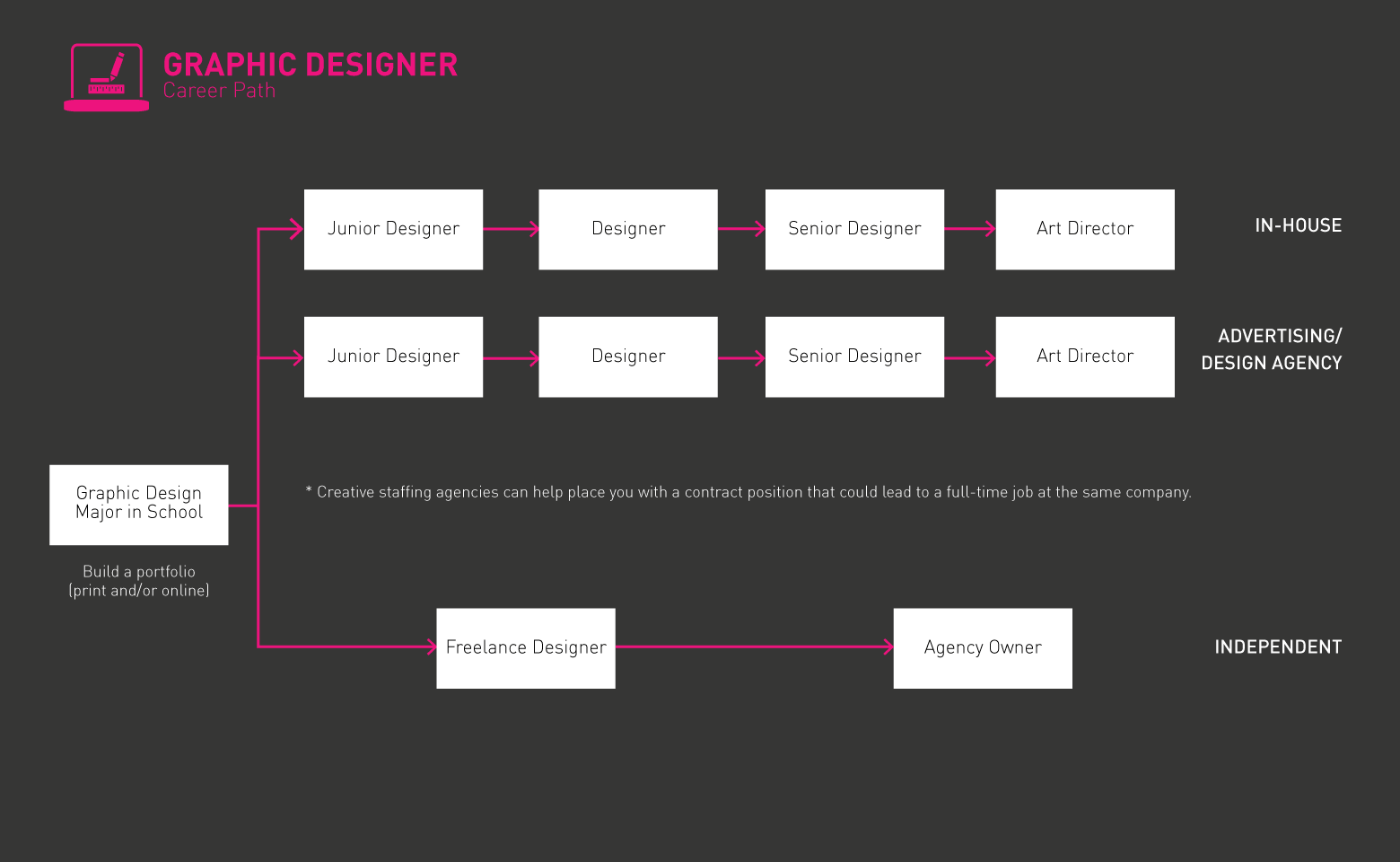
- Build a polished portfolio that shows your best five to ten projects, with clear explanations of the problem, your idea, and the result
- Apply for entry-level and junior positions such as Junior Art Director, Junior Designer, Production Artist, Assistant Art Director, Art Department Assistant, or Studio Assistant
- Look for internships and freelance gigs to build experience, since many full-time roles start there
- Search job boards such as LinkedIn, Indeed, Creative Circle, AIGA's design job board, and agency career pages
- Attend portfolio reviews, student showcases, and industry events hosted by AIGA, The One Club (which includes the Art Directors Club), and local ad clubs
- Network with alumni, instructors, and professionals, and send thoughtful messages with a link to your work
- Tailor your portfolio and resume to the type of Art Director role you want, whether advertising, editorial, film, or digital
- Practice presenting your work out loud, because Art Directors sell ideas, not just make them
- Show that you can work in a team by including collaborative projects and explaining your role
- Keep your social media and online presence professional and full of work you are proud of
- Be open to starting in production, design, or studio roles, and aim to move into concept and direction as you build trust
- Follow up after interviews and send a thank-you note, since creative fields are small and reputations travel
- Deliver strong work reliably, hit deadlines, and handle feedback professionally so people want to work with you again
- Build a distinctive point of view and a recognizable body of work, including award-winning or widely seen projects
- Move step by step from designer or junior Art Director to Art Director, Senior Art Director, Associate Creative Director, and Creative Director
- Learn the business side, including budgets, client relationships, and how creative work ties to results
- Develop leadership and mentoring skills by guiding junior designers and interns
- Expand your skills into video, motion, 3D, or digital product so you can lead across formats
- Enter your work in awards and speak at events or schools to raise your profile
- Stay connected to your network, since many senior roles are filled through reputation and referrals
Websites:
- Graphis - graphis.com
- AIGA, the professional association for design - aiga.org
- The One Club for Creativity - oneclub.org
- Cannes Lions International Festival of Creativity - canneslions.com
- Art Directors Guild (film and television) - adg.org
- Society for News Design - snd.org
- Society of Illustrators - societyillustrators.org
- Communication Arts - commarts.com
- Print Magazine - printmag.com
- Creative Review - creativereview.co.uk
- It's Nice That - itsnicethat.com
- Ad Age - adage.com
- Behance - behance.net
- Awwwards - awwwards.com
Books:
- Hey, Whipple, Squeeze This by Luke Sullivan
- Ogilvy on Advertising by David Ogilvy
- Thinking with Type by Ellen Lupton
- The Education of an Art Director edited by Steven Heller and Veronique Vienne
- Ways of Seeing by John Berger
If you find that being an Art Director isn't the right fit, your eye for design, your leadership, and your storytelling skills can shine in many related careers.
- Graphic Designer
- Creative Director
- Production Designer
- UX/UI Designer
- Brand Strategist
- Photographer
- Motion Graphics Designer
- Illustrator
- Photo Editor
- Marketing Manager
- Set Designer
- Publication Designer
“Find the weakest element of your design, and make it the strongest.” Vikki McDonald, Freelance Graphic Designer and Art Director
Newsfeed

Featured Jobs
Online Courses and Tools
Annual Salary Expectations
New workers start around $104K. Median pay is $137K per year. Highly experienced workers can earn around $184K.