






Spotlights
Broadcast Engineer, Transmission Technician, Master Control Operator, Video Engineer, Audio Engineer, Satellite Technician, RF Technician, Broadcast Operations Technician, Transmission Engineer, Broadcast Systems Technician, Technical Operator, Broadcast Technician Assistant
When you watch live sports, breaking news, or your favorite TV show, Broadcast Technicians are behind the scenes making sure the picture and sound reach your screen flawlessly. Their work means millions of viewers experience clear, smooth broadcasts without interruption—bringing stories and entertainment to life in real time.
Broadcast Technicians set up, operate, and maintain the electronic equipment that controls and transmits television and radio signals. They collaborate closely with producers, engineers, camera operators, and technical directors to ensure broadcasts run without glitches. Their daily tasks include testing equipment, troubleshooting signal problems, and switching between different video and audio feeds during live broadcasts to deliver seamless viewing experiences.
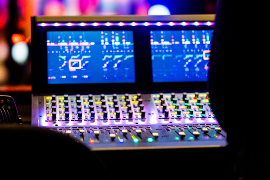
Using specialized gear like transmitters, audio consoles, video switchers, and satellite receivers, Broadcast Technicians rely on their deep knowledge of electronics and signal flow. Their role is crucial because they turn complex technical setups into clear, reliable broadcasts that inform and entertain millions every day.
- Playing a vital role in delivering live news, sports, and entertainment to the public.
- Solving technical challenges on the fly to keep broadcasts running smoothly.
- Working behind the scenes on high-energy live productions that millions watch simultaneously.
- Learning and mastering cutting-edge broadcast technology and equipment.
Working Schedule
Broadcast Technicians often work irregular hours, including nights, weekends, and holidays, especially during live events or breaking news. Many work full-time in television or radio stations, while others freelance or work for networks and production companies. The environment can be fast-paced and high-pressure, requiring quick problem-solving to meet tight broadcast deadlines.
Typical Duties
- Set up and operate broadcast equipment such as cameras, microphones, transmitters, and switchboards.
- Monitor signal quality and troubleshoot technical issues during broadcasts.
- Coordinate with producers and directors to manage live video and audio feeds.
- Maintain and repair electronic broadcast equipment to prevent failures.
- Manage satellite feeds and ensure proper signal transmission to stations and cable systems.
- Perform routine tests on equipment to comply with broadcast standards.
- Switch between different video and audio sources during live events.
- Document technical problems and solutions for future reference.
- Assist in designing and installing new broadcast systems and upgrades.
- Ensure safety protocols are followed in handling electrical and transmission equipment.
- Operate recording devices and playback machines for pre-recorded segments.
- Respond quickly to unexpected technical issues during live broadcasts.
Additional Responsibilities
- Keep up-to-date with new broadcast technologies and industry standards.
- Train junior technicians and interns on equipment and procedures.
- Collaborate with maintenance teams to schedule repairs and upgrades.
- Prepare technical reports on system performance and outages.
- Ensure compliance with Federal Communications Commission (FCC) regulations.
- Manage inventory of broadcast equipment and spare parts.
- Participate in emergency broadcasts and technical rehearsals.
- Support post-broadcast wrap-up and equipment shutdown procedures.
A Broadcast Technician’s day often starts by reviewing equipment status and conducting system checks to ensure everything is ready for the day’s broadcasts. They communicate with the production team to understand the schedule and any special technical requirements for upcoming shows.
Midday involves hands-on operation during live or recorded broadcasts. Technicians monitor signal quality, switch between feeds, and troubleshoot any unexpected issues. They work closely with directors and engineers to coordinate timing and technical cues, ensuring smooth transitions and clear audio/video.
Later in the day, technicians may perform maintenance or repairs on equipment, update software, and prepare for the next day’s broadcasts. They document any technical problems encountered and collaborate with team members to improve system reliability and efficiency.
Soft Skills
- Attention to detail
- Problem-solving under pressure
- Effective communication
- Teamwork and collaboration
- Adaptability to changing situations
- Patience and perseverance
- Time management
- Critical thinking
- Active listening
- Stress management
- Customer service orientation
- Willingness to learn new technology
Technical Skills
- Knowledge of broadcast equipment operation
- Understanding of audio and video signal flow
- Familiarity with satellite and RF transmission
- Proficiency with video switchers and audio consoles
- Troubleshooting electronic systems
- Basic electrical and wiring skills
- Operating recording and playback systems
- Understanding FCC regulations
- Use of broadcast automation software
- Knowledge of digital and analog signals
- Master Control Operator: Manages and monitors the overall broadcast feed, ensuring all content airs correctly and on time.
- Transmission Technician: Focuses on the transmission equipment that sends the signal from the station to viewers and listeners.
- RF Technician: Specializes in radio frequency equipment and antennas to maintain signal quality and coverage.
- Field Broadcast Technician: Works on location to set up and operate portable broadcast equipment for live events.
- Audio Broadcast Technician: Concentrates on the quality and mixing of sound during broadcasts.
- Video Broadcast Technician: Handles video equipment, including cameras and switchers, to manage picture quality.
- Satellite Technician: Manages satellite uplinks and downlinks to ensure smooth long-distance transmission.
- Broadcast Systems Technician: Maintains and repairs the technical systems that support broadcasting operations.
- Television stations
- Radio stations
- Broadcast networks
- Cable and satellite providers
- Production companies
- Sports broadcasting organizations
- News agencies
- Government broadcasting services
- Event production firms
- Technical equipment manufacturers
- Satellite communication companies
- Streaming media companies
Broadcast Technicians often face high-pressure situations where any technical glitch can disrupt a live broadcast, requiring quick thinking and calm problem-solving skills. Working in fast-paced environments means they must be ready to respond instantly to equipment failures or signal issues.
Their work hours can be irregular and demanding, including evenings, weekends, holidays, and overnight shifts, especially when supporting live events or breaking news coverage. This schedule can affect personal life and requires flexibility.
The job demands physical stamina as technicians may need to carry heavy equipment, climb ladders, and handle complex wiring. They also must keep learning as technology evolves rapidly, requiring continuous training and adapting to new systems and software.
- Shift toward digital and IP-based broadcasting systems replacing traditional analog.
- Increased use of automation and remote operation of broadcast equipment.
- Growth of streaming platforms requiring integration with traditional broadcast workflows.
- Advancements in high-definition (HD) and ultra-high-definition (4K/8K) broadcasting.
- Greater reliance on satellite and internet delivery for live event coverage.
- Development of cloud-based broadcast solutions and asset management.
- Emphasis on cybersecurity to protect broadcast infrastructure.
- Use of AI and machine learning for quality control and signal monitoring.
- Environmental initiatives promoting energy-efficient broadcast equipment.
- Demand for multi-platform content delivery across TV, online, and mobile devices.
Many Broadcast Technicians showed early interest in electronics, tinkering with radios, computers, or audio equipment as kids. They often enjoyed hands-on activities like building circuits, fixing gadgets, or experimenting with sound and video devices.
They were curious about how television and radio stations worked, loved watching live events, and sometimes participated in school media clubs or local community TV projects, gaining early exposure to broadcasting technology.
Broadcast Technicians typically need a combination of formal education and hands-on training. Many pursue associate degrees or technical certificates in broadcast technology, electronics, or related fields. On-the-job training and internships are essential to gain practical skills and experience with broadcast equipment.
Students can take courses in relevant subjects such as:
- Electronics Fundamentals
- Audio Engineering
- Video Production
- Broadcast Technology
- Signal Processing
- Television and Radio Operations
- Digital Media Systems
- Networking and Telecommunications
- Computer Systems and Maintenance
- Safety Procedures in Broadcast Operations
Hands-on experience through internships, cooperative education, or apprenticeships is critical for success. Building a strong portfolio of technical skills and demonstrating familiarity with industry-standard equipment prepares students to enter this fast-paced field. Continuous learning keeps technicians updated on evolving broadcast technologies.
- Take classes in physics, electronics, and computer science to build a strong technical foundation.
- Join school media clubs, video production teams, or community radio stations.
- Learn software related to audio and video editing and broadcasting.
- Participate in internships or summer programs at local TV or radio stations.
- Develop strong communication and teamwork skills through group projects.
- Explore courses in mathematics and digital technology to enhance problem-solving abilities.
- Attend workshops or seminars on broadcasting technology and media production.
- Practice troubleshooting and repairing electronic devices independently.
- Study digital media and telecommunications to understand modern broadcast systems.
- Network with professionals through school events or online forums.
- Look for programs offering hands-on lab work with real broadcast equipment.
- Choose schools with partnerships or internships at local TV or radio stations.
- Ensure the curriculum covers both analog and digital broadcast technologies.
- Seek programs that teach FCC regulations and compliance standards.
- Find courses that include training on satellite and RF transmission.
- Check if programs offer instruction in broadcast automation software.
- Look for opportunities to work on live broadcasts as part of training.
- Verify that faculty have industry experience and connections.
- Consider programs that provide career counseling and job placement assistance.
- Select programs with updated equipment reflecting current industry standards.
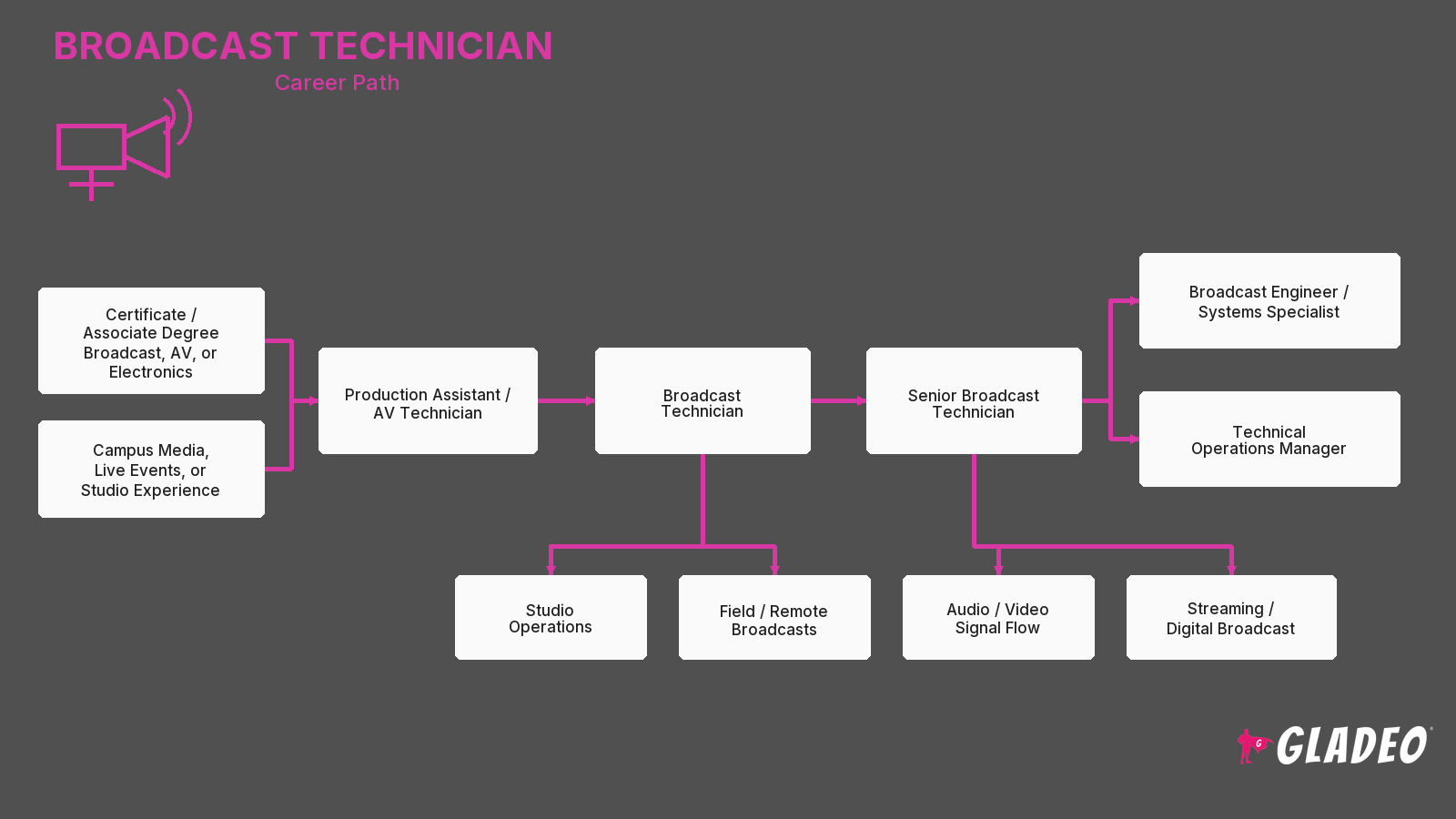
- Apply for entry-level roles such as Broadcast Technician Assistant or Master Control Operator.
- Build a demo reel or portfolio showcasing technical skills and any broadcast projects.
- Network with industry professionals through local stations, trade shows, and online groups.
- Volunteer at community radio or TV stations to gain experience.
- Prepare for interviews by practicing technical questions and scenario problem-solving.
- Stay open to freelance or part-time work to build diverse experience.
- Obtain certifications related to electronics or broadcast technology if possible.
- Keep learning new software and equipment beyond formal education.
- Ask for feedback and mentorship from experienced technicians.
- Demonstrate reliability and the ability to work under pressure during live events.
- Use job boards that specialize in media and broadcast careers.
- Attend industry meetups and workshops to expand your network.
- Master advanced broadcast systems and automation technology.
- Develop leadership skills to manage technical teams or departments.
- Gain certifications in specialized equipment or broadcast standards.
- Build relationships with producers, engineers, and network executives.
- Stay informed about emerging technologies impacting the industry.
- Pursue roles such as Broadcast Engineer or Technical Director.
- Lead training programs for new technicians.
- Seek opportunities to work on high-profile or live event broadcasts.
Websites:
- Society of Broadcast Engineers (sbe.org)
- Broadcast Engineering Magazine (broadcastengineering.com)
- National Association of Broadcasters (nab.org)
- Broadcast Education Association (beaweb.org)
- Radio World (radioworld.com)
- TV Technology (tvtechnology.com)
- International Association of Broadcasting Manufacturers (iabm.org)
- Broadcast Technical Operations Council (btoctv.org)
- Cablefax (cablefax.com)
- Streaming Media (streamingmedia.com)
- IEEE Broadcast Technology Society (ieee-bts.org)
- Digital Video Broadcasting Project (dvb.org)
- Media Technology Monitor (mediapulse.com)
- Broadcast & Cable (broadcastingcable.com)
Books:
- Broadcast Engineer's Handbook by Jerry Whitaker
- Introduction to Broadcast Engineering by David M. Owen
- The Art of Digital Video by John Watkinson
- Radio Production by Robert McLeish
- Television Production Handbook by Herbert Zettl
If the fast-paced world of live broadcasting doesn’t feel like the right fit, many related careers use similar skills in electronics, media, and communications.
- Audio Engineer
- Video Editor
- Radio Technician
- Telecommunications Technician
- IT Support Specialist
- Electronics Technician
- Media Production Assistant
- Live Event Technician
- Network Operations Technician
- Security Systems Technician
Newsfeed

Featured Jobs
Online Courses and Tools