







Spotlights
Talent Buyer, Show Promoter, Live Event Promoter, Music Promoter, Tour Promoter, Booking Agent, Event Producer, Concert Producer, Festival Promoter, Independent Promoter, Live Entertainment Promoter, Show Producer
A Concert Promoter is responsible for organizing and promoting live music events, including concerts, festivals, and other performances. They collaborate with artists, agents, venues, and sponsors to plan and execute successful events that attract audiences and generate revenue. Their primary objective is to ensure the success of the concert by managing all aspects of the promotion process.
Someone has to bet on an artist before anyone else will, book the venue, sell the tickets, and put real money on the line to make sure that unforgettable night of live music actually happens. That someone is the Concert Promoter, the risk-taking dealmaker who turns an idea for a show into thousands of fans singing along under the lights.
Concert Promoters identify talent worth booking, negotiate deals with artists and their agents, secure venues, and handle the financing, marketing, and logistics that turn a live show from an idea into reality. They work closely with talent agents, venue managers, artist managers, marketing teams, and ticketing companies, coordinating every detail from the contract that guarantees an artist's fee to the local advertising campaign that fills the seats. Promoters take on real financial risk, fronting money for venue rental, production costs, and artist guarantees long before a single ticket is sold, betting that their instincts about what audiences want to see will pay off.
Using ticketing platforms, marketing tools, and a deep network of industry relationships, Concert Promoters turn financial risk and hustle into unforgettable live experiences. Their work matters because without promoters willing to bet on artists, book the room, and market the show, live music simply would not happen at the scale it does, from tiny club shows that launch careers to massive stadium tours that define an entire summer.
- Discovering and championing artists before the rest of the world catches on
- Creating unforgettable live experiences that bring communities together
- Thriving on the excitement and unpredictability of the live music business
- Feeling the payoff of a sold-out show that you built from scratch through hustle and instinct
Working Schedule
Concert Promoters typically work irregular hours that intensify dramatically as a show date approaches, with long days handling logistics, marketing pushes, and last-minute problem solving. Many promoters work independently or for small promotion companies, while others work within larger promotion firms that book shows across multiple markets. Evening and weekend work is essential since that is when most shows happen, and travel is common for promoters who work with touring artists across different cities. The job blends office-based negotiation and planning with on-the-ground, hands-on show days.
Typical Duties
- Identifying and scouting talent worth booking for a show or tour
- Negotiating contracts and financial guarantees with artists and their agents
- Securing and booking venues for performances
- Financing shows, including artist fees, venue costs, and production expenses
- Coordinating marketing and advertising campaigns to sell tickets
- Working with ticketing companies to manage sales and pricing
- Overseeing production logistics like staging, sound, and security
- Managing the budget and financial risk for each show
- Coordinating with local media and influencers to promote events
- Handling day-of-show logistics and troubleshooting problems as they arise
- Settling accounts with artists and venues after the show
- Building long-term relationships with artists, agents, and venues for future bookings
Additional Responsibilities
- Analyzing ticket sales data to guide future booking decisions
- Negotiating sponsorship deals to offset costs and boost revenue
- Managing relationships with local government and permitting offices
- Coordinating hospitality and rider requirements for artists and crews
- Building a reputation in specific genres or regional markets
- Staying informed on emerging artists through streaming data and social media trends
- Handling insurance and risk management for large-scale events
A Concert Promoter's morning often starts by checking overnight ticket sales for upcoming shows and reviewing marketing performance to see what is working and what needs adjustment. There may be a call with a talent agent about a potential booking, negotiating fees, dates, and terms before a deal can move forward.
Midday is usually filled with logistics, confirming venue details, coordinating with a marketing team on social media and advertising pushes, and troubleshooting a hiccup like a scheduling conflict or a production detail that needs last-minute fixing. Promoters often juggle several shows in different stages at once, from ones still being booked months out to one happening that very night.
On show days, evenings are consumed by being physically present, overseeing load-in, checking in with the artist's team, managing the box office, and handling anything unexpected that comes up in real time. After the show, Promoters settle finances with the artist and venue and start looking ahead to the next booking, always thinking several shows into the future.
Soft Skills
- Persuasion and confident negotiation
- Risk tolerance and comfort with financial uncertainty
- Strong networking and relationship-building skills
- Quick problem-solving under pressure
- Resilience in the face of setbacks or losses
- Attention to detail
- Adaptability when plans change at the last minute
- Strong instincts for what audiences want
- Clear communication with artists, agents, and vendors
- Organizational skills for managing many moving parts at once
- Persistence and hustle
- Confidence making high-stakes decisions quickly
Technical Skills
- Contract negotiation and deal structuring
- Ticketing platforms and sales analytics
- Event budgeting and financial risk management
- Marketing and social media promotion strategy
- Venue logistics and production basics
- Knowledge of music genres and artist markets
- Familiarity with entertainment industry contracts and riders
- Data analysis of streaming and ticket sales trends
- Sponsorship and partnership negotiation
- Understanding of local permitting, safety, and licensing regulations
- Independent Promoter: Books and finances shows on their own, often in a specific city or genre
- National Promoter: Works for a large promotion company booking shows and tours across multiple markets
- Festival Promoter: Specializes in producing multi-day or multi-artist music festivals
- Club Promoter: Focuses on smaller venue shows, often helping build emerging artists' audiences
- Talent Buyer: Works within a venue or promotion company to book acts for that specific location
- Regional Promoter: Focuses on booking and marketing shows within a specific geographic region
- Independent concert promotion companies
- Large national and international promotion companies
- Concert venues and clubs with in-house booking teams
- Music festivals and festival production companies
- Talent agencies with promotion divisions
- Artist management companies
- Ticketing and live entertainment technology companies
- Performing arts centers and amphitheaters
- College and university event programming boards
- Nightlife and hospitality groups
- Sponsorship and brand marketing agencies
- Nonprofit music and arts organizations
Concert Promoting is a genuinely high-risk business. Promoters often put real money on the line before a single ticket sells, and if a show underperforms, they can lose significant amounts of their own or their company's money. That financial risk requires a thick skin and the ability to recover quickly from a bad night and get back to work on the next booking.
The schedule is demanding and unpredictable, with long stretches of evening and weekend work, especially as show dates approach. Promoters have to be reachable at all hours to handle last-minute problems, and touring or festival seasons can mean extended stretches away from home or personal time.
The job also requires constant hustle and relationship-building. Success in this field depends heavily on trust and reputation, and building the kind of relationships that get you access to in-demand artists takes years of consistent, reliable work. Promoters have to balance big creative bets on new talent with the financial discipline to keep their business afloat when those bets do not always pay off.
- Increased use of streaming and social media data to identify emerging artists worth booking
- Growth of boutique and experiential concert formats beyond the traditional venue show
- Rising ticket prices and dynamic pricing models changing how shows are marketed and sold
- Consolidation of independent promoters under larger national promotion companies
- Expansion of festival culture and multi-day event formats
- Increased focus on sustainability and environmental impact at large-scale events
- Growth of livestreamed and hybrid concert experiences alongside in-person shows
- Rising importance of data analytics for pricing, marketing, and audience targeting
- More promoters specializing in niche genres or underserved regional markets
- Growing use of dynamic and technology-driven marketing to reach younger audiences
Many Concert Promoters were the friend who organized everyone, planning outings, throwing parties, or figuring out how to get a group of people somewhere fun. They often had a natural instinct for what would draw a crowd and were not afraid to take a risk to make something happen.
Others grew up obsessed with live music, going to as many shows as possible, discovering new artists before their friends did, and maybe even trying to book a small show themselves at a local venue or house party. A love of live music paired with natural hustle, sales instincts, and comfort with risk often points directly toward this career.
There is no single required path into concert promotion, and many successful promoters built their careers through hands-on experience rather than a specific degree. That said, a bachelor's degree in business, marketing, event management, or music business gives aspiring promoters a strong foundation in negotiation, finance, and marketing. What matters most in this field is real experience booking and promoting shows, often starting small with local venues or college events before working up to bigger acts and bigger risk.
Students can take courses in relevant subjects such as:
- Business Administration
- Marketing and Advertising
- Event and Meeting Planning
- Music Business
- Finance and Budgeting
- Negotiation and Sales
- Communications and Public Relations
- Entrepreneurship
- Economics
- Data Analytics for Marketing
Because this field rewards hustle and results over credentials, hands-on experience matters enormously. Promoting small shows in college, volunteering with campus event boards, or interning with a local promotion company or venue gives aspiring promoters the real experience and relationships that open doors later. Many successful promoters started by taking a financial risk on a small local show and building from there.
- Take business, marketing, and economics courses whenever available
- Attend as many live shows as possible and study what makes them successful
- Volunteer or intern with a local venue, festival, or promotion company
- Try booking and promoting a small show yourself, even a school or community event
- Join or help lead a college concert or event programming board
- Build social media and marketing skills by promoting events online
- Practice negotiation through debate, sales, or entrepreneurship activities
- Network with local musicians and venue staff to learn how bookings work
- Study ticketing platforms and how pricing and sales data are used
- Take on leadership roles that require organizing logistics for a group
- Follow the live music industry through trade publications and industry news
- Build comfort with financial risk by managing a budget for a small project or event
- Strong business, marketing, or event management coursework
- Faculty or guest speakers with real concert promotion or live event experience
- Opportunities for hands-on event planning or campus programming experience
- Coursework covering negotiation, contracts, and financial risk
- Access to internships with venues, festivals, or promotion companies
- Programs located near active live music markets and touring circuits
- Strong alumni network in live entertainment or event management
- Courses in marketing analytics and social media strategy
- Career services connected to the live entertainment industry
- Opportunities to manage a real budget or produce a real event as coursework
- Flexible scheduling that allows for part-time promotion work while studying
- Entrepreneurship resources for students wanting to start their own promotion business
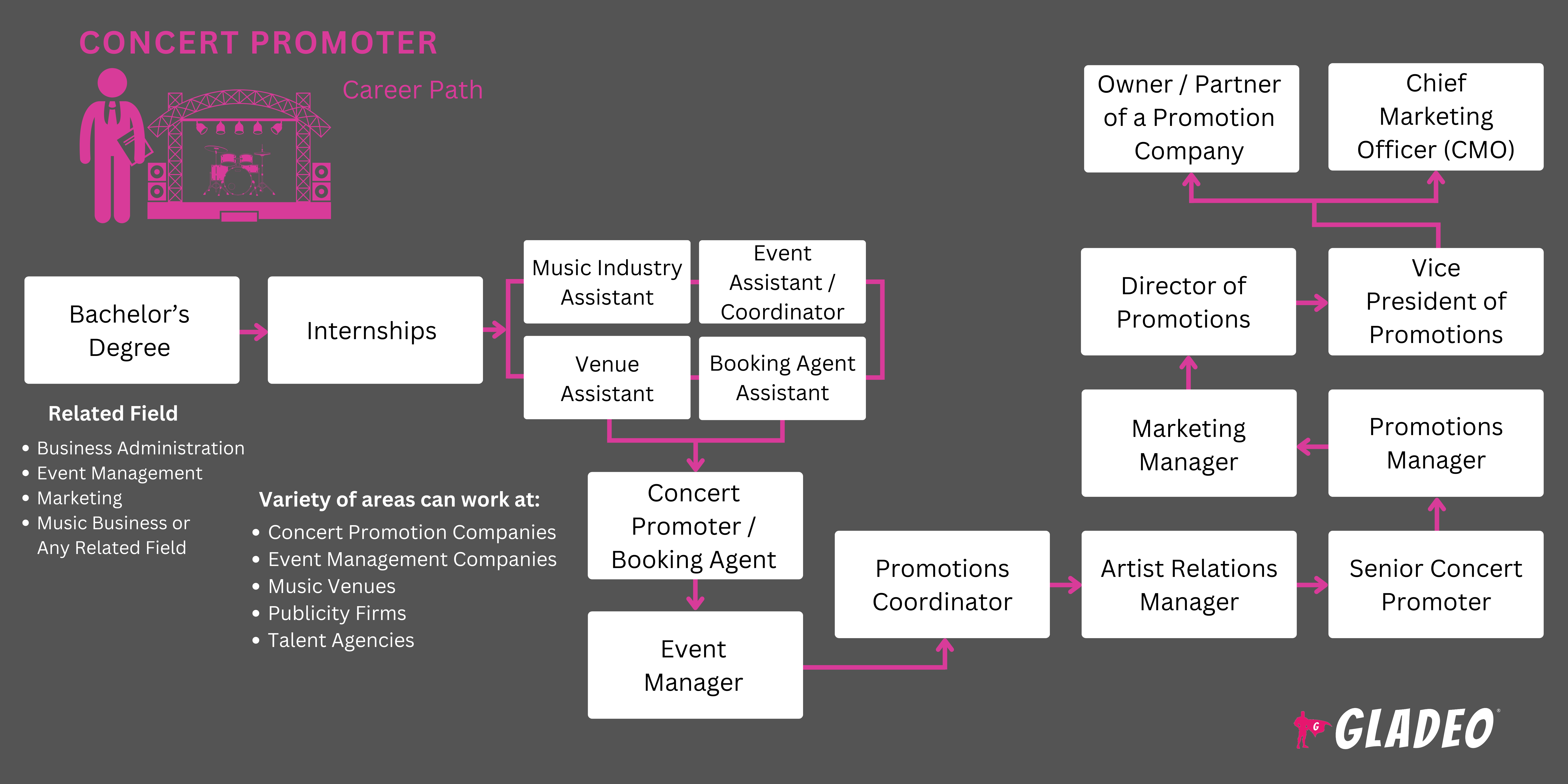
- Start small by promoting a local show, campus event, or house party to build a track record
- Pursue internships at local venues, promotion companies, or festivals
- Apply for entry-level roles like Promotion Assistant, Marketing Coordinator, or Talent Buyer Assistant
- Build relationships with local musicians and bands who need help getting booked
- Learn ticketing platforms and social media marketing tools inside and out
- Network relentlessly at shows, industry events, and through mutual connections
- Be willing to start with low-stakes, low-budget shows to build experience and trust
- Highlight any experience organizing events, even informal ones, in interviews
- Demonstrate a genuine understanding of your local music scene and its audiences
- Show comfort with financial risk and the ability to learn from a loss
- Follow and reach out respectfully to established promoters in your target market
- Stay persistent, this industry rewards hustle and does not always come easily at first
- Build a track record of successful, well-attended, profitable shows
- Take on bigger financial risk as your judgment and reputation grow
- Expand your network of artists, agents, and venues you can call on
- Specialize in a genre or regional market where you can become the go-to promoter
- Move from small independent shows to bigger venues, tours, or festivals
- Build strong relationships with national promotion companies for potential partnerships or buyouts
- Mentor newer promoters and build a reputation as a trusted industry leader
- Stay ahead of trends in ticketing, marketing, and audience behavior to keep your edge
Websites:
- International Live Events Association - ileahub.com
- Pollstar - pollstar.com
- Billboard - billboard.com
- Music Business Worldwide - musicbusinessworldwide.com
- International Live Music Conference - ilmc.com
- National Independent Venue Association - nivassoc.org
- Recording Academy (GRAMMYs) - grammy.com
- Variety - variety.com
- Association of Performing Arts Professionals - apap365.org
- Event Marketer - eventmarketer.com
- Venues Now - venuesnow.com
- Eventbrite Resource Hub - eventbrite.com/resources
- Music Managers Forum - musicmanagersforum.org
- Live Music Business Advisor - livemusicbusiness.com
Books:
- All You Need to Know About the Music Business by Donald S. Passman
- How to Make It in the New Music Business by Ari Herstand
- Setlist: The Unmaking of the Music Business by Kevin Erickson
- Music Money and Success by Jeffrey Brabec and Todd Brabec
- Never Split the Difference by Chris Voss
If you find that being a Concert Promoter isn't the right fit, your negotiation, marketing, and event skills translate well into many related careers.
- Talent Agent
- Event Planner
- Marketing Manager
- Venue Booking Manager
- Festival Producer
- Artist Manager
- Sponsorship Sales Manager
- Public Relations Specialist
- Tour Manager
- Sports Event Promoter
Newsfeed

Featured Jobs
Online Courses and Tools
Annual Salary Expectations
New workers start around $104K. Median pay is $144K per year. Highly experienced workers can earn around $220K.