






Spotlights
Experiential Marketing Manager, Brand Activation Manager, Event Marketing Specialist, Live Marketing Producer, Brand Experience Manager, Field Marketing Manager, Pop-Up Experience Manager, Activation Strategist, Event and Experience Coordinator, Immersive Marketing Producer, Brand Ambassador Program Manager, Experiential Campaign Manager
Picture a pop-up ice cream shop that only serves flavors named after a new streaming show, or a festival booth where you can step into a giant inflatable recreation of a video game level and post the video everywhere. That jolt of "wait, I have to try this" doesn't happen by accident. Experiential Marketers design the moments where a brand stops being a logo on a screen and becomes something people can walk into, touch, taste, and remember.
Experiential Marketers plan and produce live brand experiences: product launch parties, festival activations, mall pop-ups, mobile tours, trade show booths, and branded experiences at concerts or sporting events. They start with a creative concept and then handle everything it takes to make it real, picking venues, designing the physical space, briefing brand ambassadors, coordinating vendors and fabricators, and making sure the technology, lighting, and flow of the experience all work together. They work closely with creative directors, event producers, social media teams, and the brand's own marketing leadership to make sure every activation ties back to a bigger campaign and a clear goal, whether that's generating buzz, collecting leads, or just making people fall in love with a product in person.
Using project management software, floor plan and 3D rendering tools, budget trackers, and social listening dashboards, Experiential Marketers turn an idea sketched on a whiteboard into a fully staffed, fully built event that runs for a weekend or a whole tour. Their work matters because in a world full of ads people scroll past, a great experience is something people choose to remember, share, and talk about long after they leave.
- Watching a concept you sketched on paper become a physical space full of excited people
- Creating moments that make strangers smile, laugh, and want to tell their friends
- Blending creativity, logistics, and psychology into a single high-energy project
- Seeing the direct, visible reaction of real people to something you built from scratch
Working Schedule
Experiential Marketers typically work full-time, but the schedule rarely looks like a standard nine-to-five. In the weeks leading up to an activation, expect long planning sessions, vendor calls, and site visits; during the event itself, be ready for early load-ins, late breakdowns, and full weekends on your feet. The role splits time between an office or home setting for planning and budgeting, and physical event spaces, warehouses, or convention centers for setup and execution. Many work for marketing or experiential agencies that serve multiple brand clients, while others work in-house for a single company's marketing team, and freelance producers are common in the industry.
Typical Duties
- Developing creative concepts for brand activations, pop-ups, and live events
- Scouting and booking venues, festivals, and event spaces
- Building budgets and negotiating contracts with vendors, fabricators, and staffing agencies
- Designing the layout and flow of an experience with creative and production teams
- Hiring, training, and briefing brand ambassadors and event staff
- Coordinating logistics like shipping, load-in schedules, permits, and insurance
- Managing on-site production during setup, the event, and breakdown
- Tracking campaign performance metrics like foot traffic, leads, and social engagement
- Collaborating with social media and PR teams to amplify the experience online
- Troubleshooting problems in real time, from weather delays to broken equipment
- Presenting post-event recaps and results to marketing leadership or clients
- Sourcing and briefing photographers, videographers, and content creators covering the event
Additional Responsibilities
- Researching cultural trends and competitor activations for inspiration
- Managing relationships with festival organizers, malls, and venue owners
- Maintaining an inventory of reusable booth materials and branded assets
- Coordinating giveaways, sampling programs, and promotional item logistics
- Ensuring activations meet safety codes and accessibility requirements
- Writing run-of-show documents and staff training materials
- Negotiating sponsorship or co-branding partnerships for larger activations
- Analyzing past campaigns to improve future experience design
On a planning day, an Experiential Marketer might start the morning reviewing a 3D rendering of an upcoming pop-up with a designer, making notes on where the photo wall should go and whether the entrance feels inviting enough. Mid-morning could bring a call with a fabrication vendor to confirm the branded structure will ship on time, followed by a budget review to make sure the project is still on track.
Midday often involves coordinating with multiple teams at once: checking in with the staffing agency about brand ambassador training, reviewing social content plans with the digital team, and confirming permits with a city or venue. If the activation is close, this might be a site visit to walk the space and imagine how attendees will move through it.
On event days, the schedule flips entirely. Mornings start early with load-in, checking that every element from lighting to signage is exactly right before doors open. Throughout the day, the Experiential Marketer is on their feet solving problems, greeting VIPs or press, making sure brand ambassadors are energized and on message, and watching how real people react to the space. Evenings might mean breakdown, a debrief with the team, or a quick recap of attendance and social buzz before heading home to do it again the next day.
Soft Skills
- Creativity and big-picture imagination
- Strong project management and multitasking
- Calm, quick problem solving under pressure
- Clear communication with vendors, clients, and staff
- Leadership and ability to energize a team on-site
- Adaptability when plans change last minute
- Attention to detail
- Negotiation skills
- Comfort working long, physical, on-your-feet days
- Empathy for how people experience physical spaces
- Collaboration across creative, marketing, and operations teams
- Enthusiasm and stage presence when representing a brand publicly
Technical Skills
- Event and project management software such as Asana, Monday.com, or Cvent
- Budgeting and vendor contract management
- Basic understanding of floor plans, staging, and 3D rendering tools
- Familiarity with permitting, insurance, and venue logistics
- Social media and content tracking tools
- Data analysis for measuring foot traffic, leads, and engagement
- Presentation software for pitching concepts and recapping results
- Knowledge of audio-visual and lighting basics for live events
- Vendor sourcing for fabrication, staffing, and rentals
- Familiarity with brand guidelines and campaign strategy
- Brand Activation Manager: Leads large-scale brand takeovers at festivals, sports events, or retail locations
- Field Marketing Manager: Runs mobile tours and regional grassroots events across multiple cities
- Pop-Up Experience Producer: Specializes in temporary retail or brand spaces in malls and city storefronts
- Trade Show and Conference Producer: Designs booths and experiences for B2B industry events
- Sponsorship Activation Manager: Brings a brand's sponsorship of a concert, team, or festival to life on-site
- Brand Ambassador Program Manager: Recruits, trains, and manages the staff who represent a brand in person
- Digital-Physical Hybrid Experience Designer: Blends augmented reality, apps, or livestreams into in-person activations
- Corporate Event Experience Manager: Produces internal brand experiences like product launches for employees or partners
- Experiential marketing and event production agencies
- In-house marketing teams at consumer brands
- Advertising and creative agencies with experiential divisions
- Beverage, food, and consumer packaged goods companies
- Technology and gaming companies
- Sports teams, leagues, and stadiums
- Music festivals and entertainment companies
- Retail brands and shopping centers
- Nonprofit organizations running awareness campaigns
- Automotive companies running ride-and-drive events
- Travel and hospitality brands
- Higher education and university marketing departments
Experiential Marketing is a high-energy, deadline-driven field, and the pressure ramps up fast as an activation date approaches. Budgets can be tight, vendors can fall through, and weather or venue issues can force last-minute changes that the whole team has to absorb calmly and quickly. The job rewards people who can stay creative even when things are stressful.
The schedule is far from predictable. Event weeks often mean early mornings, late nights, and full weekends on-site, sometimes in physically demanding conditions like standing for hours, working outdoors, or traveling to multiple cities for a tour. This can make it harder to maintain a traditional routine, especially during a busy activation season.
The work also asks for constant creative reinvention. Audiences get bored of the same booth format quickly, so Experiential Marketers are expected to keep coming up with fresh, surprising concepts season after season, all while proving the return on investment to marketing leadership through hard numbers like foot traffic and social reach.
- Growth of immersive and augmented reality elements inside physical activations
- Increased focus on measurable, data-driven ROI for experiential campaigns
- Rise of hybrid experiences that blend in-person events with livestreamed or virtual audiences
- Sustainability-focused activations using reusable or eco-friendly materials
- More brands using experiential marketing to build community, not just single-day buzz
- Integration of user-generated content and influencer partnerships into live events
- Smaller, hyper-local pop-ups replacing some large national tours
- Use of RFID, apps, and wearables to personalize the attendee experience
- Growing demand for accessible and inclusive event design
- Brands partnering with cultural moments like sports, gaming, and music festivals more strategically
Many Experiential Marketers were the kids who planned the school dance decorations, ran the lemonade stand with a theme, or turned a birthday party into a full production with a photo booth and games. They tended to love being the person who organized the group project, threw the surprise party, or designed the poster for the club fundraiser.
Others found their spark in theater, event volunteering, or student council, where they got to combine creative ideas with the logistics of pulling off a real event. A love of pop culture, social media trends, and noticing what makes people excited or share-worthy often carried straight into this career.
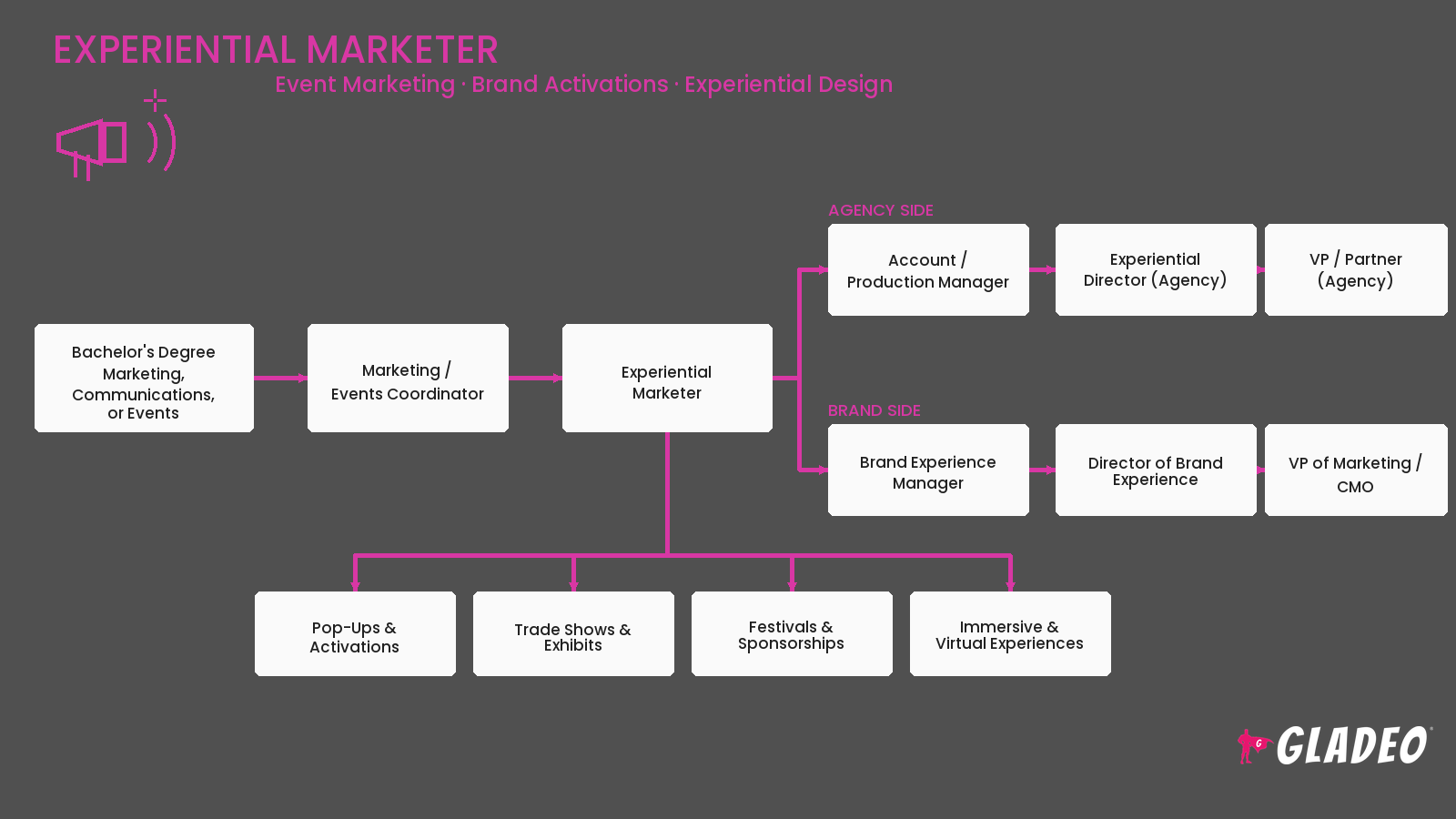
Most Experiential Marketers hold a bachelor's degree in marketing, communications, event management, public relations, or a related field. Coursework in consumer behavior, brand strategy, and event planning provides a strong foundation, and many professionals build their skills through internships or entry-level roles at agencies or in-house marketing teams before stepping into activation-focused roles.
Students can take courses in relevant subjects such as:
- Marketing Principles and Brand Strategy
- Event and Meeting Planning
- Consumer Behavior
- Public Relations and Communications
- Graphic Design and Visual Communication
- Digital and Social Media Marketing
- Business and Project Management
- Hospitality and Tourism Management
- Public Speaking and Presentation Skills
- Budgeting and Financial Planning
Hands-on experience is essential in this field. Internships with event agencies, volunteering to run school or community events, and working as a brand ambassador or event staffer all build the practical skills that classroom learning cannot. A portfolio showing concepts, run-of-show plans, and photos or video from real activations helps candidates stand out, and many Experiential Marketers continue learning through certifications in event or project management as their careers progress.
- Take marketing, business, and communications courses whenever available
- Join or lead student council, prom committee, or a school event planning group
- Volunteer to help organize community festivals, fundraisers, or school fairs
- Start a social media account showcasing event ideas, mood boards, or concepts you design
- Practice basic design tools like Canva to build simple event visuals
- Seek internships at marketing, event, or advertising agencies
- Work part-time or volunteer as a brand ambassador or event staffer to see activations firsthand
- Study brands you admire and analyze what makes their pop-ups or launches memorable
- Build organizational and budgeting skills through clubs, part-time jobs, or personal projects
- Practice public speaking and comfort presenting ideas to a group
- Attend local festivals, conventions, or trade shows and take notes on what works
- Network with marketing professionals through school career fairs or informational interviews
- Marketing or communications programs with a dedicated event or experiential track
- Opportunities for internships with agencies, brands, or event companies
- Courses that combine creative strategy with hands-on budgeting and logistics
- Access to real campus events where students can plan and execute activations
- Instructors with actual agency or brand-side experience
- Strong alumni network in marketing, advertising, or event production
- Career services that connect students with experiential and event marketing employers
- Coursework covering social media, content creation, and campaign measurement
- Opportunities to build a portfolio through class projects or student organizations
- Programs located near or connected to major marketing, media, or event hubs
- Flexible options for internships during the school year, not just summer
- Access to design or presentation software as part of the coursework
- Build a portfolio of event concepts, mood boards, or activations you helped plan, even in school or as a volunteer
- Apply for entry-level titles like Event Marketing Coordinator, Brand Ambassador Coordinator, or Marketing Assistant
- Search job boards like LinkedIn, Indeed, and agency career pages, plus event industry job boards
- Get experience working event floors as a brand ambassador or promotional staffer to understand the work from the ground up
- Reach out to experiential and event marketing agencies directly, even without an open listing
- Attend industry mixers, trade shows, or conferences to meet people already in the field
- Highlight organizational skills, creativity, and any hands-on event experience on your resume
- Practice talking through a past event you helped run, including what went wrong and how you handled it
- Be willing to start with logistics-heavy roles to learn the operational side of the business
- Follow experiential marketing agencies and brands on social media to study their recent work
- Take on freelance or gig event staffing work to build connections and experience
- Show enthusiasm for being on-site and working non-traditional hours during interviews
- Take ownership of larger and higher-budget activations as you gain experience
- Build strong relationships with vendors, venues, and staffing partners
- Develop expertise in measuring and reporting campaign ROI to leadership
- Pursue certifications in event or project management
- Mentor junior coordinators and event staff
- Specialize in a high-demand niche like festivals, retail pop-ups, or sponsorship activations
- Build a reputation for creative concepts that consistently perform well
- Move into senior producer, experiential director, or brand marketing leadership roles
Websites:
- Event Marketer Magazine - eventmarketer.com
- Experiential Marketing Association - emiconferences.com
- American Marketing Association (AMA) - ama.org
- BizBash - bizbash.com
- Event Industry News - eventindustrynews.com
- Meetings and Conventions - meetings-conventions.com
- Adweek - adweek.com
- PRSA (Public Relations Society of America) - prsa.org
- Cvent Blog - cvent.com/en/blog
- The Balance Careers - Marketing - thebalancemoney.com
- International Live Events Association (ILEA) - ileahub.com
- Association of National Advertisers (ANA) - ana.net
Books:
- The Experience Economy by B. Joseph Pine II and James H. Gilmore
- Contagious: Why Things Catch On by Jonah Berger
- Purple Cow by Seth Godin
- Youtility by Jay Baer
- Building a StoryBrand by Donald Miller
If you find that Experiential Marketing isn't the right fit, your creativity, event logistics skills, and ability to connect with people transfer well to many related careers.
- Event Planner
- Public Relations Specialist
- Brand Manager
- Social Media Manager
- Trade Show Coordinator
- Marketing Coordinator
- Sponsorship Manager
- Hospitality Manager
- Promotions Manager
- Communications Specialist
Newsfeed

Featured Jobs
Online Courses and Tools
Annual Salary Expectations
New workers start around $58K. Median pay is $78K per year. Highly experienced workers can earn around $107K.