






Spotlights
Firefighter/EMT, Firefighter/Paramedic, Fire Engineer, Driver/Operator, Fire Apparatus Operator, Fire Technician, Wildland Firefighter, Hotshot, Smokejumper, Aircraft Rescue Firefighter, Volunteer Firefighter, Fire Rescue Specialist
The alarm tones drop, the bay doors rise, and within a minute or two a crew of Firefighters is rolling toward someone's emergency. It might be a kitchen fire, a car wreck on the highway, an older neighbor who has fallen, or a wildfire racing across a hillside. Firefighters run toward what other people run away from, and the people they meet are usually having the scariest moment of their lives. For anyone who wants a career that mixes courage, teamwork, physical challenge, and hands-on helping, the fire service offers all of that and more.
Many people picture Firefighters battling flames, and they do, but most of their calls today involve medical emergencies, crashes, hazardous materials, rescues, and false alarms. On a single shift, a crew might treat a person having chest pain, cut someone out of a wrecked car, check a smoke alarm complaint, pump out a flooded basement, and respond to a house fire. Between calls, they train, inspect and clean equipment, study building layouts, visit schools, and cook and eat together at the station. Firefighters work with dispatchers, paramedics, police officers, utility crews, building inspectors, and the families and neighbors in the community they serve. Some work in cities and suburbs, some in rural volunteer departments, some at airports, military bases, or industrial sites, and some on wildland crews that fight forest and brush fires.
To get the job done, Firefighters use fire engines and ladder trucks, hoses, pumps, ladders, forcible entry tools, thermal imaging cameras, hydraulic rescue tools, breathing apparatus, medical gear, and protective clothing built to survive extreme heat. The work matters because fire spreads fast and a small mistake or a slow response can change a life forever. Firefighters also prevent emergencies by inspecting buildings, teaching fire safety, and working to make the places where people live and work safer.
- Helping people on their worst days, and being the calm, capable presence a family remembers for the rest of their lives
- Belonging to a tight-knit crew that eats, trains, and works together and often feels like a second family
- Doing work that is different every shift, with a mix of physical challenge, problem solving, and medical care
- Having a schedule with long stretches of time off in many career departments, which leaves room for family, school, hobbies, and other work
- Enjoying public respect and the stability of a public service career, which commonly includes good benefits and a retirement plan
“Volunteers make up 70% of the nation’s fire service. The fact that people are willing to do the job for free speaks for itself.” Jonathan Yi, Firefighter, Beaumont Fire Rescue
Working Schedule
Most career Firefighters work long shifts at the station so the fire department is staffed around the clock. A common pattern is a 24-hour shift followed by 48 hours off, and some departments use 48 hours on and 96 hours off, 24 on and 72 off, or 12-hour shifts. Time off adds up, but when you are on duty, you are on duty: you eat, train, work, and sleep at the station, and calls can interrupt sleep at any hour, any day of the year, including holidays. Volunteer and paid-on-call Firefighters carry a pager or phone and respond from home or work whenever an alarm sounds. Wildland Firefighters often work seasonally, usually in the warmer, drier months, and may be sent on assignments that last two weeks or longer in remote areas with long, physically demanding days. Many Firefighters also hold second jobs or run side businesses during their days off.
Typical Duties
- Responding to fires, medical calls, crashes, hazardous materials incidents, rescues, and other emergencies
- Putting out fires using hoses, pumps, ladders, and tools, and working as part of a coordinated crew
- Searching for and rescuing people in burning buildings and other dangerous places
- Providing emergency medical care, including CPR, bleeding control, oxygen, and assistance for paramedics
- Using hydraulic tools and rescue equipment to free people trapped in vehicles or collapsed structures
- Driving and operating fire engines, ladder trucks, and other emergency vehicles safely
- Ventilating buildings, controlling utilities, and limiting damage to property
- Establishing a water supply by connecting to hydrants or using tankers and portable pumps
- Writing accurate incident reports for every call
- Checking and cleaning breathing apparatus, hoses, tools, apparatus, and protective gear
- Training every shift on skills like search and rescue, forcible entry, patient care, and fire behavior
- Educating the public on fire safety, smoke alarms, and emergency preparedness
Additional Responsibilities
- Inspecting buildings, businesses, and hydrants for safety and compliance with fire codes
- Visiting schools, community events, and neighborhood groups to teach fire safety and CPR
- Studying the layout of local buildings and developing plans for emergencies in high-risk locations
- Cleaning, cooking, and maintaining the fire station as a shared home
- Staying in top physical condition through daily workouts and wellness checks
- Mentoring new firefighters and helping with recruit and probationary training
- Helping with disaster response, such as floods, storms, wildfires, and mutual aid to nearby departments
- Supporting investigations by preserving evidence and sharing observations with fire investigators
Shift change usually happens early in the morning, around seven or eight. The crew coming on duty meets the crew going off, gets a report on any equipment problems or ongoing issues, and checks every tool, hose, air pack, medical bag, and rescue device on the engine. Then comes breakfast, often cooked together, and station chores, which might include cleaning the bay, mopping floors, washing the rig, or restocking supplies. Whenever the tones sound, everything stops and the crew moves: boots, coat, helmet, seat belts, and out the door in about a minute.
The late morning and afternoon are a mix of training, workouts, community visits, and calls. A crew might practice raising ladders, drag hoses across a parking lot, run a medical scenario with a training dummy, review how to handle a car on its side, or inspect a business in the neighborhood. Calls come at their own pace. Some days there are a handful, some days a dozen or more, and each one can last a few minutes or several hours. Because the next call could be a house fire or a heart attack, Firefighters learn to eat quickly, stay hydrated, and keep their gear ready at all times.
Evening and night bring dinner, paperwork, studying, personal time, and, ideally, sleep, though calls can arrive at any moment and the crew may be up and out again at two in the morning. At the end of the shift, they give a report to the next crew, clean and restock the apparatus, and head home. Many Firefighters say the hardest part of the schedule is not the fire itself but the stretch of sleepless nights, and the best ones learn to rest whenever they can.
Soft Skills
- Teamwork and the ability to depend on others in dangerous situations
- Calm, steady composure under pressure
- Courage combined with good judgment about risk
- Clear communication, especially over radios and in noisy, stressful conditions
- Compassion for frightened, injured, or grieving people
- Discipline and the ability to follow orders and a chain of command
- Initiative, curiosity, and a willingness to learn from everyone around you
- Humility and a good attitude, even when you are the newest member of the crew
- Emotional resilience and the ability to cope with difficult experiences
- Adaptability when plans change and emergencies unfold unpredictably
- Leadership and the ability to guide others when needed
- Reliability, honesty, and a strong sense of personal responsibility
Technical Skills
- Understanding of fire behavior and strategies for suppressing different kinds of fires
- Skills with hoses, pumps, ladders, ropes, and forcible entry tools
- Safe use of self-contained breathing apparatus and protective equipment
- Emergency medical skills such as CPR, airway care, bleeding control, and patient assessment
- Vehicle extrication and technical rescue techniques
- Apparatus operation, including driving and operating a fire pump
- Awareness of hazardous materials and how to respond safely
- Knowledge of the incident command system for organizing large emergencies
- Understanding of building construction, fire protection systems, and fire codes
- Mechanical aptitude and the ability to use and care for tools and equipment
- Municipal or Structural Firefighter: Responds to fires, medical calls, and rescues in a city, town, or county fire department
- Firefighter/Paramedic: Combines firefighting with advanced emergency medical care, often on engines or ambulances
- Volunteer or Combination Firefighter: Serves a community on a volunteer or paid-on-call basis, often alongside career staff
- Wildland Firefighter: Fights forest, brush, and grass fires on engine crews, hand crews, and helitack teams, usually for federal, state, or local agencies
- Hotshot or Smokejumper: Joins elite wildland teams that hike or parachute into remote areas to build firelines
- Aircraft Rescue Firefighter: Protects airports and responds to aircraft emergencies with specialized trucks and training
- Driver/Operator: Drives the apparatus and operates the pump to supply water to the crew
- Fire Inspector or Investigator: Reviews buildings for safety, enforces fire codes, and determines how fires started
- City and county fire departments
- Fire protection districts and volunteer fire companies
- Combination departments that use both career and volunteer personnel
- State forestry and wildland fire agencies
- Federal land management agencies, such as the U.S. Forest Service and Department of the Interior bureaus
- Military installations and Department of Defense fire and emergency services
- Airports and aircraft rescue and firefighting units
- Industrial sites, refineries, power plants, and shipyards with fire brigades
- Universities, hospitals, and large campuses with fire safety programs
- Tribal fire departments
- Seaports and marine fire units
- Private wildland contractors and fire prevention companies
Firefighting is physically demanding and risky. Firefighters work in extreme heat, thick smoke, collapsing structures, hazardous materials, traffic, and severe weather while wearing heavy gear and breathing apparatus. Training, teamwork, protective equipment, and strict safety procedures reduce risk, but injuries and deaths do occur. Long-term health matters, too: smoke and chemicals have been linked to higher risks of certain cancers and heart and lung problems, so modern departments emphasize cleaning gear, decontaminating after fires, medical screening, and regular fitness.
The mental and emotional load is real, too. Firefighters see accidents, serious injuries, fires that destroy homes, and sometimes the death of people they could not save. Over time, that can lead to stress, sleep problems, and post-traumatic stress, and departments increasingly provide peer support, counseling, and wellness programs. The fire service is a paramilitary organization with a chain of command, uniforms, strict rules, and a culture that values discipline, humility, and respect for rank. If you struggle with taking direction or doing chores while you earn your place, the culture will test you. Many Firefighters miss birthdays and holidays and spend a lot of nights sleeping at the station instead of at home.
Getting hired is its own challenge. Fire departments often receive far more applicants than they have openings, and the process can take months or years of studying, training, and testing, sometimes with multiple departments. Many people begin as volunteers, EMTs, or seasonal wildland Firefighters to get a foot in the door. Here is how one working firefighter describes the road in.
“As most career guys stay for 20 plus years, the turnover rate is low. I've tested with 7-8 departments before landing a spot but most of the time you’re competing with hundreds and thousands of guys testing for the same spots, sometimes a single opening. Once you do make it on a written list, you're competing again to secure a spot with physical agility testing, psychological testing, lie detector and multiple interviews. Once you make it, the testing isn't over. Most departments require 12-18 months of probation where you go through phase testing and basically prove your worth.” Jonathan Yi, Firefighter, Beaumont Fire Rescue
- Emergency medical calls make up most of the workload, so more departments want every Firefighter trained as an EMT or paramedic
- Rising concern about lithium-ion battery fires, electric vehicle fires, and new building materials that burn hotter and faster
- Longer and more intense wildfire seasons, with more homes built near wildlands, which has expanded the need for wildland and structural coordination
- Cancer prevention efforts, including washing gear, wiping down after fires, using hoods and decontamination routines, and improving station air quality
- Strong focus on behavioral health, peer support, and suicide prevention in the fire service
- Thermal imaging cameras, drones, mapping software, and apps that help crews see and plan during emergencies
- Community risk reduction and community paramedicine programs that visit residents to prevent emergencies before they happen
- Staffing challenges, especially for volunteer departments, which are working to recruit and keep younger members
- Realistic training with simulators, live fire props, and standardized qualifications, such as NFPA 1010
- Efforts to build fire departments that reflect and welcome the communities they serve
Many Firefighters were active kids who loved being outdoors, playing sports, climbing, camping, and testing themselves physically. They were often the ones who helped a neighbor, took care of younger siblings, or stayed calm when a friend got hurt. Some grew up around the fire service because a parent, relative, or family friend served, and some were hooked by a fire station tour, a junior firefighter program, or a Fire Service Exploring post.
In school, they often liked shop class, science, health, physical education, and team activities, and they were drawn to jobs where they could use their hands and work with people. Many had early jobs in construction, landscaping, lifeguarding, or camp work, and many were the person their friends relied on in a crisis. They tended to enjoy challenges, problem solving, and feeling that their effort mattered.
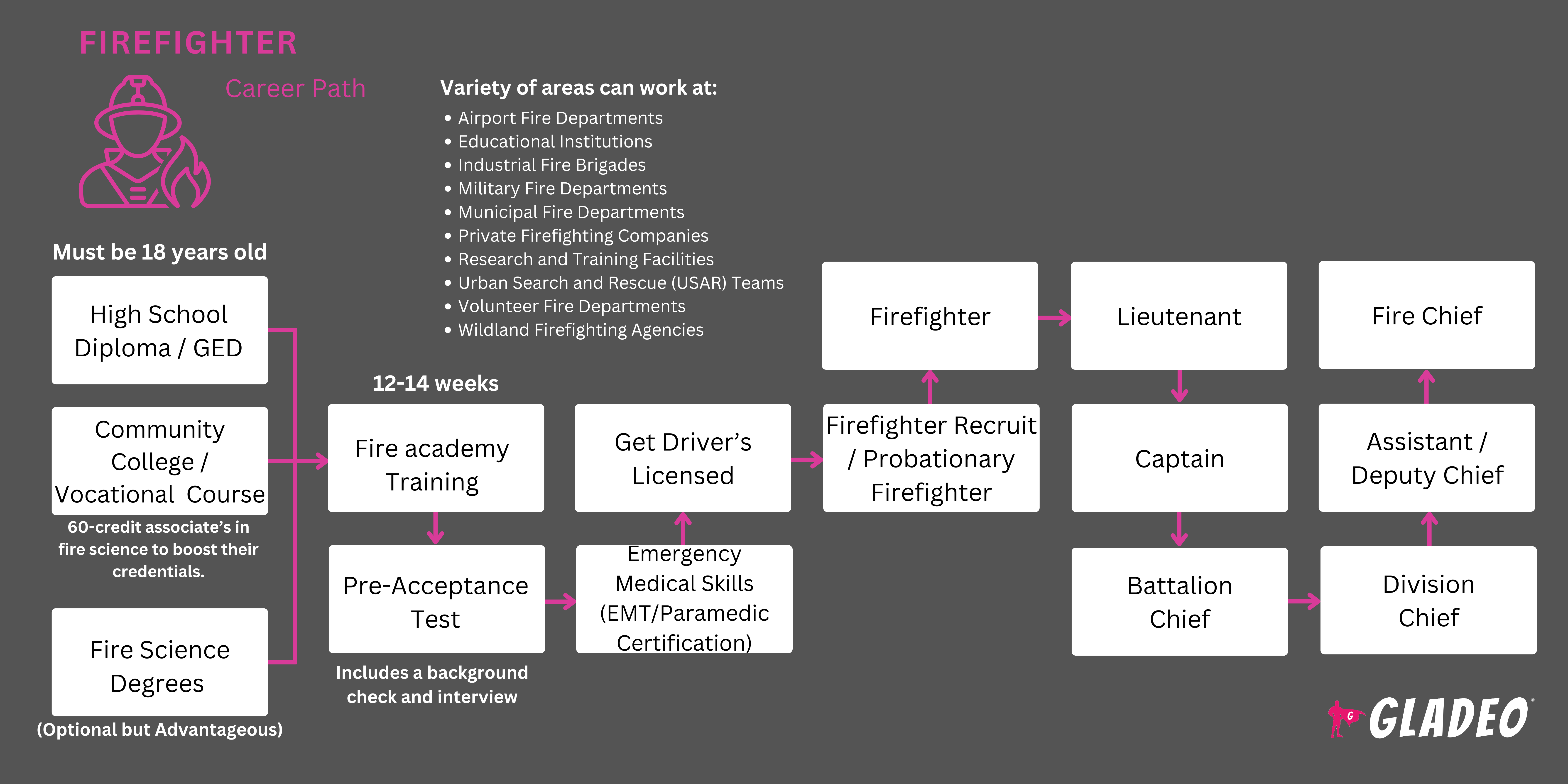
Firefighters do not need a college degree, but they do need to meet several requirements, and the exact list varies by state and department. You generally must be at least 18 (some departments require 21 at hire), have a high school diploma or GED, hold a valid driver's license, pass a background check, and pass physical and medical exams. Many career departments require or strongly prefer an Emergency Medical Technician (EMT) certification from the National Registry of Emergency Medical Technicians or your state, and some want paramedic training. Wildland Firefighters complete entry-level courses from the National Wildfire Coordinating Group, such as S-130 and S-190, along with a work capacity test, and then train on the job with their crews.
Students can take courses in relevant subjects such as:
- Introduction to Fire Science and Fire Protection
- Fire Behavior and Combustion
- Building Construction for Fire Protection
- Emergency Medical Technician (EMT) Training
- Hazardous Materials Awareness
- Fire Prevention and Fire Codes
- Principles of Emergency Services Safety and Survival
- Fire Protection Systems
- Incident Command and Emergency Management
- Anatomy, Physiology, and Physical Fitness
Fire academy training teaches the core skills of the job: fire behavior, hose and ladder operations, search and rescue, forcible entry, ventilation, breathing apparatus, extrication, hazardous materials awareness, and emergency medical care. Some applicants complete a fire academy on their own through a community college or state fire training program before applying, while other departments hire recruits and then send them through their own academy. Academies can last from a few months to half a year or more. Most are built around national qualification standards, which are now organized under NFPA 1010 (replacing the earlier NFPA 1001), and many lead to Firefighter I and II certification recognized by state fire marshals or accrediting bodies such as the Pro Board and IFSAC.
Getting in is a multi-step process. The Candidate Physical Ability Test, or CPAT, developed by the International Association of Fire Fighters and the International Association of Fire Chiefs, is a timed test of eight events, such as stair climbing, hose drags, ladder raising, forcible entry, and rescue drags, done while wearing a weighted vest. Some departments use other agility tests. Applicants also take written exams, interviews, background checks, medical and psychological screening, and often a polygraph. Once hired, new Firefighters train under experienced crew members for months, and over a career they continue learning through department drills, state training, and national courses such as those from the National Fire Academy.
- Take EMT, health science, first aid, anatomy, and physical education classes if your school offers them
- Earn your CPR, first aid, and EMT certifications as early as you can
- Join a Fire Service Exploring post, a junior firefighter program, or a volunteer department that welcomes young members
- Visit a local station and ask Firefighters about their work, their schedule, and how they got started
- Build real fitness with strength, endurance, and cardio training, and practice carrying weight, climbing stairs, and dragging loads
- Research the specific requirements of the departments where you want to work, since they can differ a lot
- Consider an associate's degree in fire science or a related field, and decide whether in-person, online, or hybrid works best
- Take classes in math, mechanical reasoning, reading comprehension, chemistry, and building construction to prepare for written exams
- Try volunteering with the American Red Cross, a community emergency response team, or a service group to build teamwork and community experience
- Keep your record clean and your social media professional, and avoid drugs, since background checks are thorough
- Learn a trade or mechanical skill, such as carpentry, welding, auto repair, or electrical work
- Look into seasonal wildland jobs, conservation corps, or military service as ways to gain experience
- Programs recognized by your state fire marshal, state fire training agency, or national accrediting bodies such as the Pro Board or IFSAC
- Instructors who are experienced Firefighters, officers, and paramedics
- Hands-on training with live fire props, apparatus, ladders, hoses, and rescue equipment
- A curriculum that follows national qualification standards, such as NFPA 1010
- Built-in EMT training or a clear path to getting certified
- A strong emphasis on safety, fitness, and wellness, not just skills
- Support for passing the CPAT and other physical tests
- Connections to local departments for ride-alongs, internships, and hiring
- Clear costs for tuition, gear, and testing fees, along with financial aid and scholarships
- Strong graduate outcomes and an active alumni network
- Schedules and formats that work if you are working or volunteering while you learn
- For college programs, regional accreditation and credits that transfer if you want a bachelor's degree later
- Check the job pages of fire departments, city and county governments, and state forestry agencies, and sign up for hiring alerts
- Read each posting carefully so you know the exact requirements for age, certifications, license, and testing
- Earn your EMT certification (and consider paramedic training) to make yourself much more competitive
- Volunteer, or work as a paid-on-call Firefighter, to gain experience, references, and relationships
- Study for the written exam using up-to-date materials that match the test your target department uses
- Train for the CPAT or other physical test until you can pass it with margin, because speed counts
- Prepare for the oral board interviews with practice questions, and be ready to explain why you want this career
- Be completely honest in every step of the background process, including polygraph and medical review
- Keep your driving record, finances, and social media in good shape
- Apply to many departments and be patient, since hiring lists can move slowly
- Consider seasonal wildland work, a conservation corps, or military service to build experience and a path to a permanent job
- Be willing to move to where the openings are
- Be an excellent probationary Firefighter by showing up early, working hard, and learning from every call
- Earn additional certifications, such as driver/operator, hazardous materials, technical rescue, fire instructor, fire inspector, and paramedic
- Prepare for promotional exams to become engineer, lieutenant, captain, battalion chief, and beyond
- Pursue a degree in fire science, emergency management, or public administration for leadership roles
- Seek mentors who are respected leaders and ask for honest feedback
- Take on special assignments such as training, public education, fire prevention, or investigations
- Attend courses at state fire academies and the National Fire Academy
- Build a reputation for leadership by supporting your crew, staying calm, and staying humble
Websites:
- International Association of Fire Fighters (IAFF) - iaff.org
- International Association of Fire Chiefs (IAFC) - iafc.org
- National Fire Protection Association (NFPA) - nfpa.org
- U.S. Fire Administration and National Fire Academy - usfa.fema.gov
- National Volunteer Fire Council - nvfc.org
- National Registry of Emergency Medical Technicians - nremt.org
- The Pro Board - theproboard.org
- National Wildfire Coordinating Group - nwcg.gov
- U.S. Forest Service - fs.usda.gov
- National Interagency Fire Center - nifc.gov
- Women in Fire - womeninfire.org
- FireRescue1 - firerescue1.com
- National Fallen Firefighters Foundation - firehero.org
- USAJOBS - usajobs.gov
Books
- Report from Engine Co. 82 by Dennis Smith
- Young Men and Fire by Norman Maclean
- Firefighter Functional Fitness: The Essential Guide to Optimal Firefighter Performance and Longevity by Dan Kerrigan and Jim Moss
- Firefighter Success: 20 C's to Firefighter Excellence by Jim Moss
- The Big Burn: Teddy Roosevelt and the Fire That Saved America by Timothy Egan
If you find that being a Firefighter isn't the right fit, your skills in emergency response, teamwork, fitness, and public safety can open many doors.
- Emergency Medical Technician
- Paramedic
- Fire Inspector or Fire Investigator
- Emergency Management Specialist
- Police Officer
- Forestry Technician or Park Ranger
- Occupational Health and Safety Specialist
- 911 Dispatcher
- Registered Nurse
- Fire Protection Engineer
“No guts, no glory… you are competing with hundreds and thousands of men and women. The real question is how bad do you want it. Do your job, don’t be lazy, keep your mouth shut, have initiative, and ultimately be an information sponge.” Jonathan Yi, Firefighter
"The final test of a leader is that he leaves behind in other men the conviction and the will to carry on." Walter Lippman

Newsfeed

Featured Jobs
Online Courses and Tools
Annual Salary Expectations
New workers start around $85K. Median pay is $115K per year. Highly experienced workers can earn around $147K.