






Spotlights
Glass Installer, Glass Fabricator, Window Installer, Curtain Wall Installer, Storefront Installer, Glass Mechanic, Architectural Glass Technician, Auto Glass Technician, Skylight Installer, Glass and Glazing Contractor, Mirror Installer, Commercial Glazier
Every gleaming glass skyscraper, every storefront you window-shop through, every skylight that fills a room with sunlight exists because a Glazier measured, cut, and installed it with precision. Glass looks effortless once it is in place, but getting a massive, fragile pane to fit perfectly into a steel frame hundreds of feet in the air, without cracking it or leaving a single leak, is a skill few people ever master.
Glaziers select, cut, install, and replace glass and other glazing materials in windows, storefronts, curtain walls, skylights, mirrors, and shower enclosures. They work from architectural drawings to measure openings precisely, then cut, grind, and fit glass panels, often massive and expensive ones, using suction lifts, cranes, and specialized frames. On a job site, glaziers coordinate closely with architects, general contractors, ironworkers, and metal framers, since glass usually goes in only after the surrounding structure is ready and has to fit exactly within tight tolerances. Some glaziers specialize in residential windows and mirrors, while others focus on the massive curtain wall systems that wrap entire office towers in glass.
Using tools like glass cutters, suction cup lifters, caulking guns, glazier's points, and increasingly, laser measuring devices and computer-modeled glass panels, Glaziers combine careful handwork with serious attention to safety, since a single pane of architectural glass can weigh hundreds of pounds and shatter if mishandled. Their work does more than let in light; energy-efficient glazing systems keep buildings warm in winter and cool in summer, cutting energy costs and improving comfort for everyone inside. Every clean, weathertight seal a glazier installs protects a building for decades.
- Seeing a building's entire look transformed by the glass you carefully installed
- Mastering a trade that blends precision craftsmanship with physical skill
- Working on visible, landmark projects that define a city's skyline
- Strong union pay and apprenticeship pathways with real advancement
“I take my kids to the California Academy of Sciences. I ran that project when it was first built. They love going there and being able to tell people that “my daddy painted this.” To see the pride and joy in their eyes…that they were almost a part of it. It’s about having the pride in the workmanship of being a craftsman.” Robert Williams III, Business Rep, International Union of Painters and Allied Trades District Council 16, Northern California
Working Schedule
Glaziers typically work full-time, around 40 hours a week, with most work happening on active construction sites during standard business hours. Emergency or repair glaziers may work evenings, weekends, or on-call hours to replace broken storefront glass or fix a burglary or storm-damaged window quickly. The job is a mix of outdoor site work, sometimes at significant heights on scaffolding or lifts, and indoor shop work cutting and preparing glass before installation. Most glaziers are employed by glazing contractors or work through a union hiring hall, though some experienced glaziers run their own small glass and mirror businesses.
Typical Duties
- Measuring window, door, and wall openings for precise glass fit
- Reading architectural blueprints and glazing schedules
- Cutting glass and glazing materials to specification in the shop or on site
- Installing glass into aluminum, wood, or steel frames using glazing points, clips, or sealant
- Setting large architectural glass panels using suction lifts and cranes
- Installing curtain wall systems on commercial and high-rise buildings
- Applying weatherproof sealants, gaskets, and caulking around glass installations
- Replacing broken, cracked, or storm-damaged glass
- Installing mirrors, shower enclosures, and glass railings
- Fabricating and installing skylights and glass roofing systems
- Removing old glass and frames safely before replacement
- Inspecting completed installations for leaks, alignment, and code compliance
Additional Responsibilities
- Maintaining and calibrating cutting tools and lifting equipment
- Estimating glass quantities and costs for upcoming jobs
- Coordinating delivery schedules for large or custom glass orders
- Training apprentices on cutting, handling, and installation techniques
- Following manufacturer specifications for specialty and safety glass
- Keeping detailed records of measurements and completed installations
- Responding to emergency glass repair calls
- Staying current on building codes related to glazing and energy efficiency
A Glazier's day often starts in the shop, reviewing the day's work order and checking that the correct glass panels, already cut and tempered to spec, have arrived from the fabricator. Before heading to the job site, they load frames, sealants, suction lifts, and safety equipment, double-checking measurements against the blueprint one more time.
At the site, the crew sets up scaffolding or a lift if the installation is above ground level, then carefully maneuvers each glass panel into position using suction cups or a crane, guiding it into the frame without chipping an edge or cracking the pane. Midday work is exacting: seating the glass properly, securing it with glazing points or clips, and running a clean, weathertight bead of sealant around every edge. On a commercial curtain wall job, this process repeats floor after floor.
Afternoons often bring inspection and cleanup, checking that every pane is level, sealed, and free of defects before the crew moves to the next opening. If a call comes in for an emergency repair, a broken storefront window overnight, the glazier may head straight there to measure, cut, and install a replacement on the spot. At the end of the day, tools are cleaned, leftover glass is stored safely, and the crew reviews what is scheduled for tomorrow.
Soft Skills
- Precision and careful attention to detail
- Physical coordination and steady hands
- Patience when handling large, fragile materials
- Problem-solving when an opening is not perfectly square
- Clear communication with contractors and crew members
- Comfort working at heights on scaffolding or lifts
- Reliability and punctuality on tightly scheduled job sites
- Customer service skills for residential and repair calls
- Teamwork when maneuvering heavy glass panels
- Physical stamina for lifting and standing for long periods
- Safety awareness around sharp materials and heavy loads
- Adaptability to different building types and glazing systems
Technical Skills
- Glass cutting, scoring, and edging techniques
- Reading architectural blueprints and glazing schedules
- Operation of suction lifts, cranes, and glass-handling equipment
- Sealant, caulking, and weatherproofing application
- Curtain wall and storefront framing systems
- Knowledge of tempered, laminated, and insulated glass products
- Measuring tools including lasers and precision tape measures
- Frame installation for aluminum, wood, and steel systems
- Energy code and building code requirements for glazing
- Basic math for calculating glass sizes and material quantities
- Commercial Glazier: Installs storefronts, curtain walls, and large-scale building glass
- Residential Glazier: Installs and repairs windows, doors, and mirrors in homes
- Curtain Wall Installer: Specializes in the glass exteriors of high-rise buildings
- Auto Glass Technician: Replaces windshields and vehicle glass, a related specialty trade
- Skylight Installer: Focuses on roof-mounted glass and daylighting systems
- Art and Decorative Glazier: Works with stained glass, etched glass, and custom designs
- Emergency Repair Glazier: Handles urgent storefront and storm-damage glass replacement
- Shower and Mirror Installer: Specializes in bathroom glass enclosures and mirror work
- Commercial glazing and curtain wall contractors
- Residential window and glass companies
- Union hiring halls and apprenticeship programs
- General contractors on high-rise and retail construction
- Auto glass repair franchises
- Glass fabrication and manufacturing plants
- Architectural and design firms specifying glazing systems
- Property management companies handling glass repairs
- Storefront and retail build-out contractors
- Skylight and specialty glazing manufacturers
- Government and institutional facilities departments
- Small, owner-operated glass and mirror shops
“Some of us we have more Neanderthal DNA than others. You’ve got to be able to express that in the best way possible. We all have a sense of creativity that can be shown and it’s finding that way to show that creativity. Some people they can do that behind a computer, other people it’s great to be able to build a building. It all comes into that sense of being of whatever makes you feel alive.” Robert Williams III, Business Rep, International Union of Painters and Allied Trades District Council 16, Northern California
Glazing demands exceptional precision, because glass does not forgive mistakes. A miscut panel, a poor seal, or a frame that is out of square can mean an expensive piece of glass is wasted or, worse, a leak that damages a building years down the line. Glaziers are expected to double-check every measurement and take their time even when a schedule is tight, because rushing with heavy glass is genuinely dangerous.
The physical demands are real. Glass panels can weigh hundreds of pounds, and glaziers spend much of the day lifting, carrying, and maneuvering them, sometimes while standing on scaffolding or a lift many stories up. Cuts and lacerations are an ever-present risk, and proper technique and protective gear are non-negotiable. Weather can also complicate outdoor installations, and emergency repair calls can come at inconvenient hours.
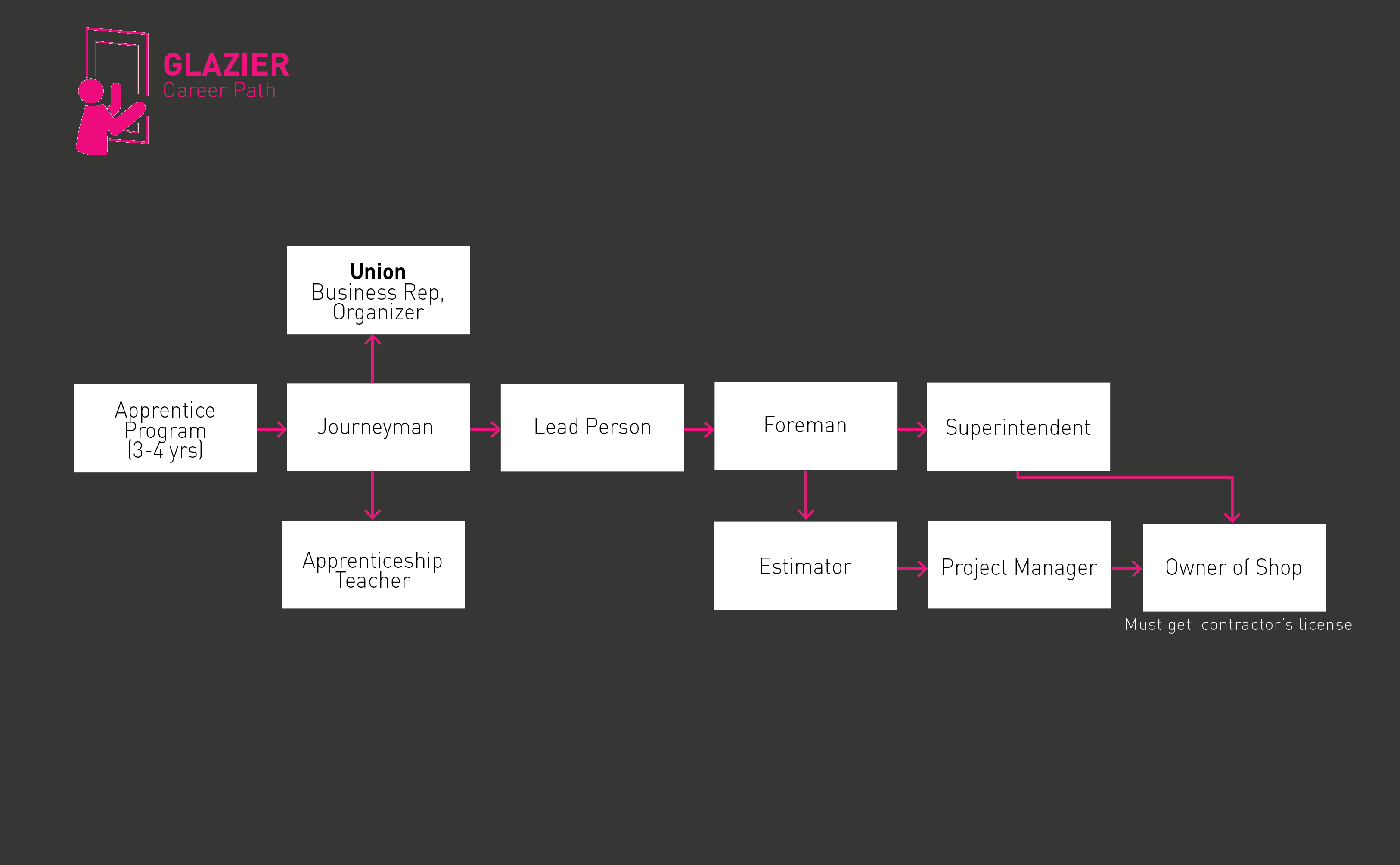
In return, glaziers build a visible, lasting legacy in the buildings around them and often earn strong union wages with clear paths from apprentice to journeyman to foreman or shop supervisor. Many experienced glaziers eventually move into estimating, project management, or running their own glass and glazing businesses, using the trade knowledge they built in the field.
- Growth in energy-efficient, triple-pane, and low-emissivity glazing systems
- Expansion of all-glass curtain wall architecture on commercial buildings
- Increased use of laser measuring and digital templating for precise fabrication
- Rising demand for smart glass that tints or darkens electronically
- Greater emphasis on hurricane-resistant and impact-rated glazing in coastal regions
- Use of Building Information Modeling to coordinate glazing with other trades
- Growth in solar glass and building-integrated photovoltaic panels
- Advances in fall-protection and mechanical lifting equipment for large panels
- Rising demand for soundproofing and acoustic glazing in urban buildings
- Adoption of robotic and vacuum-assisted glass handling on large commercial jobs
Many Glaziers grew up enjoying precise, hands-on hobbies like model building, puzzles, or woodworking, where getting every measurement exact mattered to the finished result. They often liked working with their hands on projects that had a visible, satisfying outcome, and they had patience for tasks that others found tedious.
Some were drawn to art and design classes, especially anything involving symmetry, light, or materials like glass and metal, while others simply liked being around construction sites and watching buildings take shape. A calm, careful temperament combined with an interest in how buildings are assembled often pointed these students toward glazing as a trade.
Most Glaziers learn the trade through a registered apprenticeship, often sponsored by the International Union of Painters and Allied Trades (IUPAT) Glaziers, Architectural Metal and Glass Workers division, or through independent glazing contractors. Apprenticeships typically last three to four years, combining paid on-the-job training with classroom instruction in glass types, framing systems, blueprint reading, and safety. A high school diploma or equivalent is generally required, and strong math skills are especially valuable.
Students can take courses in relevant subjects such as:
- Blueprint Reading
- Construction Math and Geometry
- Introduction to Glazing and Glass Technology
- Architectural Drafting
- Shop Class and Materials Handling
- Occupational Safety (OSHA 10 or 30)
- Building Codes and Energy Efficiency
- Metal Framing and Curtain Wall Systems
- Sealants and Weatherproofing Basics
- Customer Service for Trades
Apprentices earn wages from their first day while working under journeyman glaziers on real installations, with pay increasing at each level of the program. Many programs include dedicated shop time to practice glass cutting, handling, and frame fitting before working on live commercial projects. After becoming a journeyman, additional certifications in specialty products like curtain wall systems or hurricane-rated glazing can open doors to higher-paying, specialized work.
- Take geometry and algebra seriously; precise measurement is central to the trade
- Enroll in shop, drafting, or construction technology classes if available
- Contact a local glaziers union or glazing contractor about apprenticeship opportunities
- Practice careful, detail-oriented hobbies like model building or woodworking
- Attend a SkillsUSA competition or trade career fair to meet employers
- Job shadow a glazier or tour a glass fabrication shop
- Earn an OSHA 10 safety certification before applying to programs
- Get comfortable working at moderate heights, such as on ladders or scaffolding
- Take a basic drafting or CAD class to build blueprint-reading skills
- Talk to a working glazier about the physical demands and daily routine
- Work part-time or summer jobs involving careful handling of materials
- Research apprenticeship application windows and entrance requirements early
- A registered apprenticeship recognized by the U.S. Department of Labor
- Sponsorship by IUPAT, a glazing contractors association, or a reputable employer
- Curriculum covering both residential and commercial glazing systems
- Hands-on shop time for glass cutting and handling before fieldwork
- Instructors with real commercial glazing experience
- A clear wage progression schedule tied to completed apprenticeship levels
- Strong safety training including fall protection and glass-handling procedures
- Job placement support with local glazing contractors
- Training in current energy-efficient and specialty glass products
- Opportunities to earn certifications in curtain wall or impact-glazing systems
Manageable class sizes with real bench and tool time
Flexible scheduling if you plan to work while completing the program
- Apply to a local glaziers union apprenticeship or glazing contractor directly
- Complete any required aptitude test and interview thoroughly prepared
- Earn an OSHA 10 certification before applying to stand out from other candidates
- Highlight any experience with precise measurement, tools, or materials handling
- Attend union open houses or contractor hiring events
- Consider entry-level shop or warehouse roles at a glass fabricator to get a foot in the door
- Ask about pre-apprenticeship programs at local trade schools
- Build a reliable work history, since punctuality and consistency matter to employers
- Network with working glaziers or their union locals for referrals
- Be ready to demonstrate comfort with heights and heavy lifting honestly
- Keep a valid driver's license, since work sites vary across a region
- Follow up consistently with the hiring hall while awaiting apprenticeship placement
- Complete every level of apprenticeship training and pass required exams
- Volunteer for complex jobs like curtain wall or specialty glass installations
- Earn certifications in energy-efficient, impact-rated, or smart glass systems
- Build a reputation for precision and zero-defect installations
- Move from journeyman into foreman, shop supervisor, or estimator roles
- Learn to read cost estimates and bids to move toward project management
- Mentor apprentices in cutting, handling, and installation techniques
- Consider starting an independent glazing business after years of field experience
Websites:
- International Union of Painters and Allied Trades (IUPAT) - iupat.org
- National Glass Association - glass.org
- Glass Association of North America - glasswebsite.com
- Insulating Glass Manufacturers Alliance - igmaonline.org
- American Architectural Manufacturers Association - aamanet.org
- National Center for Construction Education and Research (NCCER) - nccer.org
- SkillsUSA - skillsusa.org
- Occupational Safety and Health Administration - osha.gov
- Associated Builders and Contractors - abc.org
- Glass Magazine - glassmagazine.com
- Fenestration and Glazing Industry Alliance - fgiaonline.org
- Home Builders Institute - hbi.org
Books:
- Glazier's Reference Manual by International Union of Painters and Allied Trades
- The Complete Guide to Windows and Doors by Editors of Creative Homeowner
- Architectural Glass by Michael Wigginton
- Curtain Wall Systems: A Primer by American Society of Civil Engineers
- Glass Construction Manual by Christian Schittich
If you find that being a Glazier isn't the right fit, your precision, materials knowledge, and construction skills carry over well into related trades.
- Carpenter
- Window and Door Installer
- Metal Framer
- Construction Millwright
- Curtain Wall Estimator
- Sheet Metal Worker
- Auto Glass Technician Sign Installer
- Construction Project Coordinator
- Architectural Sales Representative
“You can get what you want out of it depending on how hard you want to invest yourself into it and how dedicated you want to be. You can just get by or you can flourish and rise up in the industry. It’s all up to the individual.” Robert Williams III, Business Rep, International Union of Painters and Allied Trades District Council 16, Northern California
Newsfeed

Featured Jobs
Online Courses and Tools
Annual Salary Expectations
New workers start around $48K. Median pay is $63K per year. Highly experienced workers can earn around $102K.