






Spotlights
Construction Equipment Mechanic, Equipment Mechanic, Equipment Technician, Field Mechanic, Field Service Technician, Field Technician, Heavy Equipment Mechanic, Heavy Equipment Technician, Mechanic, Mobile Heavy Equipment Mechanic, Off-Road Equipment Technician
When massive machines like cranes, bulldozers, and graders roar to life on construction sites, it's the Heavy Equipment Technician’s skill that keeps them running safely and efficiently. These professionals ensure the powerful equipment that builds our roads, buildings, and infrastructure works flawlessly, impacting the success and safety of entire projects.
Heavy Equipment Technicians spend their days diagnosing, repairing, and overhauling heavy machinery used in construction, mining, and logging. They work closely with equipment operators, site managers, and parts suppliers to identify issues, make precise repairs, and maintain equipment performance. Their efforts ensure machines operate smoothly, reducing downtime and preventing costly breakdowns.
Using a mix of mechanical know-how and advanced diagnostic tools, these technicians read blueprints, operate hoists, and test hydraulic and pneumatic systems. Their expertise in troubleshooting complex systems not only keeps projects on track but also safeguards the people relying on this massive machinery every day.
- Solving tough mechanical problems and seeing heavy equipment back in action after a repair.
- Working hands-on with powerful machinery that shapes cities and industries.
- Being an essential part of large construction and mining teams by ensuring safety and reliability.
- Building specialized technical skills that are always in demand in many industries.
Working Schedule
Heavy Equipment Technicians often work full-time hours on construction or mining sites, which can include early mornings, evenings, or weekends depending on project deadlines. Many work outdoors in various weather conditions and may travel between job sites. The pace can be fast when machines break down unexpectedly, requiring quick, on-the-spot repairs to keep operations moving.
Typical Duties
- Inspect heavy machinery like cranes, bulldozers, graders, and conveyors to identify mechanical or hydraulic problems.
- Diagnose equipment malfunctions using diagnostic tools and test runs.
- Repair or replace damaged parts such as engines, transmissions, brakes, and hydraulic systems.
- Dismantle and reassemble machinery components using hand tools and hoists.
- Read and interpret technical manuals, blueprints, and wiring diagrams to guide repairs.
- Perform routine maintenance tasks including lubrication and adjustments to prevent breakdowns.
- Test repaired equipment to ensure proper functioning and manufacturer compliance.
- Maintain records of repairs, parts used, and maintenance schedules.
- Order and manage replacement parts and supplies needed for repairs.
- Collaborate with operators and supervisors to understand equipment issues and timelines.
- Ensure safety protocols are followed while working on heavy machinery.
- Use computerized diagnostic equipment to monitor system performance.
Additional Responsibilities
- Stay updated on new heavy equipment technology and repair techniques.
- Train junior technicians or apprentices on equipment maintenance and repair.
- Assist in planning maintenance schedules to minimize downtime.
- Conduct safety inspections and report hazards related to machinery.
- Manage inventory of tools and replacement parts efficiently.
- Communicate repair status and issues clearly to management and operators.
- Help develop cost estimates for repairs and maintenance work.
- Participate in emergency repair teams during critical breakdowns.
The day often starts by reviewing scheduled maintenance and urgent repair requests while inspecting equipment on-site. Technicians check logs and coordinate with operators to prioritize tasks for the day.
Midday involves hands-on work diagnosing equipment problems, dismantling parts, and replacing components. This requires precision and focus, often involving heavy lifting and use of tools like hoists, wrenches, and diagnostic software.
Later in the day, technicians test repaired machinery to verify performance and safety. They document the work completed, order any needed parts, and discuss upcoming maintenance plans with supervisors before wrapping up, sometimes responding to last-minute emergencies.
Soft Skills
- Problem-solving mindset to diagnose complex mechanical issues.
- Attention to detail for precise repairs and safety checks.
- Communication skills to explain problems and solutions clearly.
- Teamwork when coordinating with operators and other technicians.
- Physical stamina and strength for handling heavy parts and tools.
- Adaptability to work in changing weather and environments.
- Patience and persistence during challenging repairs.
- Time management to balance multiple tasks and deadlines.
- Safety awareness to prevent accidents on site.
- Mechanical intuition to understand how parts interact.
- Dependability to respond to urgent repair needs.
- Willingness to learn new technologies and methods.
Technical Skills
- Reading and interpreting blueprints and technical manuals.
- Using diagnostic tools for hydraulic, pneumatic, and mechanical systems.
- Proficiency with hand tools and power tools.
- Operating hoists and lifting equipment safely.
- Performing mechanical repairs on engines, transmissions, and brakes.
- Testing machinery performance after repairs.
- Maintaining records and documentation digitally or on paper.
- Understanding of electrical wiring and systems in heavy equipment.
- Using computer software for ordering parts and tracking maintenance.
- Knowledge of safety regulations and compliance standards.
- Field Technician: Works on-site at various locations, often outdoors, handling repairs and maintenance on active equipment.
- Shop Technician: Repairs and overhauls equipment in a workshop environment with access to specialized tools.
- Mobile Heavy Equipment Mechanic: Travels to job sites with a fully equipped truck to perform repairs on-site.
- Hydraulic Specialist: Focuses specifically on the repair and maintenance of hydraulic systems in heavy machinery.
- Electrical Systems Technician: Specializes in diagnosing and fixing electrical and electronic components of heavy equipment.
- Preventive Maintenance Technician: Concentrates on routine inspections and servicing to prevent equipment breakdowns.
- Mining Equipment Technician: Works with machinery specifically used in mining operations, often in remote locations.
- Construction Equipment Mechanic: Focuses on machines used in building and infrastructure projects.
- Construction companies
- Mining corporations
- Logging and forestry firms
- Equipment rental companies
- Heavy machinery dealerships
- Municipal public works departments
- Oil and gas industry contractors
- Agricultural equipment suppliers
- Manufacturers of heavy machinery
- Transportation and logistics companies
- Road and highway maintenance agencies
- Military and defense contractors
Heavy Equipment Technicians work in physically demanding environments, often outdoors where weather can be harsh and unpredictable. They must be prepared to lift heavy parts and work in awkward positions, which requires strength and endurance.
The job can be high pressure, especially when equipment breaks down unexpectedly and causes project delays. Technicians need to stay calm, think critically, and work quickly without sacrificing safety or quality.
Work hours may extend beyond the typical 40-hour week, including early mornings, nights, and weekends to meet project deadlines. Travel to remote or multiple job sites is common, requiring flexibility and time away from home.
- Increasing use of computerized diagnostic tools and software for troubleshooting.
- Growing demand for technicians skilled in hybrid and electric heavy equipment.
- More emphasis on preventive maintenance to reduce costly breakdowns.
- Integration of telematics and GPS systems in heavy machinery for real-time monitoring.
- Use of virtual reality (VR) and simulation training for technician education.
- Rising importance of environmental regulations affecting equipment maintenance.
- Development of advanced hydraulic and pneumatic systems requiring specialized knowledge.
- Expansion of remote repair support and mobile service units.
- Growth in automation and semi-autonomous heavy equipment.
- Greater focus on safety standards and certifications.
Many Heavy Equipment Technicians discovered their passion for fixing things early on, often tinkering with bikes, cars, or lawnmowers as kids. They enjoyed hands-on activities that involved understanding how machines worked and solving mechanical puzzles.
They often loved working with tools, building models, or helping with household repairs. Their curiosity about engines, motors, and large machines set the foundation for a career in maintaining the giant equipment that builds and powers the world.
Becoming a Heavy Equipment Technician usually involves a combination of formal education and hands-on training. Many start by earning a diploma or certificate in heavy equipment technology or diesel mechanics, while others gain experience through apprenticeships or on-the-job training programs.
Students can take courses in relevant subjects such as:
- Diesel Engine Repair
- Hydraulics and Pneumatics
- Electrical Systems for Heavy Equipment
- Blueprint Reading and Technical Drawing
- Welding and Fabrication
- Preventive Maintenance Practices
- Computerized Diagnostic Tools
- Safety and Environmental Regulations
- Machine Shop Practices
- Heavy Equipment Operation Basics
Hands-on experience is crucial in this field, so students should seek internships or apprenticeships to build skills and confidence. Maintaining a detailed portfolio of repairs and projects can help when applying for jobs. Continuous learning is important as technology evolves rapidly in heavy machinery.
- Take classes in math, physics, and shop or industrial arts to build a strong technical foundation.
- Participate in vocational training or technical education programs if available.
- Join clubs or groups focused on mechanics, robotics, or engineering.
- Seek opportunities for internships or summer jobs with construction or equipment companies.
- Develop computer skills, especially with diagnostic software and spreadsheets.
- Attend career fairs and talk to professionals in the field.
- Work on personal projects involving machines or vehicles to gain practical experience.
- Build communication and teamwork skills through group projects and activities.
- Explore apprenticeships or certification programs immediately after high school.
- Consider enrolling in community college or trade schools with heavy equipment or diesel technology programs.
- Look for programs with strong hands-on training and access to real heavy equipment.
- Choose schools that offer internships or connections to local employers.
- Verify that instructors have industry experience and certifications.
- Check if the program covers hydraulics, pneumatics, and electrical systems thoroughly.
- Ensure the curriculum includes safety training and environmental regulations.
- Select programs that teach computerized diagnostic tools and software.
- Find programs that offer preparation for industry certifications.
- Look for schools with small class sizes for personalized instruction.
- Seek options that provide career placement assistance.
- Consider the availability of evening or part-time classes to accommodate work schedules.
- Evaluate the quality and condition of lab equipment and tools.
- Check if the program offers training in welding and fabrication techniques.
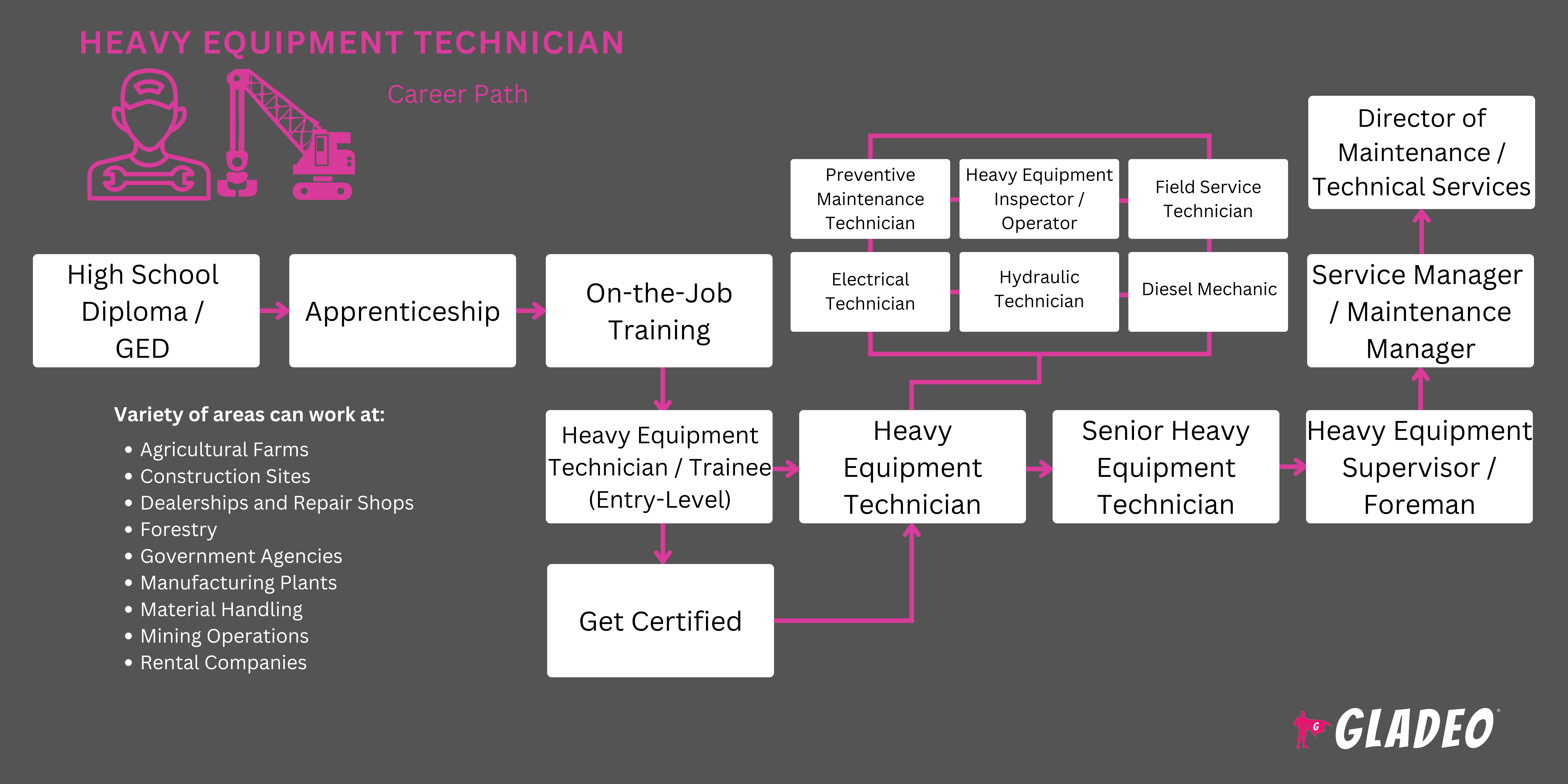
- Apply for entry-level positions such as Maintenance Assistant or Junior Equipment Technician.
- Build a portfolio documenting hands-on repair and maintenance projects.
- Network with professionals at trade shows, career fairs, and online forums.
- Seek apprenticeships or internships with construction or mining companies.
- Gain experience operating diagnostic tools and reading technical manuals.
- Be willing to start with routine maintenance tasks to learn the basics.
- Demonstrate reliability and a strong work ethic to supervisors.
- Obtain necessary safety certifications and licenses early on.
- Continue learning about new equipment technologies and repair methods.
- Practice good communication skills to effectively work with operators and team members.
- Ask for feedback and take initiative on additional responsibilities.
- Consider joining professional associations for networking and training opportunities.
- Gain certifications in specialized systems like hydraulics or electrical diagnostics.
- Develop expertise with specific equipment brands or models.
- Pursue advanced training in computerized diagnostics and software.
- Build relationships with supervisors and project managers for advancement.
- Take on leadership roles training junior technicians or managing teams.
- Expand knowledge into equipment management or operations planning.
- Consider roles in equipment sales or technical support.
- Stay current on industry trends to become a valuable resource on emerging technologies.
Websites:
- Association of Equipment Management Professionals (AEMP) - aemp.org
- The Diesel Technology Forum - dieseltech.org
- National Institute for Automotive Service Excellence (ASE) - ase.com
- Construction Equipment Guide - constructionequipmentguide.com
- International Union of Operating Engineers (IUOE) - iuoe.org
- National Association of Heavy Equipment Training Schools - nahets.org
- Society of Automotive Engineers (SAE) - sae.org
- Equipment World - equipmentworld.com
- Heavy Equipment Forums - heavyequipmentforums.com
- LinkedIn Groups for Heavy Equipment Technicians
- OSHA - Occupational Safety and Health Administration - osha.gov
- National Center for Construction Education and Research (NCCER) - nccer.org
- Trade-Schools.net - trade-schools.net
- Diesel Mechanics Academy - dieselmechanicsacademy.com
Books:
- Heavy Equipment Operations Level 1 Trainee Guide by NCCER
- Diesel Technology by Andrew Norman
- Modern Diesel Technology: Diesel Engines by Sean Bennett
- Heavy Equipment Maintenance Management by Anthony Tarantino
- Hydraulics and Pneumatics: A Technician's and Engineer's Guide by Andrew Parr
If a career as a Heavy Equipment Technician doesn't turn out to be the right fit, there are many related jobs where your mechanical skills and hands-on experience can shine.
- Diesel Mechanic
- Automotive Service Technician
- Industrial Machinery Mechanic
- Maintenance Technician
- Construction Equipment Operator
- Welding Technician
- Field Service Technician
- Machinist
- Electrical Technician
- HVAC Technician
Newsfeed

Featured Jobs
Online Courses and Tools