





Spotlights
Structural Iron Worker, Steel Erector, Rodbuster, Ornamental Ironworker, Rigger, Steel Worker, Reinforcing Iron Worker, Bridge Ironworker, Connector, Welder-Fitter, Precast Erector, Tower Erector
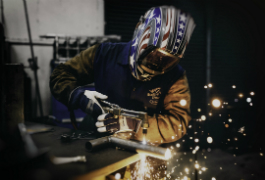
Look up at any skyscraper, stadium, or bridge and you are looking at the work of Ironworkers. Long before the glass and concrete go in, someone has to climb hundreds of feet into open sky, catch a beam swinging from a crane cable, and bolt it into place so the whole structure has something to stand on. Ironworkers build the skeletons that hold up the modern world, and without them nothing else about a building or a bridge would be possible.
Ironworkers read structural blueprints and turn them into towering frames of steel, rebar-reinforced concrete, and precast panels. They hook loads to cranes, guide beams into position, align columns, and connect steel with bolts or welds until a structure can stand on its own. On any given job they are working shoulder to shoulder with crane operators, welders, riggers, structural engineers, and general contractors, constantly communicating by hand signal and radio because a miscommunication at height can be dangerous. Some ironworkers specialize in the reinforcing bar, or "rebar," that gives concrete its strength, while others focus on ornamental and architectural metalwork like railings, staircases, and facades.
Using tools like impact wrenches, cutting torches, welding rigs, come-alongs, spud wrenches, and connecting bars, along with full fall-protection harnesses and safety lines, Ironworkers combine raw strength with precision and nerve. Every beam they set and every weld they finish becomes permanent structure, invisible once the building is finished but holding everything else up for decades. It is physical, high-stakes work, and it is also some of the most essential work in construction.
- Watching a skyline you helped build rise beam by beam and knowing you were part of it
- Doing physically demanding, high-skill work that most people could never do
- Strong union wages, benefits, and pension plans through a respected trade
- A tight-knit crew culture built on trust, since everyone's safety depends on everyone else
Working Schedule
Ironworkers typically work full-time, often 40 or more hours a week, with early start times to take advantage of daylight and cooler temperatures. Overtime is common when a project is racing toward a deadline or when steel deliveries dictate a tight erection schedule. The job is almost entirely outdoors and at height, on active job sites that can be hot, cold, windy, or wet, and crews often travel to wherever the next big job is, sometimes working away from home for weeks at a stretch on major commercial or infrastructure projects. Most ironworkers are union members dispatched through a local hiring hall to different contractors and job sites throughout their career.
Typical Duties
- Reading blueprints and structural drawings to determine where beams, columns, and rebar go
- Signaling crane operators to lift and position steel members
- Connecting structural steel with bolts, ensuring proper torque and alignment
- Welding steel connections using stick, MIG, or flux-core methods
- Placing and tying reinforcing bar (rebar) for concrete foundations, walls, and decks
- Erecting precast concrete panels, curtain walls, and structural components
- Rigging loads safely using slings, shackles, and spreader bars
- Plumbing, leveling, and aligning structural frames before final connections
- Installing metal decking for floors and roofs
- Setting up and moving fall-protection systems, guardrails, and safety nets
- Cutting and burning steel with torches and plasma cutters
- Inspecting completed connections for code compliance and structural integrity
Additional Responsibilities
- Attending daily safety briefings and toolbox talks before work begins
- Maintaining and inspecting rigging equipment, harnesses, and tools
- Coordinating with crane operators and other trades to sequence work safely
- Mentoring apprentices on rigging, welding, and connecting techniques
- Keeping accurate records of hours, materials, and completed work areas
- Helping plan the erection sequence with foremen and project engineers
- Participating in union meetings and continuing safety certifications
- Adapting to weather delays and shifting project schedules
An Ironworker's day usually starts early, often before sunrise, with a safety meeting where the crew reviews the day's lift plan, weather conditions, and any hazards on site. Gear goes on first: harness, hard hat, gloves, and tools clipped to a belt. The morning often begins high in the structure, connecting beams that were set the day before or preparing anchor points for the next crane lift.
Midday is when the real rhythm of the job takes over. A crane swings a beam into position, and connectors guide it by hand into place, bolting it temporarily before it is plumbed and permanently fastened. Other crew members might be tying rebar cages on the ground, welding connections on a lower floor, or rigging the next load. Communication is constant and precise, because everyone on the crew is trusting the person next to them with their safety.
Afternoons often bring inspections, tightening final connections, and preparing the site for the next day's steel delivery. As the structure grows, the crew tracks progress against the erection plan and adjusts for anything that did not go as expected, like a beam that arrived slightly off-spec or a weather delay that pushed back a major lift. At the end of the day, tools are secured, rigging is stowed, and the crew reviews what is coming next.
Soft Skills
- Physical courage and comfort working at extreme heights
- Trust and reliability as part of a tight-knit crew
- Clear, fast communication under pressure
- Problem-solving when steel does not fit exactly as planned
- Discipline around safety procedures at all times
- Stamina and physical endurance
- Adaptability to weather and changing job conditions
- Strong spatial reasoning and blueprint literacy
- Composure in loud, fast-moving environments
- Willingness to take direction and give it clearly
- Punctuality and dependability
- Pride in precise, permanent work
Technical Skills
- Reading structural blueprints and shop drawings
- Rigging and signaling for crane operations
- Welding techniques including stick, MIG, and flux-core
- Bolting and torque specifications for structural connections
- Reinforcing bar placement and tying techniques
- Use of cutting torches and plasma cutters
- Fall-protection systems and OSHA safety standards
- Surveying tools for plumb, level, and alignment checks
- Operation of come-alongs, chain hoists, and connecting bars
- Basic knowledge of structural engineering principles
- Structural Ironworker: Erects the steel frame of buildings, bridges, and towers
- Reinforcing Ironworker (Rodbuster): Places and ties rebar for concrete structures
- Ornamental Ironworker: Installs railings, staircases, fences, and architectural metalwork
- Connector: Specializes in guiding and bolting beams into place high above the ground
- Rigger: Focuses on safely attaching and moving loads with cranes and hoists
- Precast Erector: Sets precast concrete panels and structural components
- Bridge Ironworker: Specializes in the unique demands of bridge and highway structure erection
- Tower Erector: Builds communication towers, transmission towers, and wind turbine structures
- Commercial construction contractors
- Bridge and highway construction firms
- Steel fabrication and erection companies
- Industrial and power plant construction firms
- Shipyards and heavy manufacturing facilities
- Wind energy and telecommunications tower companies
- Union hiring halls and apprenticeship programs
- General contractors on high-rise and stadium projects
- Government infrastructure and transportation agencies
- Precast concrete manufacturers
- Demolition and structural renovation firms
- Specialty rigging and crane companies
Ironwork is physically demanding and genuinely dangerous, and the trade does not sugarcoat that. Working hundreds of feet in the air on a narrow beam, in wind and changing weather, requires constant focus and total trust in your crew and your equipment. There is no room for a bad day when it comes to safety procedures, and ironworkers are expected to follow fall-protection rules and rigging protocols exactly, every single time.
The schedule can be unpredictable. Weather delays push work later into the evening or into weekends to catch up, and many ironworkers travel for major jobs, spending weeks away from home on bridges, stadiums, or power plants in other states. The physical toll of climbing, lifting, and working in extreme heat or cold adds up over a career, and staying in shape is part of the job description whether or not it is written down.
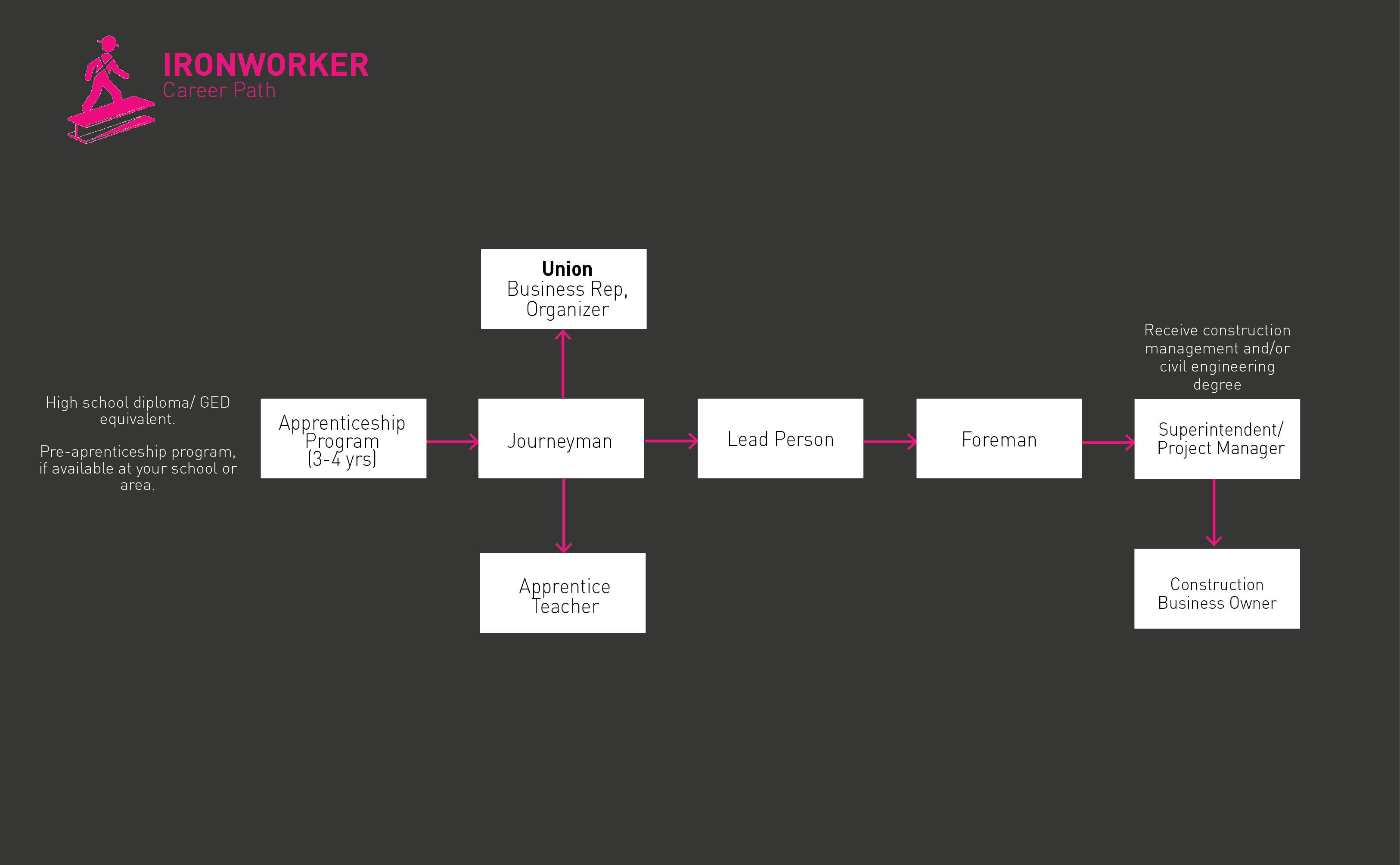
In exchange, the trade offers real rewards: strong union wages that rival many white-collar salaries, a defined path from apprentice to journeyman to foreman, and the unmatched satisfaction of pointing at a skyline and saying "I built that." Ironworkers who put in the years often find themselves training the next generation, running crews, or moving into supervisory and safety roles that keep them close to the trade without the same physical demands.
- Growth in wind turbine and renewable energy tower construction
- Increased use of Building Information Modeling (BIM) to plan steel erection sequences
- Adoption of laser layout tools and GPS for precise structural alignment
- Expansion of infrastructure projects rebuilding bridges and highways
- Rising use of prefabricated and modular steel components to speed erection
- Greater emphasis on fall-protection technology and jobsite safety monitoring
- Growth in data center and warehouse construction driving steel demand
- More women and young workers entering the trade through outreach and apprenticeship programs
- Use of drones for site surveys and progress tracking on tall structures
- Advances in high-strength steel alloys reducing weight while increasing capacity
Many Ironworkers grew up climbing everything in sight, from trees to playground equipment to the tallest thing they could find, and they were rarely afraid of heights the way some of their friends were. Building with construction toys, watching cranes at nearby job sites, and taking things apart to see how they were put together were common early interests.
Others were drawn to team sports that rewarded toughness and trust in teammates, or to shop class and hands-on projects where they could see immediate, physical results from their effort. A comfort with risk, paired with a strong sense of responsibility to the people around them, often pointed these students toward a trade where both of those traits matter every single day.
Most Ironworkers enter the trade through a registered apprenticeship, typically sponsored jointly by the International Association of Bridge, Structural, Ornamental and Reinforcing Iron Workers (the Ironworkers union) and local contractors. These programs usually last three to four years and combine paid on-the-job training with classroom instruction in blueprint reading, rigging, welding, and safety. A high school diploma or equivalent is generally required to apply, and some technical schools offer pre-apprenticeship programs that give students a head start.
Students can take courses in relevant subjects such as:
- Blueprint Reading and Drafting
- Welding Technology
- Construction Math
- Structural Steel Fundamentals
- Rigging and Crane Signal Basics
- Occupational Safety (OSHA 10 or 30)
- Physical Education and Strength Training
- Shop Class and Metalworking
- Geometry and Trigonometry
- Introduction to Construction Technology
Apprentices earn wages from day one while learning on real job sites under the supervision of experienced journeymen, and their pay increases at set intervals as they complete each level of training. Many apprenticeship programs also send trainees to a dedicated training center to practice rigging, welding, and connecting in a controlled environment before applying those skills at height. Continuing education after becoming a journeyman, including crane signal person certification and advanced welding credentials, keeps ironworkers competitive for supervisory and specialty roles.
- Take shop, welding, and construction technology classes if your school offers them
- Build strength and endurance through sports, weight training, or physical labor jobs
- Study geometry and trigonometry, which show up constantly in layout and rigging
- Contact a local Ironworkers union hall to ask about pre-apprenticeship programs
- Attend a SkillsUSA or trade-focused career fair to meet contractors and union reps
- Visit a construction site on a job shadow or tour if your school arranges one
- Get comfortable working at height gradually, such as through rock climbing or scaffolding work
- Earn an OSHA 10 safety certification while still in high school if possible
- Practice reading blueprints and technical drawings in a drafting or CAD class
- Talk to a working ironworker or union apprenticeship coordinator about the day-to-day job
- Work summer jobs in general labor or construction to build physical conditioning
- Research apprenticeship application deadlines and required entrance exams early
- A registered apprenticeship recognized by the U.S. Department of Labor
- Sponsorship or affiliation with the Ironworkers union or a reputable contractor
- A curriculum that combines classroom instruction with substantial paid field hours
- Access to a dedicated training center with rigging, welding, and connecting stations
- Instructors who are experienced journeyman ironworkers
- A clear wage progression schedule tied to completed training levels
- Strong job placement rates with local signatory contractors
- Safety training that includes OSHA 10/30 and fall-protection certification
- Opportunities to earn welding certifications alongside ironworking training
- A track record of graduates advancing to journeyman and foreman roles
- Support for pre-apprenticeship candidates who need extra preparation
- Location and travel requirements that fit your circumstances
- Apply directly to a local Ironworkers union apprenticeship program
- Complete any required aptitude test and in-person interview with confidence and preparation
- Get physically ready; apprenticeship programs often include a physical fitness component
- Earn an OSHA 10 or OSHA 30 certification before applying to stand out
- Attend union open houses or informational sessions to meet apprenticeship coordinators
- Build a work history of reliability, even in unrelated jobs, since punctuality matters
- Ask about pre-apprenticeship or trade school programs that feed directly into union halls
- Be ready to discuss your comfort with heights and physical work honestly
- Network with current ironworkers or their family members for informal advice
- Keep a valid driver's license, since job sites can be spread across a region
- Show up on time to every step of the application process without exception
- Stay in contact with the hiring hall while waiting for your apprenticeship class to start
- Complete every level of apprenticeship training on schedule and pass all required tests
- Volunteer for difficult or specialized tasks like connecting or precision rigging
- Earn advanced welding, rigging, and signal person certifications
- Build a reputation for safety consciousness and reliability on every job
- Move from journeyman into a foreman or general foreman role by demonstrating leadership
- Pursue crane operator or superintendent training for a path off the beam
- Get involved in union leadership, training committees, or apprenticeship instruction
- Stay current on new materials, erection methods, and safety technology
Websites:
- International Association of Bridge, Structural, Ornamental and Reinforcing Iron Workers - ironworkers.org
- Associated General Contractors of America - agc.org
- American Institute of Steel Construction - aisc.org
- National Center for Construction Education and Research (NCCER) - nccer.org
- American Welding Society - aws.org
- SkillsUSA - skillsusa.org
- Steel Erectors Association of America - seaa.net
- Home Builders Institute - hbi.org
- Occupational Safety and Health Administration - osha.gov
- Ironworker Management Progressive Action Cooperative Trust (IMPACT) - impact-net.org
- Engineering News-Record - enr.com
- National Association of Women in Construction - nawic.org
Books:
- Ironworkers: An Illustrated History by Jeff Grunow
- Ironworker Trade Study Guide by American Technical Publishers
- High Steel: The Daring Men Who Built the World's Greatest Skyline by Jim Rasenberger
- Structural Welding Code Handbook by American Welding Society
- Up Against It: The Story of the Empire State Building's Steel by Robert Merrill
If you find that being an Ironworker isn't the right fit, your strength, rigging know-how, and comfort with structural work translate well into other trades.
- Welder
- Crane Operator
- Structural Steel Detailer
- Rigger
- Scaffold Builder
- Construction Millwright
- Boilermaker
- Elevator Constructor
- Carpenter
- Construction Superintendent
"The most helpful thing to say to someone thinking of being an ironworker is just to try it out. If anyone feels any proclivity to such work they should give it a go. After some short time, they will know if that is a career for them or not. People that love working with metal will fall in love with it as soon as they spend some time in a shop or on site. On top of that is to never stop improving and finding more ways to love your work. This is a tough profession and after many years of day in and day out work you will eventually wear out. The secret is to constantly be trying new things and branching out. If you weld MIG for many years then you could start learning TIG which is a very different game. If you are working in fabrication for too long and it becomes monotonous then you could try construction. That way you learn new things, meet new people, exchange experiences and forge your own path that may lead you to who knows where but wherever it does, it will be a place where only those with experience and love for their work can get to." Adam Mason, Welding Pros

Newsfeed

Featured Jobs
Online Courses and Tools
Annual Salary Expectations
New workers start around $50K. Median pay is $73K per year. Highly experienced workers can earn around $97K.