






Spotlights
Landscape Architect, Environmental Designer, Urban Planner, Site Planner, Land Use Planner, Landscape Designer, Green Infrastructure Specialist, Urban Designer, Land Development Engineer, Site Engineer, Environmental Consultant, Civil Landscape Engineer
Imagine walking through a park, a campus, or a neighborhood where every tree, pathway, and water feature feels perfectly balanced with nature and human needs. Landscape Engineers create these outdoor spaces that shape how communities live, work, and play, blending science, design, and sustainability to transform environments.
Landscape Engineers design, plan, and oversee the development of outdoor areas such as parks, residential communities, commercial sites, and public spaces. They collaborate closely with architects, civil engineers, environmental scientists, urban planners, and clients to ensure landscapes are functional, beautiful, and environmentally responsible. Their work involves analyzing site conditions, drafting detailed plans, and managing construction to create spaces that meet ecological standards and user needs.
Using tools like computer-aided design (CAD) software, geographic information systems (GIS), and environmental modeling, Landscape Engineers craft designs that balance aesthetics with practical concerns such as drainage, soil stability, and plant selection. Their expertise ensures that outdoor spaces not only look stunning but also support ecosystems, manage water resources, and improve quality of life for communities.
- Seeing a once-empty or neglected area transformed into a vibrant, sustainable space for people to enjoy
- Knowing your designs help protect natural resources and promote environmental health
- Collaborating with diverse professionals to create innovative solutions for complex land challenges
- Contributing to community wellbeing by improving accessibility, safety, and beauty in public spaces
Working Schedule
Landscape Engineers typically work full-time in offices, studios, and outdoor sites. Their schedule can involve standard business hours but also requires site visits that may take place early mornings or evenings. Deadlines for client projects and construction phases can create periods of intense work, sometimes requiring overtime. Many Landscape Engineers work for engineering firms, government agencies, or as consultants, balancing between team collaboration and independent fieldwork.
Typical Duties
- Conduct site analysis including soil testing, topography, and environmental impact studies
- Develop detailed landscape and grading plans using CAD and GIS software
- Collaborate with architects, civil engineers, and environmental experts to integrate designs
- Select appropriate plants, materials, and irrigation methods suitable for the environment
- Prepare cost estimates and project timelines for clients and contractors
- Review construction plans to ensure compliance with design specifications and regulations
- Supervise landscape installation and construction activities on-site
- Incorporate sustainable design principles such as stormwater management and erosion control
- Ensure projects comply with local zoning laws, environmental regulations, and safety standards
- Present design proposals to clients and community stakeholders for approval
- Modify plans based on feedback, site conditions, or budget changes
- Maintain project documentation and reports for regulatory agencies
Additional Responsibilities
- Research new landscaping materials, technologies, and sustainability practices
- Attend public meetings or hearings to explain project impacts and gather feedback
- Coordinate with contractors and suppliers to secure resources and manage logistics
- Develop maintenance plans for completed landscapes to ensure long-term health
- Stay updated on environmental laws, building codes, and industry standards
- Prepare environmental impact assessments for project approvals
- Assist in grant writing or funding proposals for public landscaping projects
- Train or mentor junior engineers or interns on project methods and software
A Landscape Engineer’s day often begins with reviewing project plans and checking emails for any updates from clients or contractors. They might spend the morning analyzing site survey data or adjusting CAD drawings to address new environmental constraints.
By midday, they often meet with architects, engineers, or city planners to discuss project progress, coordinate schedules, or solve design challenges. This is also a time to visit construction sites to inspect ongoing work and ensure everything aligns with the design and safety standards.
Afternoons usually involve preparing reports, updating project documentation, or presenting design concepts to clients or community groups. The day might end with planning for upcoming phases, budgeting, or researching new sustainable landscaping techniques to improve future projects.
Soft Skills
- Creativity and artistic vision
- Strong communication and presentation skills
- Problem-solving and critical thinking
- Attention to detail and precision
- Collaboration and teamwork
- Adaptability to changing project demands
- Time management and meeting deadlines
- Environmental awareness and stewardship
- Client relationship management
- Negotiation and conflict resolution
- Decision-making under pressure
- Patience and perseverance in long-term projects
Technical Skills
- Proficiency in CAD software (AutoCAD, Civil 3D)
- Knowledge of GIS mapping and analysis
- Understanding of soil science and hydrology
- Familiarity with plant biology and horticulture
- Ability to read and create technical drawings and blueprints
- Project management software skills
- Environmental impact assessment techniques
- Knowledge of local zoning and environmental regulations
- Experience with stormwater management design
- Construction supervision and quality control
- Urban Landscape Engineer: Focuses on designing green spaces within cities to enhance urban living and manage stormwater.
- Environmental Restoration Engineer: Specializes in rehabilitating damaged ecosystems and natural habitats through engineered landscapes.
- Recreational Landscape Engineer: Designs parks, trails, and sports facilities that balance user experience with environmental care.
- Residential Landscape Engineer: Creates outdoor living spaces for homes, including gardens and patios, emphasizing aesthetics and functionality.
- Land Development Engineer: Works on large-scale land projects such as subdivisions and commercial developments, integrating infrastructure and landscaping.
- Ecological Engineer: Designs landscapes that support biodiversity and natural processes, often working with conservation groups.
- Transportation Landscape Engineer: Plans roadside vegetation and green buffers to improve safety and environmental quality along highways.
- Golf Course Landscape Engineer: Designs the terrain, drainage, and landscaping for golf courses to optimize playability and sustainability.
- Engineering consulting firms
- Architectural and design firms
- Government agencies (city, state, federal)
- Environmental consulting companies
- Landscape architecture firms
- Construction and land development companies
- Nonprofit environmental organizations
- Universities and research institutions
- Parks and recreation departments
- Real estate development companies
- Municipal planning departments
- Agricultural and forestry services
Landscape Engineers often face pressure to balance client desires with environmental regulations, requiring careful negotiation and creative problem-solving. Deadlines for project phases and construction can be tight, demanding focused attention and efficient workflow.
Work hours are generally full-time with occasional overtime during critical project stages or site inspections. Fieldwork may involve outdoor conditions that require physical stamina and flexibility.
The role demands attention to detail and persistence, as designs often undergo multiple revisions based on site conditions, budget changes, or regulatory feedback. Patience and resilience are vital to seeing projects through from concept to completion.
- Growing emphasis on sustainable and green infrastructure designs
- Increased use of advanced software like 3D modeling and virtual reality for design visualization
- Integration of environmental data and climate modeling into landscape planning
- Rising demand for urban green spaces to improve public health and reduce heat islands
- Greater focus on stormwater management and erosion control techniques
- Use of native plants and ecological landscaping to support biodiversity
- Collaboration with smart city technologies for responsive outdoor environments
- Growth in renewable materials and eco-friendly construction practices
- Expansion of interdisciplinary teams including ecologists and social scientists
- Increased public participation and community engagement in design processes
Kids who love exploring nature, building forts, or drawing landscapes often find a natural fit in landscape engineering. Early interests in gardening, hiking, or creating model towns can hint at a passion for shaping outdoor spaces.
Those who enjoy solving puzzles, experimenting with plants, or combining creativity with science might discover their future in designing environments that blend beauty and function. A curiosity about how natural systems work is a strong plus.
Most Landscape Engineers begin with a bachelor’s degree in landscape architecture, civil engineering, environmental engineering, or a related field. These programs combine courses in design, ecology, soil science, and project management, preparing students for the technical and creative demands of the role.
Students can take courses in relevant subjects such as:
- Landscape Architecture
- Civil Engineering Fundamentals
- Environmental Science
- Soil Mechanics and Hydrology
- Plant Biology and Horticulture
- Computer-Aided Design (CAD)
- Geographic Information Systems (GIS)
- Sustainable Design and Green Infrastructure
- Project Management
- Construction Methods and Materials
Hands-on experience is key — internships, co-op programs, or working on real-world projects help build a strong portfolio. Many Landscape Engineers also pursue licensure or certification to advance their careers and demonstrate professional competence.
- Take advanced math courses like algebra, geometry, and calculus
- Enroll in biology and environmental science classes
- Explore art and design electives to build creativity
- Join clubs focused on nature, engineering, or architecture
- Participate in community gardening or environmental projects
- Learn computer skills, especially CAD and GIS basics
- Seek internships or volunteer with landscaping or engineering firms
- Attend college fairs and talk to professionals in the field
- Build a portfolio of design or environmental projects
- Consider dual enrollment in relevant college courses
- Look for accredited programs with strong landscape architecture or environmental engineering departments
- Choose schools offering hands-on labs, internships, and real-world project experiences
- Check faculty expertise and connections to the landscaping and engineering industries
- Ensure courses cover sustainability, plant science, and technical design software
- Find programs that teach both creative design and technical engineering skills
- Verify availability of modern design studios and computer labs
- Look for opportunities to collaborate with architecture and urban planning students
- Consider schools with strong community engagement or public project partnerships
- Review alumni success stories and job placement rates
- Seek programs that prepare students for professional licensure exams
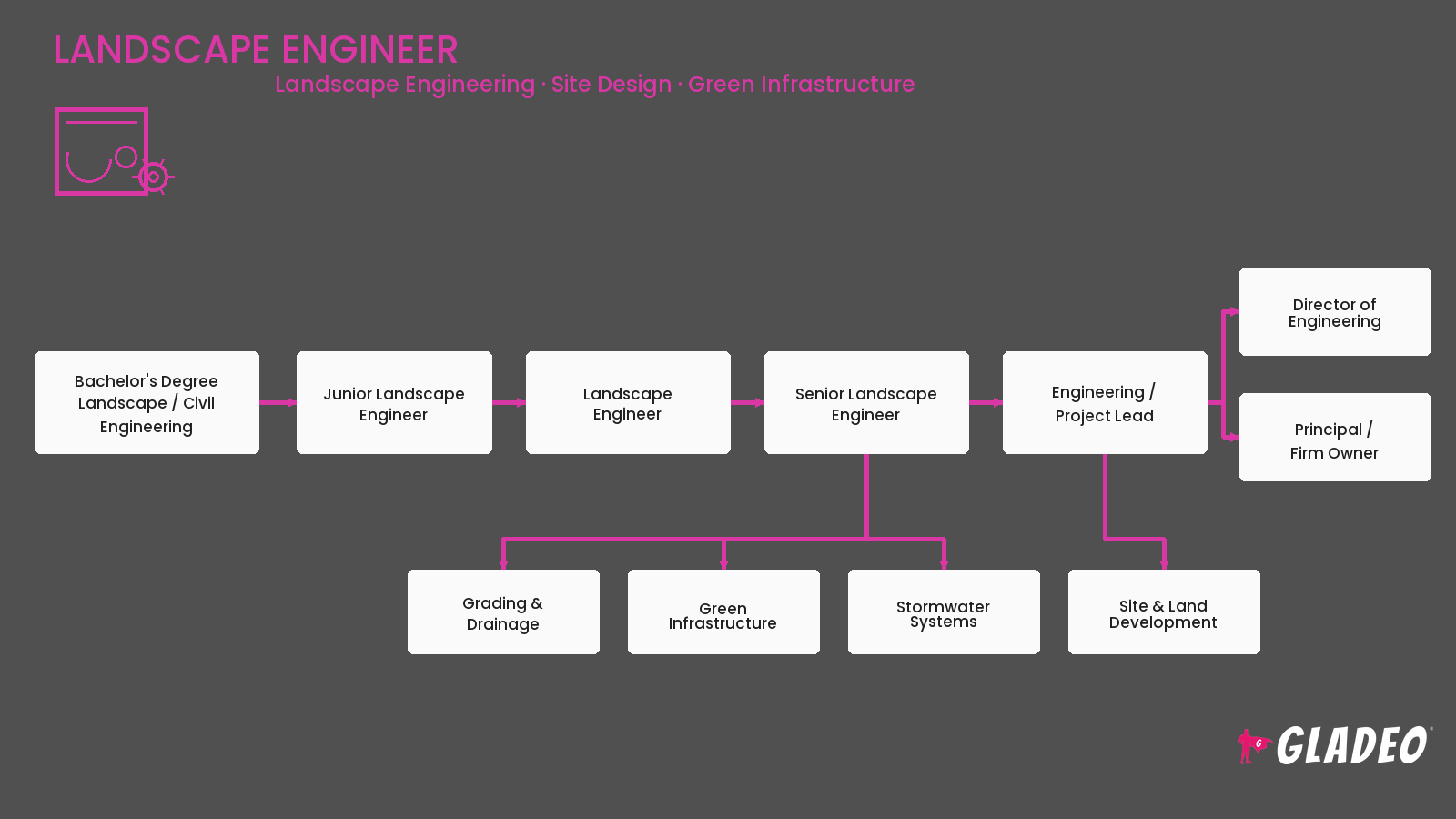
- Apply for internships at landscape architecture or engineering firms to gain practical experience
- Build a strong portfolio showcasing design sketches, CAD projects, and environmental studies
- Network with professionals through industry events and social media platforms like LinkedIn
- Seek entry-level titles such as Junior Landscape Engineer or Assistant Designer
- Prepare for interviews by practicing technical questions and explaining project experiences
- Develop proficiency in key software tools like AutoCAD and GIS
- Volunteer for community or school landscaping projects to build real-world skills
- Request feedback from mentors to improve your work and professional approach
- Stay informed about local environmental regulations and design trends
- Consider taking certification exams such as the Landscape Architect Registration Examination (LARE) if applicable
- Be ready to work on-site visits and assist senior engineers with project documentation
- Take initiative in learning about plant species and sustainable design methods
- Master advanced design and engineering software to increase efficiency and creativity
- Gain experience managing projects and coordinating multidisciplinary teams
- Earn professional licensure or certification to enhance credibility and career opportunities
- Build strong relationships with clients, contractors, and local officials
- Stay current with evolving environmental laws and sustainable practices
- Pursue leadership roles within firms or public agencies
- Contribute to professional organizations and attend industry conferences
- Explore specialization areas such as ecological restoration or urban design
Websites:
- American Society of Landscape Architects (ASLA) - asla.org
- Landscape Architecture Foundation - lafoundation.org
- Council of Landscape Architectural Registration Boards (CLARB) - clarb.org
- International Federation of Landscape Architects (IFLA) - iflaonline.org
- Environmental Protection Agency (EPA) - epa.gov
- Green Roofs for Healthy Cities - greenroofs.org
- Urban Land Institute - uli.org
- American Society of Civil Engineers (ASCE) - asce.org
- National Recreation and Park Association - nrpa.org
- Society for Ecological Restoration - ser.org
- Landscape Institute (UK) - landscapeinstitute.org
- National Association of Landscape Professionals - landscapeprofessionals.org
- Smart Growth America - smartgrowthamerica.org
- Ecological Society of America - esa.org
Books:
- Design with Nature by Ian McHarg
- Landscape Architecture: A Manual of Environmental Planning and Design by John Ormsbee Simonds
- The Professional Practice of Landscape Architecture by Walter Rogers
- Sustainable Landscape Construction by Kim Sorvig and J. William Thompson
- Planting Design: Gardens in Time and Space by Piet Oudolf and Noel Kingsbury
If landscape engineering doesn’t turn out to be the right fit, there are plenty of related careers where your skills and passions can shine.
- Civil Engineer
- Environmental Consultant
- Urban Planner
- Horticulturist
- Landscape Designer
- Construction Manager
- Park Ranger
- Environmental Scientist
- Architect
- Agricultural Engineer
Click here to download the infographic
Newsfeed

Featured Jobs
Online Courses and Tools