






Spotlights
Landscape Technician, Turf Specialist, Groundskeeper, Lawn Maintenance Worker, Turfgrass Technician, Lawn Technician, Grounds Maintenance Worker, Lawn Care Technician, Turf Maintenance Specialist, Lawn and Garden Care Technician, Landscape Maintenance Worker, Grounds Maintenance Technician
A lush, well-manicured lawn transforms neighborhoods and parks, creating inviting spaces that bring people together and boost community pride. Lawn Care Specialists are the hands and minds behind this green magic, ensuring that every blade of grass thrives and every outdoor area looks its best.
Lawn Care Specialists spend their days assessing soil health, applying fertilizers, mowing, trimming, and managing pests to keep lawns vibrant and healthy. They collaborate closely with homeowners, landscapers, garden centers, and sometimes municipal teams to customize care plans that fit each environment and customer need. Their work results in green, healthy spaces perfect for playing, relaxing, or hosting community events.
Using specialized equipment like mowers, aerators, trimmers, and sprayers, along with soil testing kits and plant health monitors, Lawn Care Specialists apply science and skill to nurture the earth beneath our feet. Their role is essential in maintaining outdoor aesthetics, preventing weed overgrowth, and promoting sustainable gardening practices that protect the environment for future generations.
- Witnessing the transformation of a dry, patchy yard into a vibrant green space that families can enjoy.
- Being outdoors and physically active while applying hands-on skills and knowledge of plants and soil.
- Helping communities look their best and contributing to environmental health through sustainable lawn care.
- Building trusted relationships with clients who rely on your expertise to maintain their homes and businesses' curb appeal.
Working Schedule
Lawn Care Specialists typically work full-time, especially during the growing season from spring through fall. Workdays often begin early to avoid midday heat and may include weekends depending on client needs. Outdoor work means adapting to weather conditions, and schedules can be flexible for freelancers but more structured for those employed by landscaping companies or municipal parks departments.
Typical Duties
- Inspect lawns and soil conditions to identify problems and determine care needs.
- Mow, trim, and edge grass areas using power tools and hand tools.
- Apply fertilizers, herbicides, and pesticides safely and accurately.
- Aerate soil to improve water and nutrient absorption.
- Plant, water, and maintain grass, shrubs, and flower beds as needed.
- Operate and maintain lawn care equipment and machinery.
- Advise customers on lawn care best practices and seasonal maintenance.
- Monitor for pests and diseases and take appropriate control measures.
- Maintain records of treatments and schedules for recurring clients.
- Clean and store equipment properly after use.
Additional Responsibilities
- Provide estimates and quotes for lawn care services.
- Stay updated on environmental regulations and safe chemical handling procedures.
- Manage inventory of lawn care supplies and order materials.
- Coordinate with other landscaping or gardening professionals for larger projects.
- Educate clients about sustainable and eco-friendly lawn care options.
- Assist in designing lawn care plans tailored to different soil types and local climates.
- Offer emergency services for storm damage or pest outbreaks.
- Participate in community outreach or educational programs about lawn health.
Mornings often start with reviewing the day's schedule and checking weather conditions. Lawn Care Specialists inspect client lawns to assess current health, identifying any new issues like pest infestations or dry patches that need attention.
Midday is usually the busiest period, involving active mowing, trimming, and applying treatments such as fertilizers or weed control products. They operate equipment with care and precision, taking breaks to hydrate and adjust plans based on ongoing observations.
Afternoons may focus on equipment maintenance and cleaning, client consultations, or preparing reports and treatment plans. They often communicate with customers about progress and upcoming needs, ensuring satisfaction and planning future visits.
Soft Skills
- Attention to detail
- Physical stamina and endurance
- Problem-solving abilities
- Good communication skills
- Time management
- Customer service orientation
- Flexibility to adapt to weather and schedules
- Ability to work independently and in teams
- Responsibility for safety practices
- Patience and persistence
- Environmental awareness
- Willingness to learn new techniques
Technical Skills
- Operation of lawn mowers, trimmers, and aerators
- Knowledge of fertilizers, herbicides, and pesticides
- Soil testing and analysis
- Plant identification and pest recognition
- Use of GPS and mapping tools for large properties
- Equipment maintenance and repair
- Understanding of environmental and safety regulations
- Record keeping and scheduling software
- Application of sustainable lawn care practices
- Basic landscaping and planting techniques
- Residential Lawn Care Specialist: Focuses on maintaining private home lawns and gardens, providing personalized care.
- Commercial Lawn Care Specialist: Works on larger properties like office parks, schools, and retail centers requiring regular maintenance.
- Sports Turf Specialist: Maintains athletic fields to ensure safe and playable surfaces for sports activities.
- Organic Lawn Care Specialist: Uses eco-friendly methods and natural products to maintain lawns without synthetic chemicals.
- Municipal Groundskeeper: Employed by city or county agencies to care for public parks, roadways, and recreational areas.
- Landscape Maintenance Technician: Provides a broader range of services including lawn care as part of overall landscape upkeep.
- Turfgrass Research Technician: Supports scientific studies on grass varieties and lawn health to improve care practices.
- Irrigation Specialist: Focuses on installing and maintaining watering systems to optimize lawn hydration.
- Landscaping companies
- Garden centers and nurseries
- Municipal parks and recreation departments
- Golf courses and sports complexes
- Residential property management firms
- Commercial real estate maintenance companies
- Agricultural extension services
- Environmental conservation groups
- Homeowners associations
- Schools and universities
- Pest control companies
- Irrigation installation and maintenance businesses
Lawn Care Specialists often work long hours during peak seasons, sometimes in hot, humid, or rainy weather. Physical endurance is crucial as the job involves standing, bending, and operating machinery for several hours daily.
There can be pressure to meet client expectations for lawn appearance and to apply treatments correctly to avoid damage or environmental harm. Some days may require quick problem-solving for unexpected pest outbreaks or weather challenges.
Sacrifices may include working weekends or holidays and managing irregular schedules. However, many find the outdoor environment and the satisfaction of visible results worth the demands.
- Increasing demand for organic and chemical-free lawn care options.
- Use of drone technology for large property inspections.
- Integration of smart irrigation systems to conserve water.
- Growing emphasis on sustainable landscaping practices.
- Advances in battery-powered, quieter lawn equipment.
- Software tools for scheduling and customer management.
- Educational programs promoting native plants and biodiversity.
- Greater focus on pollinator-friendly lawn care.
- Expansion of urban green spaces increasing demand for maintenance.
- Remote monitoring of turf health using sensors.
Many Lawn Care Specialists enjoyed spending time outdoors as kids, helping in gardens or mowing their own lawns. They often had a curiosity about plants and nature and liked hands-on work that produced visible results.
Early interests might include taking care of family yards, learning about different plants, or tinkering with lawn equipment. These childhood experiences often sparked a passion for helping landscapes look their best and a love for working outside.
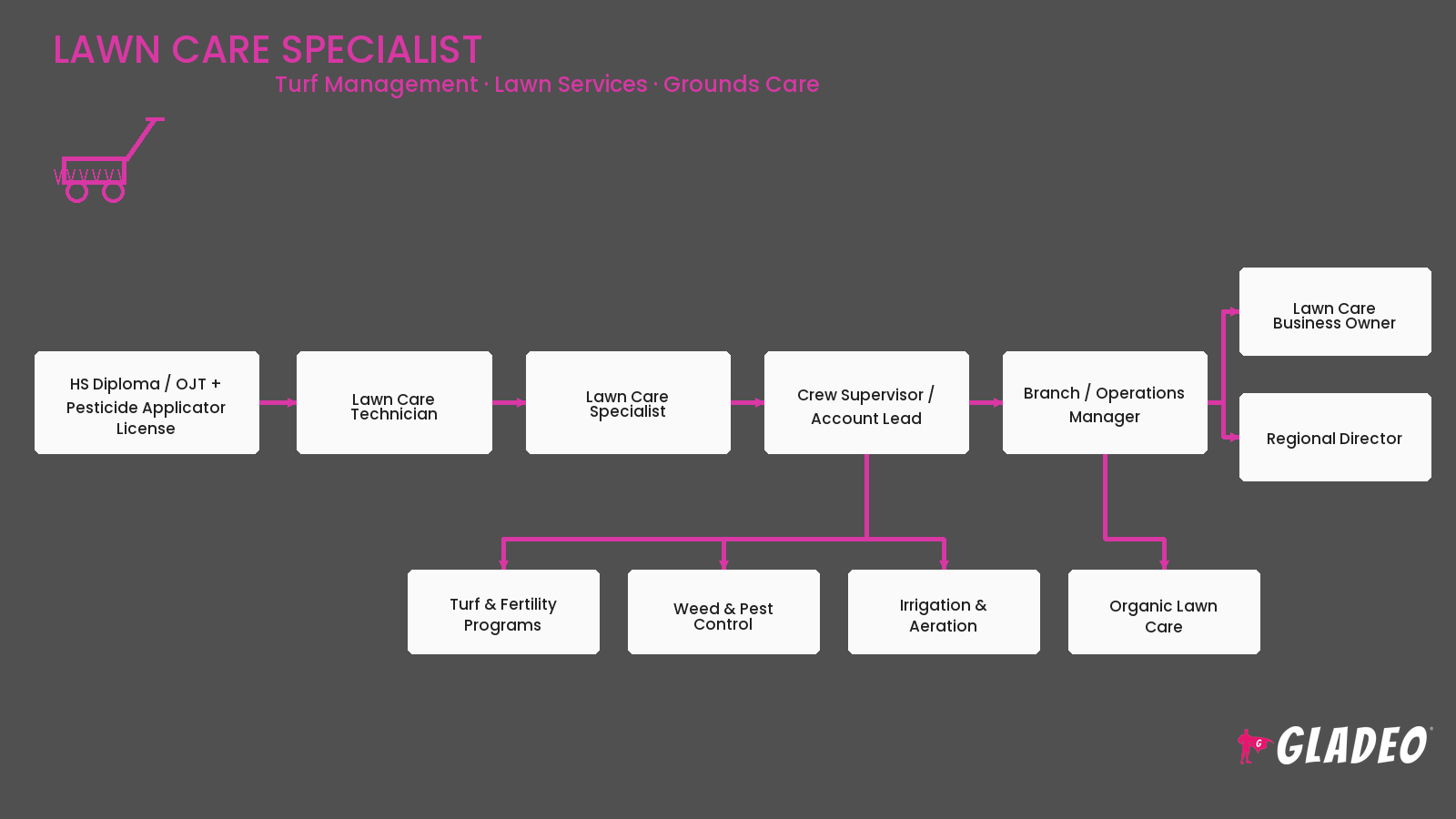
To become a Lawn Care Specialist, formal education requirements are flexible but foundational knowledge in horticulture, agriculture, or environmental science is highly valuable. Many professionals enter the field with a high school diploma combined with specialized training or certifications in lawn care and pesticide application.
Students can take courses in relevant subjects such as:
- Horticulture basics
- Soil science and management
- Plant biology
- Integrated pest management
- Environmental science
- Equipment operation and safety
- Business and customer service skills
- Sustainable landscaping practices
- Agronomy
- Chemistry related to fertilizers and pesticides
Hands-on experience through internships, apprenticeships, or entry-level positions is crucial for building expertise. Developing a strong portfolio of successful lawn care projects and obtaining certifications for chemical applications can improve job prospects and advancement opportunities.
- Take biology and environmental science classes to understand plant and soil health.
- Join agriculture or horticulture clubs to gain practical experience.
- Participate in community gardening projects or landscaping volunteer work.
- Attend workshops or seminars on lawn care and sustainable practices.
- Seek summer jobs or internships with landscaping companies.
- Develop basic mechanical skills by learning how to maintain and repair equipment.
- Improve communication skills through customer service opportunities.
- Learn about safety practices related to chemicals and machinery.
- Explore business courses if interested in starting a lawn care service.
- Research local certification options for pesticide and fertilizer application.
- Choose programs offering hands-on training in lawn care and landscaping.
- Look for courses covering both plant science and equipment operation.
- Ensure pesticide and fertilizer safety certification is available.
- Select programs with internship or apprenticeship opportunities.
- Consider schools with strong ties to local landscaping businesses.
- Verify instructors have real-world experience in lawn care.
- Choose programs emphasizing sustainable and organic practices.
- Look for small class sizes for personalized instruction.
- Check that the curriculum includes customer service and business skills.
- Prefer programs with updated equipment and technology resources.
- Seek out continuing education options for industry updates.
- Find schools offering career placement assistance.
- Apply for entry-level positions such as groundskeeper or lawn maintenance assistant.
- Volunteer for local parks or community gardens to gain experience.
- Build a simple portfolio showing before-and-after photos of lawn projects.
- Obtain pesticide application certification if possible.
- Network with local landscaping professionals and attend industry events.
- Develop strong communication and reliability to build client trust.
- Practice equipment operation and maintenance safely.
- Learn to identify common lawn diseases and pests.
- Offer seasonal services like leaf removal or snow clearing to increase work variety.
- Ask for feedback to improve skills and service quality.
- Use social media or local ads to promote your lawn care services.
- Keep detailed records of treatments and customer preferences.
- Gain certifications in pesticide application and turf management.
- Expand skills to include landscaping design and irrigation systems.
- Build relationships with clients and ask for referrals.
- Stay updated on new lawn care technologies and sustainable methods.
- Consider specializing in organic or sports turf care for niche markets.
- Develop business skills to start your own lawn care company.
- Pursue advanced training in horticulture or agronomy.
- Take leadership roles in larger landscaping projects or teams.
Websites:
- Professional Landcare Network (landscapeprofessionals.org)
- National Association of Landscape Professionals (landscapeprofessionals.org)
- Turfgrass Producers International (turfgrasssod.org)
- American Society of Agronomy (agronomy.org)
- Pesticide Environmental Stewardship (pesticidestewardship.org)
- Green Industry Pros (greenindustrypros.com)
- Lawn Care Nut (lawncarenut.com)
- University Cooperative Extension Services (varies by state)
- International Society of Arboriculture (isa-arbor.com)
- National Gardening Association (garden.org)
- Davey Tree Expert Company (davey.com)
- Environmental Protection Agency – Lawn Care (epa.gov/landscaping)
- Society of American Florists (safnow.org)
- Landscape Institute (landscapeinstitute.org)
Books:
- The Lawn Bible by David R. Mellor
- Lawn Care For Dummies by Lance Walheim and The Lawn Care Nut
- Turfgrass Management by A.J. Turgeon
- The Organic Lawn Care Manual by Paul Tukey
- Pest Management for Turfgrass by James K. Clark
If you enjoy working outdoors and caring for plants but want to explore other paths, several related careers can use your skills and interests.
- Landscaper
- Gardener
- Arborist (Tree Care Specialist)
- Park Ranger
- Agricultural Technician
- Horticulturist
- Irrigation Technician
- Golf Course Superintendent
- Environmental Technician
- Nursery Worker
Newsfeed

Featured Jobs
Online Courses and Tools