






Spotlights
Supply Chain Analyst, Operations Manager, Inventory Manager, Distribution Coordinator, Transportation Planner, Procurement Specialist, Warehouse Manager, Freight Coordinator, Supply Chain Planner, Logistics Coordinator, Demand Planner, Shipping Manager
Imagine a world where every product you order online or every item on a store shelf arrives exactly when you expect it, without delay or confusion. Logisticians are the masterminds behind this seamless flow of goods, ensuring that everything moves efficiently from factories to customers, impacting millions of lives by keeping economies running smoothly.
Logisticians analyze and coordinate the entire supply chain, overseeing how products are acquired, stored, transported, and delivered. They work closely with suppliers, warehouse teams, transportation companies, and sales departments to develop strategies that reduce costs and improve delivery times. Each day involves reviewing data, planning routes, managing inventory levels, and solving unexpected problems to keep operations on track.
Using advanced software, data analytics, and forecasting tools, logisticians optimize supply chains to respond to changing demands and disruptions. Their expertise ensures products arrive safely and on schedule, saving companies money and enhancing customer satisfaction. Without logisticians, the complex web of global trade and local deliveries would fall apart.
- Seeing complex supply chains run smoothly and knowing you helped make that happen
- Solving challenging problems that improve efficiency and reduce waste
- Helping businesses save money while delivering better service to customers
- Working in a dynamic environment where no two days are exactly the same
Working Schedule
Logisticians typically work full-time during regular business hours, though some roles require overtime or weekend shifts, especially during busy shipping seasons or when urgent issues arise. Many logisticians work in office environments, while others may visit warehouses, factories, or shipping hubs. This career can involve both teamwork and independent problem-solving, with occasional travel to supplier or distribution sites.
Typical Duties
- Analyzing supply chain data to identify inefficiencies and opportunities
- Coordinating transportation, warehousing, and inventory management
- Developing plans to improve delivery speed and reduce costs
- Communicating with suppliers, vendors, and customers to ensure smooth operations
- Monitoring shipments to prevent delays or losses
- Managing budgets related to logistics activities
- Forecasting demand to guide purchasing and inventory decisions
- Implementing software systems to track goods and resources
- Resolving problems such as transportation delays or inventory shortages
- Preparing reports and presentations on supply chain performance
- Ensuring compliance with laws and regulations related to transportation and storage
- Collaborating with sales and production teams to align logistics with business goals
Additional Responsibilities
- Training staff on logistics procedures and software tools
- Conducting risk assessments for supply chain vulnerabilities
- Negotiating contracts with transportation and warehouse providers
- Staying updated on industry trends and technologies
- Managing supplier relationships for better service and pricing
- Developing contingency plans for supply chain disruptions
- Participating in sustainability initiatives to reduce environmental impact
- Supporting customer service teams by addressing delivery issues
A logistician might start their day reviewing shipment schedules and inventory reports to spot any potential issues before the business day begins. They check emails and messages from suppliers or transport partners to confirm arrivals and departures.
Midday often involves meetings with warehouse managers, transportation providers, and sales teams to coordinate upcoming orders and resolve any problems that have arisen. They use specialized software to update tracking systems and adjust plans based on new information.
In the afternoon and evening, logisticians analyze performance data to identify trends and plan improvements. They might negotiate contracts, prepare reports for management, and plan for upcoming busy seasons, always aiming to keep the supply chain running smoothly and cost-effectively.
Soft Skills
- Problem-solving mindset
- Strong communication skills
- Attention to detail
- Organizational skills
- Adaptability and flexibility
- Collaboration and teamwork
- Critical thinking
- Time management
- Decision-making under pressure
- Customer service orientation
- Negotiation skills
- Analytical thinking
Technical Skills
- Data analysis and interpretation
- Supply chain management software (like SAP, Oracle)
- Inventory control systems
- Transportation management systems
- Forecasting and demand planning tools
- Microsoft Excel and database management
- Project management software
- Knowledge of shipping regulations
- Risk management techniques
- Process improvement methodologies
- Inbound Logistician: Focuses on managing the receipt and storage of raw materials and products coming into a company.
- Outbound Logistician: Oversees the distribution and delivery of finished goods to customers or retail locations.
- Transportation Logistician: Specializes in planning and coordinating the movement of goods via various transportation modes.
- Warehouse Logistician: Manages inventory storage, warehouse operations, and order fulfillment processes.
- Procurement Logistician: Coordinates purchasing and supplier relationships to secure materials needed for production.
- Reverse Logistician: Handles returns, recycling, and disposal of products and materials.
- Global Logistician: Manages international supply chains, dealing with customs, tariffs, and global transportation challenges.
- IT Logistician: Focuses on the development and maintenance of logistics software and tracking systems.
- Manufacturing companies
- Retail chains and e-commerce businesses
- Transportation and shipping firms
- Warehousing and distribution centers
- Government agencies
- Healthcare organizations
- Consulting firms
- Food and beverage companies
- Automotive industry
- Technology companies
- Pharmaceutical companies
- Third-party logistics providers
Logisticians often face high-pressure situations, especially when unexpected delays or disruptions occur. They must quickly analyze problems and implement solutions to avoid costly setbacks.
Work hours can be standard 40-hour weeks, but during peak seasons or emergencies, overtime and weekend work may be necessary. Being flexible and available is important to maintain smooth operations.
The role demands strong attention to detail and the ability to juggle many variables at once. Logisticians must be comfortable with continuous learning due to evolving technologies and global supply challenges.
- Increasing use of artificial intelligence and machine learning for predictive analytics
- Growth of e-commerce driving faster delivery expectations
- Greater focus on sustainability and reducing carbon footprints
- Adoption of automation and robotics in warehouses
- Integration of Internet of Things (IoT) devices for real-time tracking
- Use of blockchain technology for supply chain transparency
- Expansion of global supply chains with complex regulations
- Rise in demand for last-mile delivery optimization
- Shift toward data-driven decision-making
- Emphasis on risk management due to climate change and geopolitical factors
Many logisticians enjoyed activities that involved organizing or planning, such as managing school events, sports teams, or group projects. They often liked puzzles, strategy games, or building things that required step-by-step coordination.
Early interest in technology, problem-solving, and working with data can also point toward a career in logistics. Kids who are curious about how things move from place to place or enjoy making systems work more efficiently may find this career exciting.
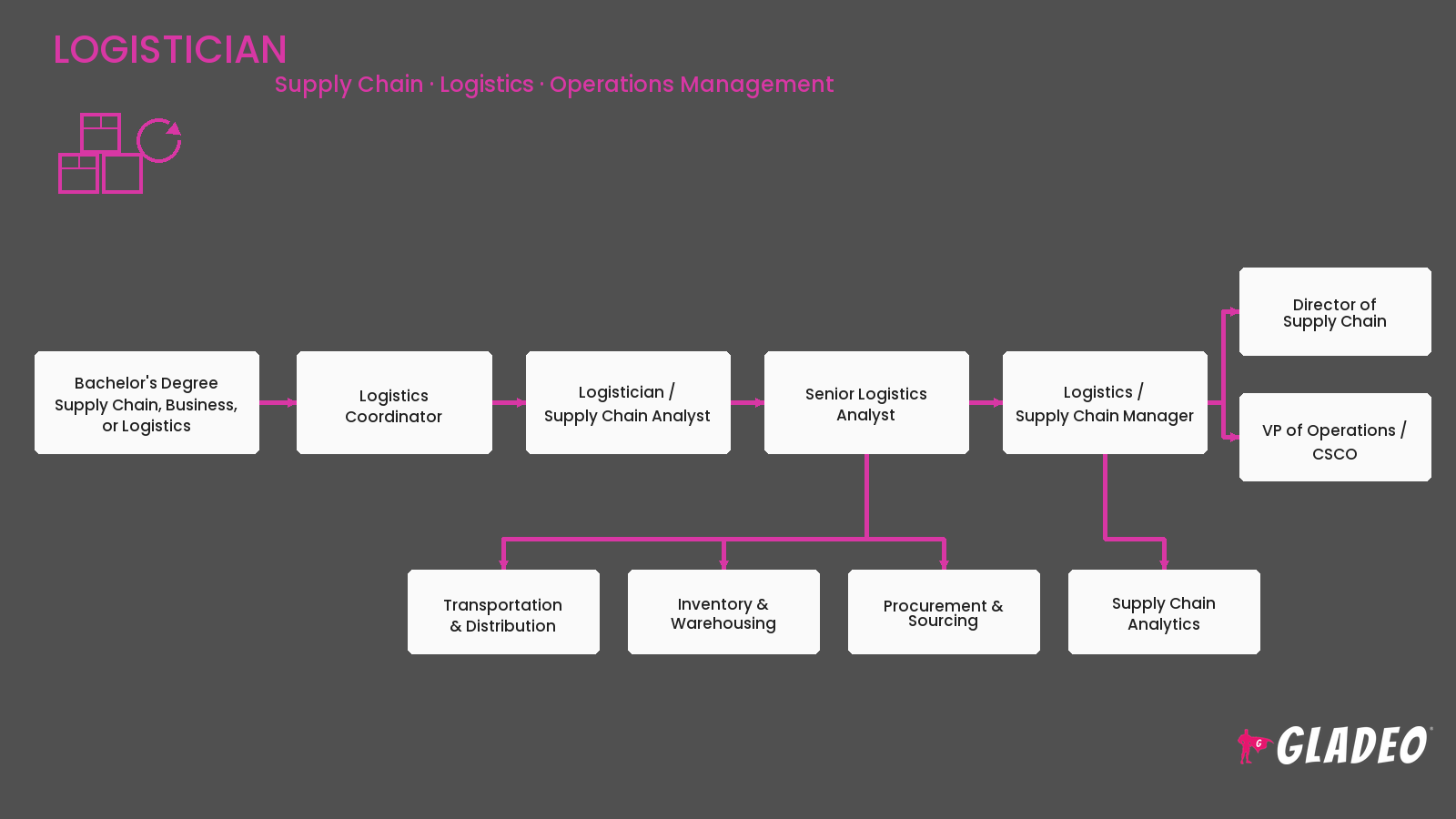
Becoming a logistician typically involves earning a bachelor's degree in logistics, supply chain management, business, or a related field. Some positions may accept associate degrees combined with experience, while advanced roles often require certifications or master's degrees.
Students can take courses in relevant subjects such as:
- Supply Chain Management
- Operations Management
- Business Statistics
- Transportation Systems
- Inventory Control
- Data Analysis and Visualization
- Project Management
- Economics
- Information Technology for Logistics
- Business Communication
Hands-on experience through internships or co-op programs is crucial for developing real-world skills. Building a strong portfolio of projects and gaining familiarity with logistics software strengthens your job prospects. Many logisticians continue learning on the job and pursue professional certifications to advance their careers.
- Take classes in math, economics, business, and computer science to build a strong foundation.
- Join clubs or teams that involve planning and organization, like student government or debate.
- Look for internships or volunteer opportunities in warehouses, shipping companies, or retail stores.
- Develop skills in Excel and learn basic data analysis tools.
- Explore online courses about supply chains and logistics.
- Attend career fairs to talk with professionals in the field.
- Consider summer programs focused on business or technology.
- Practice problem-solving and critical thinking through puzzles or strategy games.
- Build communication and teamwork skills through group projects.
- Research colleges with strong supply chain or logistics programs.
- Visit logistics companies or distribution centers to see the work firsthand.
- Network with alumni or professionals through school programs.
- Choose programs accredited by recognized supply chain or business organizations.
- Look for schools offering internships or co-op placements with logistics companies.
- Consider programs that teach current logistics software and technology tools.
- Check if the curriculum includes hands-on projects and case studies.
- Prefer schools with strong industry connections and career placement support.
- Look for classes on global logistics and transportation regulations.
- Ensure the program covers sustainability and ethical supply chain management.
- Find out about faculty experience and industry involvement.
- Seek programs that encourage teamwork and communication skills.
- Consider opportunities for certifications like APICS or CSCMP.
- Evaluate class sizes for personalized instruction.
- Explore dual-degree options combining business and technology.
- Apply for internships or entry-level roles such as logistics assistant or inventory clerk.
- Build a portfolio showcasing any logistics-related projects or coursework.
- Create a professional resume highlighting organizational and analytical skills.
- Network with professionals through LinkedIn and industry events.
- Prepare for interviews by practicing scenarios related to problem-solving and logistics.
- Learn to use common logistics software platforms.
- Volunteer for projects that allow you to demonstrate your ability to coordinate and communicate effectively.
- Seek mentors who can provide guidance and advice.
- Stay current with industry trends and news.
- Attend workshops or certification courses to boost your credentials.
- Be proactive in asking for feedback and taking on new challenges.
- Develop a reputation for reliability and efficiency.
- • Master core logistics functions such as inventory management and transportation planning.
- • Earn professional certifications like Certified Supply Chain Professional (CSCP) or Certified Logistics Professional (CLP).
- • Build strong relationships with suppliers, customers, and internal teams.
- • Take leadership roles on projects or within your organization.
- • Stay updated on emerging technologies and industry best practices.
- • Pursue advanced degrees or specialized training in supply chain management.
- • Seek opportunities to manage larger or more complex supply chains.
- • Develop skills in data analytics and strategic planning.
Websites:
- Council of Supply Chain Management Professionals (cscmp.org)
- American Society of Transportation and Logistics (astl.org)
- Institute for Supply Management (ismworld.org)
- APICS - Association for Supply Chain Management (ascm.org)
- Logistics Management (logisticsmgmt.com)
- Inbound Logistics (inboundlogistics.com)
- Supply Chain Dive (supplychaindive.com)
- Transport Topics (ttnews.com)
- International Warehouse Logistics Association (iwla.com)
- Manufacturing.net (manufacturing.net)
- Global Logistics Media (globallogisticsmedia.com)
- FreightWaves (freightwaves.com)
- Supply Chain Brain (supplychainbrain.com)
- Logistics Viewpoints (logisticsviewpoints.com)
Books:
- The Logistics and Supply Chain Toolkit by Gwynne Richards
- Supply Chain Management: Strategy, Planning, and Operation by Sunil Chopra
- The Goal: A Process of Ongoing Improvement by Eliyahu M. Goldratt
- Logistics & Supply Chain Management by Martin Christopher
- Lean Thinking by James P. Womack and Daniel T. Jones
If you love solving problems and organizing complex systems but want to explore other career paths, there are plenty of options that use similar skills in different ways.
- Operations Manager
- Procurement Specialist
- Inventory Analyst
- Transportation Planner
- Warehouse Manager
- Data Analyst
- Project Manager
- Business Analyst
- Manufacturing Technician
- Customer Service Manager
Newsfeed

Featured Jobs
Online Courses and Tools