






Spotlights
Marine Ecologist, Marine Scientist, Marine Conservationist, Marine Zoologist, Aquatic Biologist, Marine Environmental Scientist, Oceanographer, Marine Fisheries Biologist, Marine Microbiologist, Marine Botanist, Marine Mammalogist
Coral reefs, kelp forests, and open-ocean ecosystems hold secrets about climate, food webs, and the future of our planet—and Marine Biologists are the scientists who study them! From tide pools to research vessels, they investigate life in saltwater environments and how human activity affects it.
Marine Biologists observe, sample, and analyze marine organisms and their habitats. They design field surveys and lab experiments, collect water and tissue samples, identify species, track populations, and interpret data on topics such as fisheries, pollution, ocean acidification, and habitat restoration. They may work for universities, government agencies, aquariums, nonprofits, or environmental consulting firms—often splitting time between the field, the laboratory, and the office.
They use microscopes, genetic sequencing tools, GIS mapping software, SCUBA or ROV equipment, and statistical programs to turn observations into evidence. Whether monitoring sea turtle nesting beaches or publishing research on plankton communities, Marine Biologists combine scientific rigor with a passion for ocean conservation and discovery.
- Contributing to conservation and sustainable use of ocean resources
- Fieldwork in coastal and offshore environments—often unforgettable experiences
- Intellectual challenge across biology, chemistry, statistics, and policy
- Opportunities to educate the public and influence environmental decisions
Working Schedule
Schedules vary widely by employer and project. Research scientists may work standard weekday hours in labs and offices, but field seasons bring early starts, long days on boats, and multi-week expeditions. Academics balance teaching semesters with summer fieldwork. Government and nonprofit roles may include travel to monitoring sites, public meetings, and emergency response during spills or stranding events.
Typical Duties
- Design research studies and write proposals for funding agencies
- Collect biological samples in intertidal zones, estuaries, or open water
- Identify and catalog marine species using keys, microscopy, and DNA methods
- Conduct lab analyses of water quality, tissues, and plankton samples
- Operate and maintain field equipment—nets, sensors, boats, and dive gear
- Record and manage data in spreadsheets, databases, and statistical software
- Analyze population trends, habitat use, and environmental stressors
- Prepare technical reports, peer-reviewed papers, and agency briefing documents
- Present findings at conferences, public hearings, and school outreach events
- Collaborate with fisheries managers, policymakers, and conservation partners
- Ensure compliance with research permits and animal care protocols
- Train interns, students, or volunteers on field and lab procedures
Additional Responsibilities
- Write grant applications and manage project budgets
- Develop educational exhibits or public programs at aquariums and centers
- Respond to marine mammal or fish kill stranding investigations
- Review environmental impact documents for development projects
- Maintain SCUBA certifications and small-boat operator credentials
- Curate specimen collections and museum archives
- Participate in interdisciplinary climate and oceanographic research teams
A field day might begin before dawn at a marina—loading gear, checking weather, and briefing the crew on trawl or transect plans. Hours on the water involve hauling nets, tagging fish, or photographing reef health before returning to shore to preserve samples.
Lab days center on processing yesterday's collections—sorting organisms under microscopes, extracting DNA, running nutrient analyses, and entering data. Afternoons may include team meetings to review preliminary results and adjust the next field schedule.
Office days mean writing manuscripts, analyzing datasets in R or Python, responding to collaborator emails, and preparing slides for a stakeholder meeting on fishery stock status. The week ends with ordering supplies for the next expedition and reviewing student intern protocols.
Soft Skills
- Curiosity and persistence through long research timelines
- Attention to detail in sampling, labeling, and data entry
- Teamwork on boats and in shared lab spaces
- Communication of science to technical and public audiences
- Adaptability when weather or equipment changes field plans
- Ethical judgment around wildlife permits and humane handling
- Patience during repetitive lab and statistical work
- Problem-solving when gear fails far from shore
- Project management for grants and multi-year studies
- Passion for conservation without losing scientific objectivity
Technical Skills
- Marine taxonomy and species identification
- Experimental design and statistical analysis (R, SPSS, or similar)
- Water sampling and oceanographic sensor operation
- Microscopy, dissection, and histology basics
- GIS and GPS mapping for habitat and tracking data
- SCUBA diving and small-boat handling where required
- PCR and molecular biology techniques for population genetics
- Scientific writing and literature review methods
- Database management and reproducible research practices
- Permitting and compliance documentation for field research
- Fisheries Biologists: Study fish stocks, harvest impacts, and management policies
- Marine Ecologists: Focus on food webs, habitats, and ecosystem interactions
- Conservation Biologists: Protect endangered species and restore marine habitats
- Aquaculture Scientists: Improve sustainable fish and shellfish farming
- Marine Mammal Specialists: Research whales, dolphins, seals, and manatees
- Coral Reef Scientists: Monitor reef health, bleaching, and restoration projects
- Environmental Consultants: Assess project impacts for regulatory compliance
- Universities and marine laboratories (Scripps, Woods Hole, etc.)
- National Oceanic and Atmospheric Administration (NOAA) and state fish agencies
- Environmental consulting and natural resource firms
- Aquariums, zoos, and ocean education centers
- Nonprofit conservation groups (Ocean Conservancy, WWF, local land trusts)
- National and state parks with coastal or marine units
- International research institutes and expedition programs
- Fisheries councils and regional management organizations
- Biotechnology and aquaculture companies
- Military and port authority environmental divisions
Fieldwork can be physically demanding—lifting heavy gear, working on unstable boats, diving in cold water, and tolerating seasickness. Long hours during field seasons are common.
Advanced research roles usually require a master's or Ph.D., and academic positions are competitive. Funding cycles and grant deadlines create pressure; early-career pay in research labs may be modest compared to private-sector science jobs.
Despite the challenges, many Marine Biologists feel deep purpose studying systems that matter to global food security, biodiversity, and climate resilience—and sharing that knowledge with the next generation.
- Ocean acidification and climate impact research funding growth
- Environmental DNA (eDNA) for non-invasive species monitoring
- Marine protected area expansion and restoration science
- Blue economy jobs in offshore wind and aquaculture
- Remote sensing and drone surveys of coastal habitats
- Interdisciplinary collaboration with oceanographers and data scientists
- Increased public engagement through citizen science programs
- CRISPR and genomics applications in fisheries and conservation
- Policy focus on plastic pollution and microplastics research
Many Marine Biologists spent childhood summers at the beach, aquariums, or fishing with family—collecting shells, watching documentaries, and asking endless questions about sharks, dolphins, and tide pool creatures.
They often loved biology class, science fairs, snorkeling, kayaking, or volunteering at beach cleanups. A mix of outdoor adventure and lab curiosity pulled them toward ocean science rather than strictly terrestrial biology.
Marine Biologists typically need at least a bachelor's degree in marine biology, biology, zoology, or environmental science. Research, government, and university roles often require a master's or Ph.D. Field experience through internships, REU programs, and volunteer monitoring builds the resume employers expect alongside formal coursework in statistics, chemistry, and ecology.
Students can take courses in relevant subjects such as:
- General biology and marine biology
- Ecology and oceanography
- Chemistry and biochemistry
- Statistics and data analysis
- Geographic information systems (GIS)
- Physics and calculus for science majors
- Environmental policy and resource management
- Scientific writing and research methods
- Microbiology and genetics
Internships at marine labs, aquariums, or NOAA programs are critical. Employers expect evidence of field and lab experience—sample collection, data management, and at least introductory statistical analysis—before hiring into technician or junior biologist roles.
ON-THE-JOB TRAINING
Entry-level research assistants and technicians learn standard operating procedures, safety protocols, and institution-specific methods on the job. Training includes boat operations, gear maintenance, database entry, and species ID mentorship from senior biologists over months to a year.
OPTIONAL CERTIFICATIONS
- SCUBA certification (Advanced Open Water and Rescue Diver for many roles)
- American Red Cross First Aid/CPR and wilderness first aid
- Small Vessel Operator or safe boating credentials where required
- AAUS Scientific Diver certification for academic diving programs
- GIS Professional (GISP) or vendor GIS certificates for mapping-heavy roles
- Take biology, chemistry, math, and environmental science courses
- Join oceanography clubs, science olympiad, or Envirothon teams
- Volunteer at aquariums, nature centers, or beach monitoring programs
- Apply to REU (Research Experience for Undergraduates) marine programs
- Learn R or Python for basic data analysis and plotting
- Earn SCUBA certification if affordable and age-appropriate
- Participate in local watershed or estuary citizen science projects
- Job-shadow scientists at university marine labs during summers
- Enter science fairs with ecology or water-quality projects
- Read peer-reviewed summaries and practice scientific writing early
- Research colleges with marine field stations and study-abroad options
- Build a resume listing specific field and lab techniques mastered
- Choose programs with direct access to coasts, boats, and field stations
- Look for faculty actively publishing and funding student research
- Confirm statistics and GIS are required—not optional—courses
- Seek paid internships and REU placement support from the department
- Compare marine biology vs. general biology flexibility for Plan B careers
- Ask about scuba, small-boat, and safety training resources on campus
- Prefer departments connected to NOAA, Sea Grant, or aquarium partners
- Review graduation outcomes for alumni in government, consulting, and academia
- Ensure lab courses include molecular and field methods—not lectures only
- •nvestigate study-abore or semester-at-sea opportunities if interested
- Apply to NOAA, state fish and wildlife, and park service seasonal positions
- Search USAJobs, Texas A&M Sea Grant jobs board, and conservation job boards
- Target titles: Biological Technician, Fisheries Observer, Research Assistant
- Highlight field courses, boat experience, and statistical software on applications
- Network at Society for Marine Mammalogy or American Fisheries Society meetings
- Accept temporary or seasonal work to build species ID and gear experience
- Prepare writing samples—lab reports or lit reviews—for research employers
- Contact PIs directly about technician openings on funded grants
- Consider aquaculture or environmental consulting labs for entry pathways
- Relocate to coastal states with strong marine science employment clusters
- Publish peer-reviewed research and present at national conferences
- Pursue a master's or Ph.D. for lead scientist and PI eligibility
- Specialize in high-demand areas—fisheries stock assessment, GIS, or genetics
- Move from technician to biologist grades in federal service via competitive hiring
- Transition into program management at nonprofits or agency division leadership
- Combine science with policy fellowships or extension outreach careers
Websites:
- NOAA Fisheries and National Marine Sanctuaries
- Woods Hole Oceanographic Institution career resources
- Society for Marine Mammalogy
- American Fisheries Society
- MarineBio Conservation Society
- Sea Grant marine careers network
- Conservation Job Board and Earthworks-jobs
- Marine Technology Society
- USA Jobs (federal biological science listings)
- Research Experience for Undergraduates (REU) programs — NSF
Books:
- Marine Biology: Function, Biodiversity, Ecology by Jeffrey Levinton
- The Ocean of Life by Callum Roberts
- Silent Spring by Rachel Carson
- The Soul of an Octopus by Sy Montgomery
- Statistics for Biology and Health by Dalgaard (R-focused intro)
Related careers that use overlapping skills include:
- Environmental Scientist
- Wildlife Biologist
- Aquaculturist
- Science Teacher
- Environmental Consultant
- Park Ranger or Interpretive Specialist
- Laboratory Technician
- GIS Analyst
- Science Writer or Communicator
- Aquarium Curator or Educator
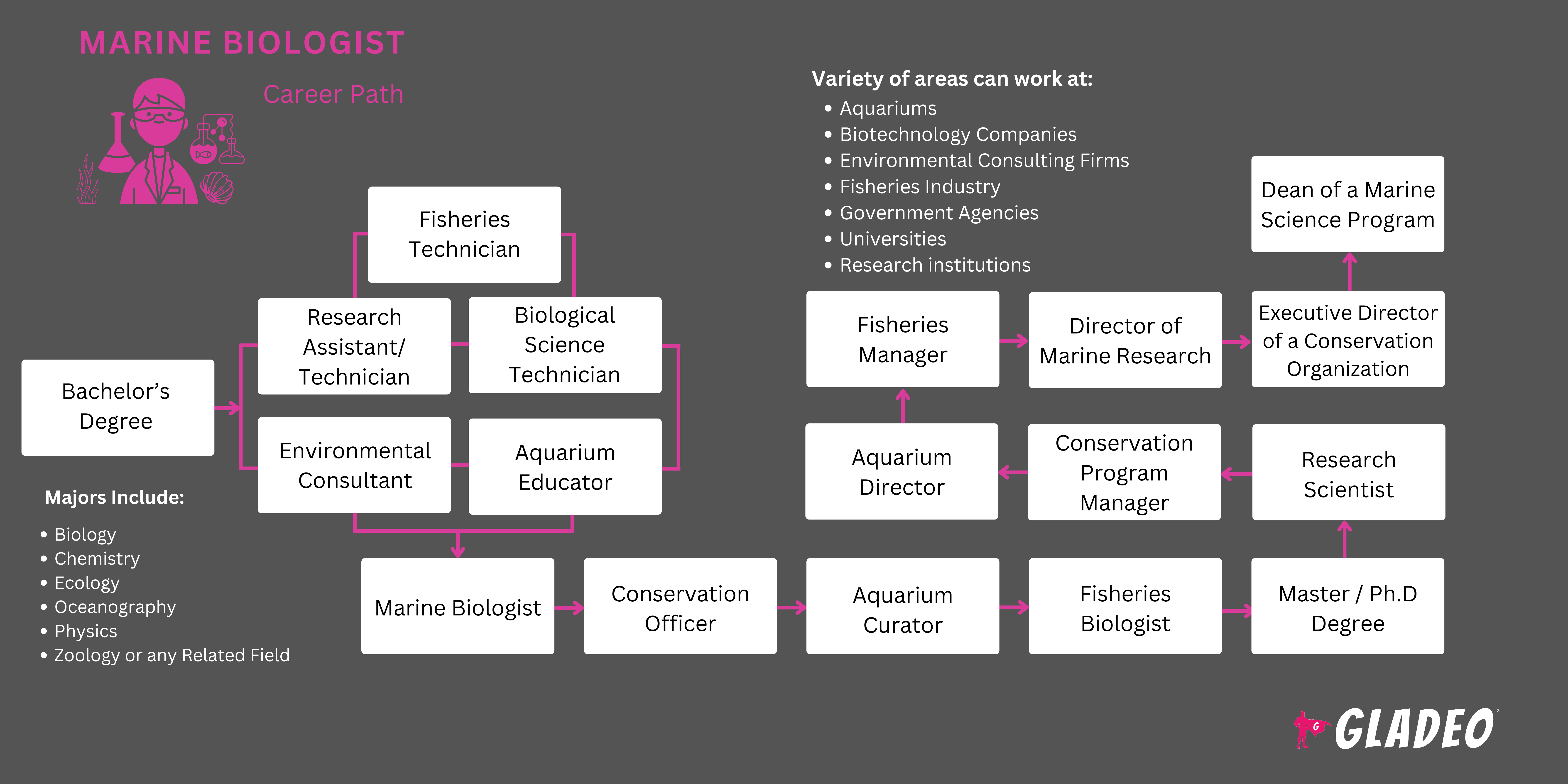
Click here to download the infographic
Newsfeed

Featured Jobs
Online Courses and Tools
Annual Salary Expectations
New workers start around $65K. Median pay is $84K per year. Highly experienced workers can earn around $114K.