







Spotlights
Development Director, Development Associate, Fundraiser, Fundraising Manager, Grant Writer, Major Gifts Officer, Annual Fund Manager, Donor Relations Manager, Director of Philanthropy, Advancement Officer, Special Events Coordinator, Planned Giving Officer
Every meal served at a food bank, every kid who gets a free tutor, every rescued animal that finds a home, and every community garden that blooms in a vacant lot has something in common: someone had to raise the money to make it happen. Non-profit development professionals are the people who turn community support into real-world impact. They are storytellers, relationship-builders, and strategists who make sure great missions have the resources to do great work, and they get to see exactly where every dollar goes.
Non-Profit Development professionals, also called fundraisers, lead the effort to bring in the gifts, grants, and partnerships that keep a non-profit running. On any given week they might meet with a longtime donor over coffee, write a grant proposal to a foundation, plan a gala or a 5K fun run, send a thank-you call to a first-time giver, or analyze data to figure out who might be ready to give again. They work side by side with executive directors, program staff, board members, volunteers, marketing teams, and finance staff, translating the organization's work into stories that inspire people to care and give.
Using donor databases known as CRMs, grant research tools, email platforms, social media, online giving sites, and plenty of old-fashioned handwritten notes, development professionals track relationships and measure results. Their work matters because even the most passionate non-profit cannot pay for supplies, staff, or services on good intentions alone. A strong development team builds trust, keeps donors connected to the mission, and creates the steady funding that lets a community organization plan for the future instead of just surviving month to month.
- Knowing that the money you raise directly changes lives, from scholarships and shelters to clean water and medical care
- Building genuine, long-term relationships with generous, interesting people from all walks of life
- Watching a carefully crafted story or grant proposal lead to a big gift that makes a new program possible
- Working for a mission you believe in, alongside a team that shares your values
- Having a career that blends creativity, strategy, writing, data, and people skills
Working Schedule
Most development professionals work full-time, typically around 40 hours a week, in an office, a hybrid setting, or sometimes fully remote. The schedule is mostly weekdays, but fundraising does not always follow a standard clock. Galas, auctions, volunteer days, donor receptions, and community walks happen in the evenings and on weekends, and year-end giving season, from November through December, can be intense because a large share of annual donations come in then. Grant deadlines can also create crunch periods when proposals must be perfect and on time. Many roles include some local travel to meet donors, and larger organizations may involve conferences or out-of-town donor visits. Some fundraisers work as freelance grant writers or consultants for several organizations.
Typical Duties
- Identifying and researching potential donors, foundations, corporations, and government funders
- Writing grant proposals, letters of inquiry, reports, and case statements that explain why the mission deserves support
- Meeting with major donors to build relationships and ask for significant gifts
- Planning and running annual giving campaigns by mail, email, phone, and social media
- Organizing fundraising events such as galas, auctions, walks, runs, and donor appreciation gatherings
- Entering and maintaining donor records, gifts, and contact notes in a CRM database
- Thanking donors promptly and sincerely through calls, notes, and personal visits
- Tracking fundraising goals and reporting results to the executive director and board
- Developing fundraising plans and budgets that match the organization's strategy
- Creating donor stories, newsletters, annual reports, and social media content with the communications team
- Managing online giving pages, peer-to-peer fundraising, and monthly giving programs
- Following up on pledges, matching gifts, and corporate sponsorship agreements
Additional Responsibilities
- Training and coordinating volunteers and board members who help with fundraising
- Making sure the organization follows ethical standards, donor privacy rules, and gift acceptance policies
- Preparing tax receipts and acknowledgment letters in line with legal requirements
- Managing relationships with corporate sponsors and community partners
- Researching grant deadlines and building a calendar of funding opportunities
- Evaluating which fundraising strategies are working and recommending changes
- Supporting planned giving programs that invite donors to include the organization in their wills
- Staying current on fundraising trends, technology, and best practices through training and conferences
A development professional's morning usually starts with checking email, the donor database, and the day's gift report to see what came in overnight. They might send a few personal thank-you messages to new donors, update records, and review the status of the current campaign. If a big grant is due, the first hours may be spent quietly writing and polishing, pulling program outcomes and budget numbers from colleagues, and making sure every requirement is met. A morning team meeting with program staff and the executive director often brings in fresh stories and updates to share with supporters.
Midday is often about people. A fundraiser might meet a donor for lunch to share how their gift is being used, tour a program site with a potential funder, or hop on a call with a corporate partner about sponsoring an upcoming event. They also check in with event volunteers, finalize vendor details for an upcoming fundraiser, and record notes from every conversation in the CRM so the whole team knows what has been discussed. Every interaction is a chance to deepen the relationship and show donors that they are valued partners rather than just a source of money.
Afternoons often blend strategy and creativity. The development professional may review data to decide which supporters should get a special year-end appeal, draft an email campaign, brainstorm a social media challenge, or plan next month's donor event. Before heading out, they update their pipeline of prospects, confirm tomorrow's meetings, and send a few more handwritten thank-you notes. On event nights, the day extends into the evening, with the fundraiser greeting guests, coordinating volunteers, and making sure the mission shines.
Soft Skills
- Strong written communication and storytelling
- Relationship building and active listening
- Persuasion and confident, authentic asking
- Empathy and genuine passion for the mission
- Organization and time management
- Resilience when donors say no or funding falls through
- Integrity and ethical judgment
- Creativity in designing campaigns and events
- Teamwork across programs, finance, marketing, and the board
- Public speaking and presentation skills
- Discretion when handling donor information
- Persistence and follow-through
Technical Skills
- Grant research and proposal writing
- Donor database and CRM software such as Salesforce Nonprofit Cloud, Blackbaud Raiser's Edge, Bloomerang, or DonorPerfect
- Prospect research and donor wealth screening tools
- Budgeting and basic financial analysis
- Email marketing platforms and social media fundraising tools
- Online giving, crowdfunding, and peer-to-peer fundraising platforms
- Data analysis using spreadsheets and dashboards
- Campaign planning and project management
- Event planning and logistics
- Knowledge of fundraising ethics, tax receipting rules, and charitable giving law
- Grant Writer: Researches funders and writes proposals for foundations, corporations, and government grants
- Major Gifts Officer: Builds personal relationships with donors capable of giving large gifts and asks for them
- Annual Fund Manager: Runs yearly campaigns that bring in many smaller donations through mail, email, and online giving
- Events and Special Projects Manager: Plans galas, auctions, runs, and other events that raise funds and awareness
- Donor Relations and Stewardship Specialist: Makes sure donors feel thanked, informed, and connected so they keep giving
- Prospect Researcher: Uses data and public information to find and qualify people and organizations likely to give
- Planned Giving Officer: Helps donors leave gifts through wills, trusts, and other long-term plans
- Capital Campaign Director: Leads large-scale efforts to fund building projects, endowments, or major expansions
- Social service organizations and community nonprofits
- Hospitals and healthcare foundations
- Colleges, universities, and school foundations
- Museums, theaters, and arts organizations
- Environmental and conservation groups
- Animal shelters and rescue organizations
- Youth development organizations and after-school programs
- Religious and faith-based charities
- Community foundations and philanthropic funds
- Advocacy and civil rights organizations
- International relief and global health organizations
- Government agencies and public service programs that partner with non-profits
Fundraising is a results-driven profession. Development staff often have clear financial goals, and the pressure to meet them can be real, especially at the end of the fiscal year or during a big campaign. Not every donor will say yes, not every grant will be funded, and a promising lead can fall through at the last minute. Successful fundraisers learn to treat "no" as "not yet," keep relationships warm, and learn from every outcome.
The hours can stretch beyond a typical workday. Events, donor dinners, and year-end giving seasons can bring late nights and weekend work, and the work requires a lot of juggling: deadlines, event logistics, donor calls, database updates, and writing, all at once. In smaller non-profits, one person may do the job of an entire department, which can mean wearing many hats and working with limited resources.
There is also a deep responsibility that comes with the work. Donors trust organizations with their hard-earned money, so honesty, transparency, and ethical practice are non-negotiable. Fundraisers must protect donor privacy, keep promises about how gifts are used, and never pressure people in ways that feel manipulative. Salaries at smaller non-profits can be modest compared with similar roles in business, though larger organizations, universities, and hospitals often offer competitive pay, and many people stay because the mission feeds their sense of purpose.
- Rapid growth of online giving, monthly giving programs, and mobile-friendly donation experiences
- Increasing use of AI tools to help with research, drafting, and data analysis, paired with human judgment and ethics
- Greater emphasis on donor retention and long-term relationships rather than one-time gifts
- Growth of peer-to-peer fundraising and social media campaigns, including Giving Tuesday
- More use of data analytics and predictive modeling to understand donor behavior
- Rise of donor-advised funds and growing interest in impact-focused philanthropy
- Increased focus on equity, diversity, and trust-based philanthropy among funders
- Expansion of corporate social responsibility partnerships and employee giving programs
- Hybrid and virtual fundraising events that reach supporters far beyond the local area
- Stronger demand for transparency, storytelling, and measurable outcomes in grant reports and donor updates
Many Non-Profit Development professionals were kids who organized the bake sale, led the canned food drive, or collected donations for a cause they cared about. They were often involved in student government, community service clubs, scouts, church or youth groups, or school fundraisers, and they loved rallying others around a shared goal. They tended to be great talkers and writers who could explain why something mattered, and many discovered they had a knack for getting people excited about a good idea.
In school, they enjoyed English, speech, social studies, and business-related subjects. They liked leading group projects, planning events like dances or fundraisers, and connecting with people of all ages. Many grew up watching a family member volunteer, work for a charity, or receive help from a community organization, and it left them wanting to give back in a bigger way.
Most Non-Profit Development professionals hold a bachelor's degree, often in fields such as non-profit management, communications, English, business, marketing, public administration, sociology, or political science. There is no single required path, and many people enter fundraising from other careers because the skills transfer well. Some pursue a master's degree in non-profit management, public administration, or philanthropic studies to move into leadership roles. Certificate programs in fundraising, grant writing, and non-profit leadership are offered by many universities and professional associations and are a smart way to build skills quickly.
Students can take courses in relevant subjects such as:
- Non-Profit Management and Leadership
- Fundraising and Philanthropy
- Grant Writing and Proposal Development
- Marketing and Communications
- Public Relations and Storytelling
- Business Writing and Composition
- Statistics and Data Analysis
- Accounting and Budgeting
- Event Planning and Project Management
- Ethics, Law, and Public Policy
Experience matters as much as coursework in this field. Volunteering and interning with a non-profit, helping with an event or campaign, or serving on a student fundraising committee are some of the best ways to learn. Professional credentials such as the Certified Fundraising Executive (CFRE) credential, which is awarded by CFRE International, and the Grant Professional Certified (GPC) credential, which is awarded by the Grant Professionals Certification Institute show employers that you meet recognized standards of knowledge and ethics.
- Take English, speech, journalism, and writing classes to sharpen your storytelling and persuasion
- Run for student government or lead a school club, and take charge of its fundraising
- Organize a drive, bake sale, charity walk, or online fundraiser for a cause you care about
- Volunteer regularly with a local non-profit and ask to help with events, mailings, or donor thank-yous
- Take business, marketing, economics, and statistics classes to understand budgets and data
- Learn to use spreadsheets, social media, and design tools like Canva
- Practice public speaking through debate, theater, or presentations
- Start a crowdfunding campaign for a school or community project
- Shadow or interview a development director or grant writer about their daily work
- Apply for internships in a development or fundraising department
- Join a student chapter or young professionals group related to philanthropy or non-profit careers
- Read the Chronicle of Philanthropy or similar publications to learn the language of the field
- Courses or concentrations in non-profit management, philanthropy, or fundraising
- Internship or practicum placements at real non-profit organizations
- Instructors who have worked as development directors, grant writers, or executive directors
- Hands-on grant writing projects and campaign planning assignments
- Exposure to donor database software and data tools used in the field
- Strong alumni networks in the local non-profit community
- Connections with professional groups such as the Association of Fundraising Professionals (AFP)
- Preparation for credentials like CFRE or GPC
- Coursework in ethics, nonprofit law, and financial management
- Career services that help with non-profit job placement
- Flexible scheduling, online options, or certificate pathways if you are working while studying
- Clear costs, scholarships, and financial aid, including programs aimed at public service careers
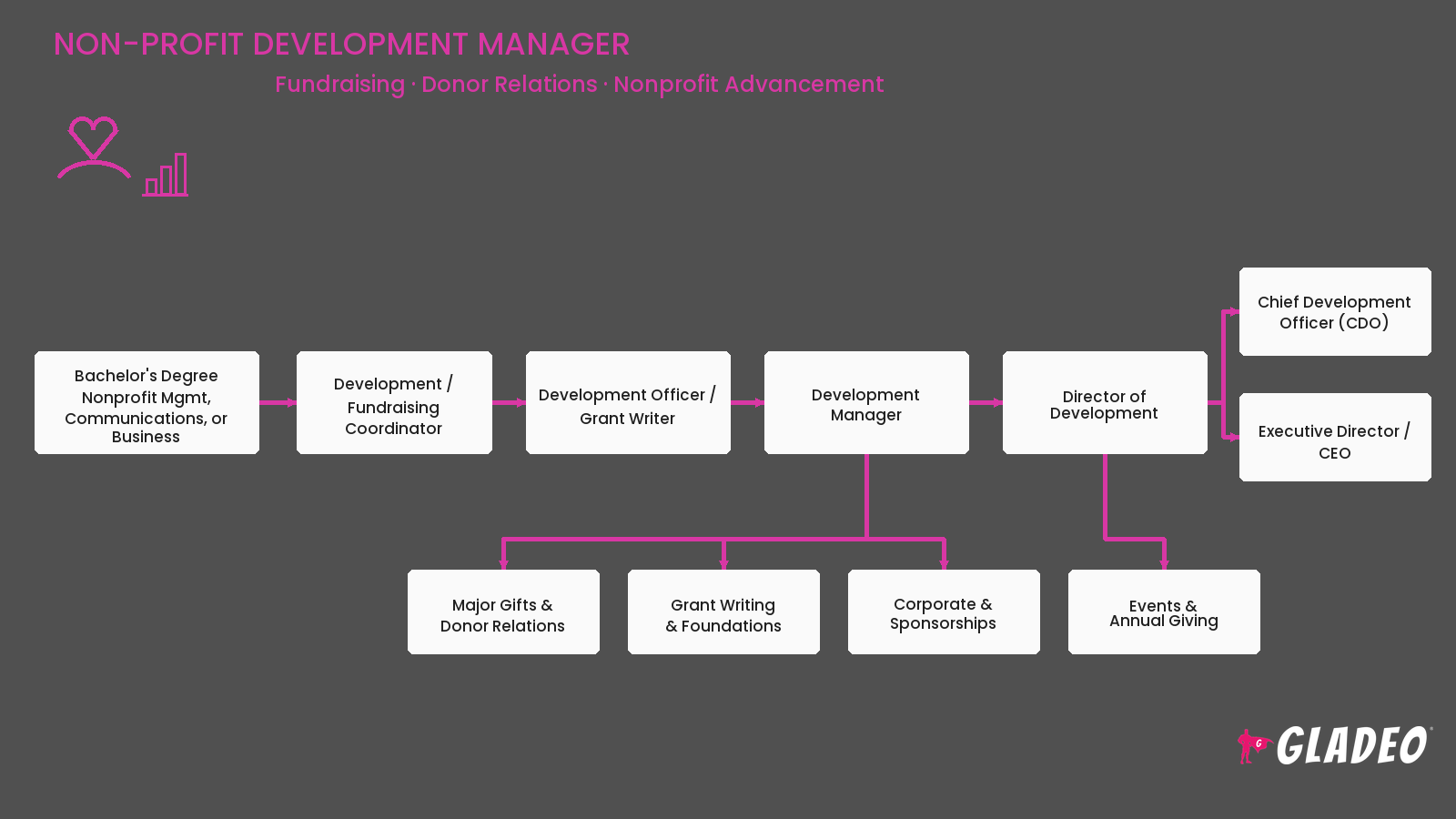
- Apply for entry-level roles such as Development Assistant, Development Coordinator, Grants Coordinator, Donor Relations Assistant, or Events Coordinator
- Search job boards like Idealist, Indeed, LinkedIn, and the Chronicle of Philanthropy job board
- Volunteer or intern with a non-profit to build experience and references before you apply
- Build a portfolio with writing samples such as a sample grant proposal, donor letter, or campaign plan
- Show results on your resume, such as dollars raised, number of participants, or events you led
- Tailor your cover letter to the organization's mission and tell a personal story about why it matters to you
- Network with local AFP chapter members and non-profit leaders through events and informational interviews
- Learn a donor database such as Salesforce, Bloomerang, or DonorPerfect through free trials and tutorials
- Practice interview questions about handling rejection, building relationships, and telling a mission story
- Consider smaller non-profits where you can touch many parts of fundraising early in your career
- Join local committees, boards, or young professional groups to meet people who hire
- Follow up after interviews with a thoughtful thank-you note, a skill every fundraiser needs
- Deliver measurable results, such as growing an annual fund or winning large grants, and track your wins
- Earn credentials like CFRE or GPC to show experience and commitment to ethics
- Move from entry-level roles into major gifts, grants manager, development manager, or director positions
- Learn the full fundraising cycle, from prospect research to campaigns to stewardship
- Build strong relationships with board members, donors, and executive leaders
- Develop leadership and management skills by supervising volunteers, interns, and staff
- Consider a master's degree in non-profit management, philanthropy, or public administration
- Move into Chief Development Officer, Vice President of Advancement, or Executive Director roles, or become an independent fundraising consultant
“It takes unwavering ambition that stems from your conviction in what you want to do with your life. Not every job is going to be exactly what or where you want it to be, but it’s about knowing that it is an important step towards where you want to be in the future. Having this understanding allows you to accept and appreciate where you are at in the present. This mindset has always kept me motivated and has allowed me to stay focused on my big picture goals, no matter what short-term obstacles I have come across.” Amanda Flores, Development Manger, Pablove Foundation
Websites:
- Association of Fundraising Professionals (AFP) - afpglobal.org
- CFRE International - cfre.org
- Grant Professionals Association (GPA) - grantprofessionals.org
- Candid - candid.org
- The Chronicle of Philanthropy - philanthropy.com
- Nonprofit Quarterly - nonprofitquarterly.org
- Giving USA - givingusa.org
- GivingTuesday - givingtuesday.org
- National Council of Nonprofits - councilofnonprofits.org
- Idealist - idealist.org
- Apra (Association of Professional Researchers for Advancement) - aprahome.org
- Council for Advancement and Support of Education (CASE) - case.org
- Grants.gov - grants.gov
- Independent Sector - independentsector.org
Books:
- Donor-Centered Fundraising by Penelope Burk
- Fundraising for Social Change by Kim Klein
- Asking: A 59-Minute Guide to Everything Board Members, Volunteers, and Staff Must Know to Secure the Gift by Jerold Panas
- Grant Writing for Dummies by Beverly A. Browning
- Fundraising Principles and Practice by Adrian Sargeant and Jen Shang
If you find that Non-Profit Development isn't the right fit, your skills in writing, relationship building, and mission-driven work can lead to many related careers.
- Non-Profit Program Manager
- Public Relations Specialist
- Marketing and Communications Manager
- Grant Administrator
- Community Outreach Coordinator
- Event Planner
- Volunteer Coordinator
- Executive Director of a Non-Profit
- Corporate Social Responsibility Manager
- Government Relations Specialist
“A nonprofit development mentor of mine always says: ‘If you’re not hearing “no”, you’re not asking enough.’ In that same vein, my quote would be, ‘If you’ve never failed, you’re not trying hard enough.’ ” Amanda Flores, Development Manager, Pablove Foundation
Newsfeed

Featured Jobs
Online Courses and Tools
Annual Salary Expectations
New workers start around $47K. Median pay is $62K per year. Highly experienced workers can earn around $85K.