






Spotlights
Nursery Technician, Horticulture Propagator, Plant Nursery Worker, Plant Cultivator, Greenhouse Propagator, Plant Breeder Assistant, Propagation Specialist, Seedling Technician, Tissue Culture Technician, Arborist Assistant, Plant Production Worker
Imagine walking through a lush greenhouse or nursery where every plant started as a tiny cutting, seed, or graft nurtured to life by a skilled Plant Propagator. These professionals quietly shape the future of gardens, farms, and landscapes by ensuring that healthy, vibrant plants can grow and thrive for people to enjoy.
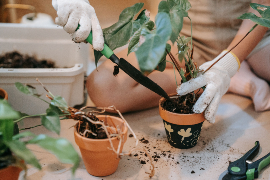
Plant Propagators spend their days working hands-on with a variety of plants, from flowers and vegetables to trees and shrubs. They carefully select plant material, prepare cuttings or seeds, and use methods like grafting or tissue culture to start new plants. They collaborate with horticulturists, nursery managers, and environmental scientists to monitor growth, prevent diseases, and ensure the plants meet quality standards before being distributed to farms, garden centers, or restoration projects.
Using tools like pruning shears, growth chambers, and specialized soil mixes, Plant Propagators apply science and patience to each step. Their expertise helps maintain plant diversity, supports sustainable agriculture, and brings beauty to communities through healthy greenery.
- Watching a tiny cutting grow into a thriving plant you helped nurture.
- Knowing your work supports food production, environmental health, and green spaces.
- Collaborating with nature and science to solve growth challenges.
- Contributing directly to sustainable farming and conservation efforts.
Working Schedule
Plant Propagators typically work full-time, often in greenhouses, nurseries, or outdoor fields. Work hours may vary with plant cycles and seasons, sometimes requiring early mornings or weekend shifts to care for plants during critical growth periods. Many Plant Propagators are employed by nurseries or agricultural businesses, though some work seasonally or as contractors. The job can involve physical labor and exposure to varying weather conditions.
Typical Duties
- Selecting healthy parent plants for propagation.
- Preparing seeds, cuttings, or grafts for planting.
- Using grafting techniques to combine plant parts.
- Maintaining optimal growing conditions (light, humidity, temperature).
- Monitoring plant health and identifying diseases or pests.
- Applying fertilizers and soil amendments appropriately.
- Recording growth data and tracking propagation success rates.
- Sterilizing tools and workspaces to prevent contamination.
- Transplanting seedlings to larger containers or fields.
- Coordinating with horticulturists and nursery staff about plant needs.
- Operating greenhouses equipment like misting systems and heating units.
- Packaging and preparing plants for transport or sale.
Additional Responsibilities
- Researching new propagation techniques and plant varieties.
- Training junior staff or interns in propagation methods.
- Ordering and managing inventory of propagation supplies.
- Ensuring compliance with agricultural regulations and safety standards.
- Maintaining detailed records for plant tracking and quality control.
- Participating in environmental sustainability initiatives.
- Assisting with pest management programs.
- Supporting breeding programs to improve plant traits.
Mornings start with inspecting propagation beds and greenhouses to check humidity, temperature, and plant conditions. The Propagator reviews growth progress and plans daily tasks based on plant needs.
Midday is hands-on: preparing cuttings, sowing seeds, grafting, or transplanting seedlings. They examine plants carefully for signs of disease or stress, applying treatments or adjusting care as needed.
Afternoons involve collaborating with horticulturists to discuss plant health and upcoming orders. They clean tools, update records, and sometimes meet with suppliers or farmers to coordinate delivery schedules.
Soft Skills
- Attention to detail
- Patience and persistence
- Problem-solving abilities
- Communication skills
- Teamwork and collaboration
- Manual dexterity
- Adaptability to changing conditions
- Time management
- Observation skills
- Reliability and responsibility
- Creativity in propagation techniques
- Commitment to environmental care
Technical Skills
- Knowledge of plant biology and growth cycles
- Proficiency in grafting and cutting techniques
- Understanding of pest and disease management
- Use of greenhouse climate control systems
- Seed stratification and treatment methods
- Record-keeping and data management
- Soil and nutrient management
- Operation of propagation tools and equipment
- Basic laboratory skills for tissue culture
- Familiarity with plant breeding concepts
- Cutting Propagator: specializes in growing new plants from stem or leaf cuttings.
- Seed Propagator: focuses on germinating and nurturing plants from seeds.
- Grafting Specialist: combines parts of two plants to create hybrids or improve growth.
- Tissue Culture Technician: uses lab techniques to grow plants from cells or tissues.
- Greenhouse Propagator: manages propagation in controlled indoor environments.
- Nursery Propagator: works in outdoor or mixed nursery settings to grow plants for sale.
- Aquatic Plant Propagator: specializes in propagating plants that grow in or near water.
- Ornamental Plant Propagator: focuses on flowers and decorative plants for landscaping.
- Commercial nurseries and plant farms
- Botanical gardens and arboretums
- Agricultural research centers
- Greenhouse operations
- Landscaping companies
- Environmental conservation groups
- University horticulture departments
- Seed production companies
- Community gardens and urban farms
- Government agricultural agencies
- Floriculture businesses
- Plant breeding and biotechnology firms
Plant Propagators often work in physically demanding environments, handling soil, water, and plants throughout the day. The job requires standing, bending, and lifting for extended periods, sometimes under hot greenhouse conditions or variable weather outdoors.
Hours may extend beyond a typical 9-to-5 schedule, especially during peak propagation seasons when plants require constant attention. Meeting deadlines for plant delivery can add pressure and require flexibility.
The job demands patience and attention to detail since propagation success depends on careful timing and technique. Propagators must be prepared for trial and error, adapting quickly when plants don’t respond as expected, and handling setbacks professionally.
- Increased use of automated climate control systems in greenhouses.
- Advances in tissue culture and micropropagation techniques.
- Growing emphasis on sustainable and organic propagation methods.
- Integration of data analytics to monitor plant growth and health.
- Development of disease-resistant plant varieties through breeding.
- Use of LED lighting to optimize plant growth cycles.
- Expansion of urban farming and vertical gardening requiring specialized propagation.
- Rising demand for native and drought-resistant plants.
- Collaboration with biotechnology for genetic improvement.
- Greater awareness of invasive species control during propagation.
Many Plant Propagators showed early interest in gardening, nature, and caring for living things. They often enjoyed growing plants from seeds, experimenting with different soils, and learning about how plants grow and change.
Curiosity about biology and the environment, combined with hands-on activities like planting flowers or vegetables, laid a foundation for their career. Early experiences in school gardens, nature clubs, or family farms encouraged their passion for plants and the outdoors.
Becoming a Plant Propagator usually requires a mix of formal education and hands-on training. Many professionals start with a high school diploma and gain specialized knowledge through vocational training, community college programs, or apprenticeships in horticulture or agriculture.
Students can take courses in relevant subjects such as:
- Botany and Plant Biology
- Horticulture Principles
- Soil Science
- Plant Pathology
- Greenhouse Management
- Plant Propagation Techniques
- Pest and Disease Management
- Agricultural Chemistry
- Environmental Science
- Agribusiness Basics
Hands-on experience is critical in this career. Internships or volunteer positions at nurseries or greenhouses can build practical skills. Many employers value a strong portfolio demonstrating successful propagation projects along with formal coursework.
- Take biology and environmental science classes to understand plant life.
- Enroll in agricultural or horticultural electives if available.
- Join gardening or agriculture clubs at school.
- Volunteer at local gardens, farms, or nurseries.
- Complete internships or summer jobs in plant nurseries.
- Develop skills in record-keeping and observation.
- Attend workshops or seminars on plant care and propagation.
- Explore community college programs in horticulture or plant sciences.
- Build a collection of plant growth experiments or projects.
- Network with professionals through school or community programs.
- Practice communication and teamwork skills.
- Stay curious about new plant varieties and technologies.
- Look for programs with hands-on greenhouse or nursery experience.
- Check if the curriculum covers both traditional and modern propagation methods.
- Choose schools offering internships or cooperative education opportunities.
- Ensure access to laboratory facilities for tissue culture training.
- Look for programs with industry partnerships or connections.
- Verify that instructors have real-world horticulture experience.
- Consider programs that teach business basics for nursery management.
- Check for certification options in plant health or pesticide application.
- Look for small class sizes for personalized instruction.
- Seek programs that emphasize sustainability and environmental stewardship.
- Find courses covering pest and disease identification and control.
- Check if programs offer training on data management and record-keeping.
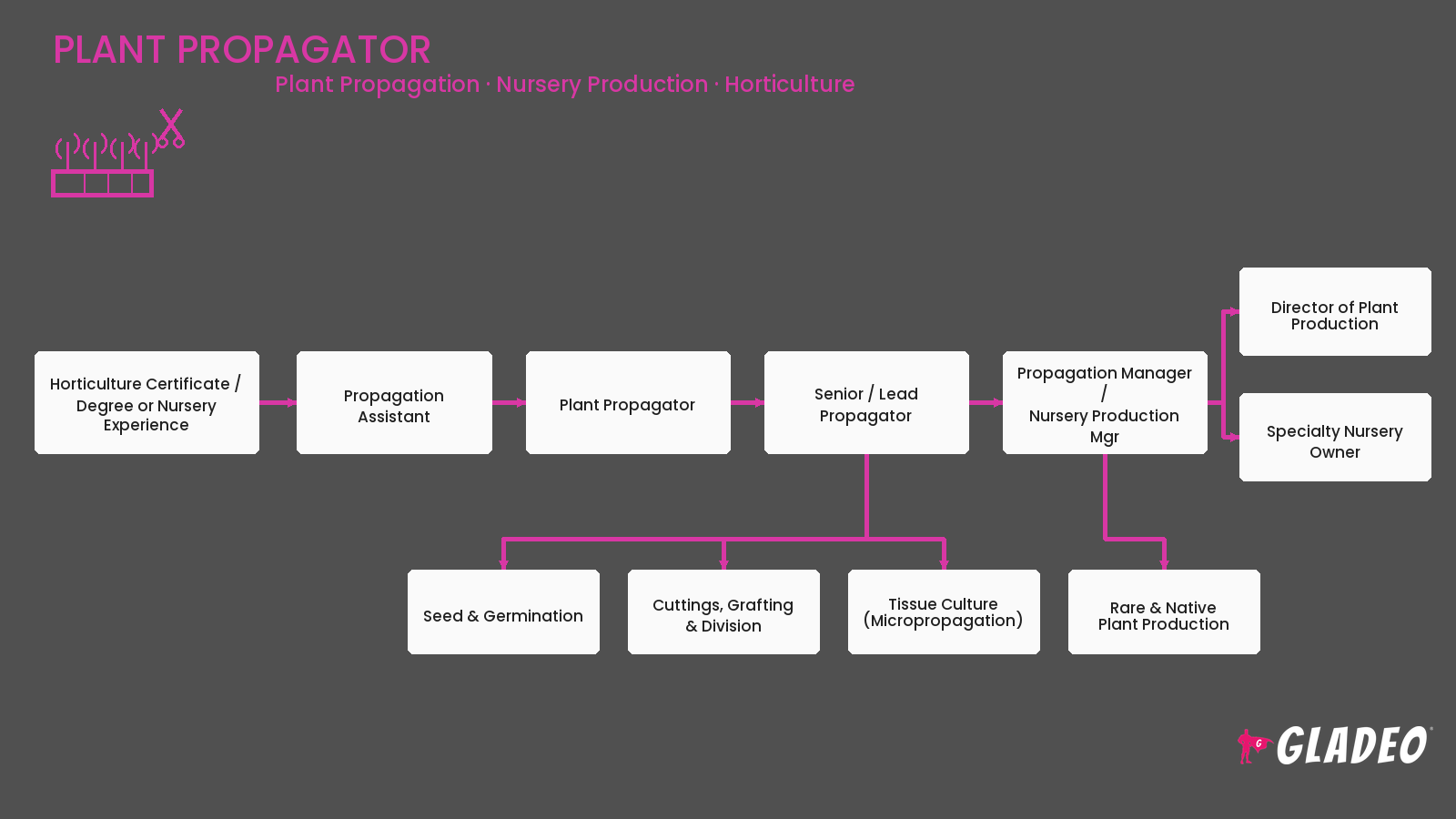
- Start as a nursery assistant or greenhouse worker to gain basic experience.
- Volunteer at botanical gardens or community farms.
- Build a portfolio documenting plant propagation projects.
- Network with local horticulturists and nursery managers.
- Attend plant shows and agricultural fairs to meet industry professionals.
- Apply for internships or apprenticeships in propagation.
- Develop skills in plant identification and care.
- Learn to operate greenhouse tools and equipment safely.
- Practice record-keeping and data tracking for propagation success.
- Take short courses or certifications to enhance your resume.
- Stay updated on new propagation techniques and technologies.
- Prepare for interviews by demonstrating your passion and knowledge of plants.
- Master advanced propagation techniques like grafting and tissue culture.
- Build relationships with horticulturists and agricultural scientists.
- Take leadership roles in nursery or greenhouse teams.
- Pursue certifications in plant health or nursery management.
- Develop expertise in plant breeding or biotechnology.
- Stay current with industry trends and new plant varieties.
- Expand your skills to include pest and disease management.
- Consider roles in research or nursery management for career growth.
Websites:
- American Horticultural Society (ahsgardening.org)
- International Plant Propagators’ Society (ipps.org)
- The Royal Horticultural Society (rhs.org.uk)
- National Gardening Association (garden.org)
- Greenhouse Grower (greenhousegrower.com)
- Plant Conservation Alliance (plantconservation.org)
- Society for Ornamental Horticulture (soreg.org)
- Horticulture Innovation Lab (horticulture.ucdavis.edu)
- GardenComm (gardencomm.org)
- USDA National Agricultural Library (nal.usda.gov)
- American Society for Horticultural Science (ashs.org)
- Botanical Society of America (botany.org)
- Cornell Cooperative Extension (cce.cornell.edu)
- Urban Agriculture Network (urbanagnetwork.org)
Books:
- Plant Propagation: Principles and Practices by Hudson T. Hartmann
- The Reference Manual of Woody Plant Propagation by Michael A. Dirr and Charles W. Heuser Jr.
- Plant Propagation Techniques: A Practical Approach by B. P. Singh
- Greenhouse Operation and Management by Paul V. Nelson
- The Plant Propagator's Bible by Miranda Smith
If plant propagation isn’t the right fit, there are many related careers that also allow you to work with plants, agriculture, or the environment in meaningful ways.
- Horticulturist
- Agricultural Technician
- Nursery Manager
- Landscape Designer
- Soil Scientist
- Environmental Scientist
- Plant Breeder
- Greenhouse Manager
- Pest Control Specialist
- Arborist
Click here to download the infographic
Newsfeed

Featured Jobs
Online Courses and Tools