





Spotlights
Podcast Host, Audio Content Creator, Podcaster-in-Chief, Audio Show Producer, Podcast Presenter, Broadcasting Host, Digital Radio Host, Audio Storyteller, Podcast Producer, Podcast Showrunner
True crime, interviews, storytelling, and niche hobbies—podcasts reach millions of listeners during commutes, workouts, and late-night scrolling. Podcasters plan, record, and publish audio shows that build loyal audiences and open doors in media, marketing, and entrepreneurship!
Podcasters develop show concepts, research guests and topics, script or outline episodes, record voice tracks and interviews, edit audio, write show notes, and distribute episodes on platforms like Spotify, Apple Podcasts, and YouTube. They may work independently, for media companies, brands, nonprofits, or networks—handling everything from microphone technique to audience analytics and sponsorship outreach.
They use DAW software (Audacity, Adobe Audition, Hindenburg, Reaper), microphones, audio interfaces, and hosting dashboards while applying storytelling and branding skills. Whether launching a solo passion project or producing a chart-topping interview series, successful Podcasters combine creativity, consistency, and audience engagement.
- Creative control over topics, format, and voice
- Building a direct relationship with a community of listeners
- Portable skills in audio production, interviewing, and digital marketing
- Multiple revenue paths—ads, sponsorships, memberships, and live events
Working Schedule
Independent Podcasters set their own hours but face self-imposed deadlines for weekly or biweekly releases. Production cycles include research days, recording blocks, editing marathons, and promotion pushes. Network or corporate producers may work standard office hours with occasional evening recordings to match guest availability across time zones.
Typical Duties
- Conceptualize, plan, and develop podcast episodes or series, including topics, formats, and episode structure.
- Conduct research to gather information and insights relevant to the podcast episodes.
- Prepare scripts or outlines for episodes, ensuring engaging and informative content.
- Set up recording equipment, including microphones, soundboards, and editing software.
- Conduct interviews, discussions, or monologues for podcast episodes.
- Edit and enhance audio recordings to improve sound quality and remove any errors or distractions.
- Incorporate music, sound effects, and other elements to enhance the overall podcast experience.
- Write compelling titles, descriptions, and show notes for each episode to attract and inform listeners.
Additional Responsibilities
- Design cover art and short video clips for social promotion
- Moderate listener communities on Discord, Patreon, or forums
- Plan live recordings, tours, or virtual listener events
- Negotiate cross-promotions with other podcasters
- Handle business tasks—contracts, taxes, and LLC formation
- Transcribe episodes for accessibility and SEO
- Collaborate with video editors for YouTube or visual podcast versions
Morning might start with analytics review—which episode spiked downloads and where listeners dropped off—then outlining next week's interview and emailing a potential guest.
Midday is a recording block: sound treatment check, mic levels, 45-minute interview, and backup file saves. After lunch, editing begins—removing ums, tightening pacing, layering intro music, and exporting the master.
Afternoon promotion includes clipping a teaser for Instagram, scheduling newsletter copy, and responding to listener DMs. The day ends with uploading to the host, verifying RSS distribution, and updating the content calendar for next month's theme.
Soft Skills
- Storytelling and conversational interviewing
- Consistency and self-discipline for release schedules
- Audience empathy—knowing what listeners value
- Networking to book guests and cross-promote shows
- Adaptability when tech fails mid-recording
- Brand voice and authenticity on mic
- Time management across research, record, edit, promote
- Resilience when growth is slow early on
- Business negotiation for sponsorships
- Collaboration with co-hosts, editors, and designers
Technical Skills
- Digital audio workstation (DAW) editing and multitrack mixing
- Microphone technique and room acoustics basics
- Audio interfaces, XLR cables, and gain staging
- Noise reduction, compression, EQ, and loudness standards
- Remote recording platforms (Riverside, SquadCast, Zoom)
- RSS hosting platforms (Buzzsprout, Libsyn, Anchor/Spotify)
- Basic graphic and video clip tools (Canva, CapCut, Premiere)
- SEO for podcast titles, tags, and show notes
- Analytics dashboards—Spotify for Podcasters, Apple Podcasts Connect
- File management, backup, and metadata tagging workflows
- Interview Podcasters: Conversation-driven shows with expert or celebrity guests
- Narrative Storytellers: Serialized documentary and true-crime formats
- Solo Commentators: Opinion, education, or coaching shows from one host
- Corporate/Branded Podcasters: Content marketing for companies and nonprofits
- Network Producers: Staff roles at podcast networks and media companies
- Live Podcasters: Audience-in-room or streaming hybrid events
- Video Podcasters: Combined audio and YouTube-first production workflows
- Independent creator businesses and media LLCs
- Podcast networks (iHeart, Wondery, Spotify Studios partners)
- Radio stations expanding into on-demand audio
- Newsrooms and digital publishers with audio desks
- Marketing and PR agencies producing client shows
- Nonprofits and foundations with mission-driven storytelling
- Sports leagues and entertainment brands
- Educational institutions with student and alumni podcasts
- Faith organizations and community broadcast ministries
- Freelance production collectives and audio studios
Income can be unpredictable early on—many Podcasters juggle day jobs while building audience. Equipment, hosting, and marketing costs add up before sponsorships arrive.
Editing and promotion often take longer than recording. Consistency matters: irregular releases lose subscribers. Public criticism and online visibility come with the role.
Still, creators who find their niche describe unmatched freedom to explore ideas, connect deeply with listeners, and open consulting, speaking, and media opportunities downstream.
- Video podcasts and YouTube as discovery engines
- AI-assisted editing, transcription, and clip generation tools
- Platform-exclusive deals and licensing on Spotify and Apple
- Niche community podcasts with membership monetization (Patreon)
- Dynamic ad insertion and programmatic podcast advertising
- Live podcast touring and hybrid virtual events
- Branded podcasts as B2B marketing standard practice
- Short-form audio clips repurposed for TikTok and Reels
- Higher production value expectations from audiences
Many Podcasters talked constantly as kids—debating friends, performing skits, or narrating video game playthroughs. They loved stories on radio, audiobooks, or YouTube and imagined hosting their own show.
School radio clubs, theater, debate team, blogging, or early TikTok channels often sparked the path. A mix of curiosity, performance comfort, and DIY tech experimentation led them to hit record.
Podcasters do not follow one degree path—many combine self-taught audio skills with backgrounds in journalism, communications, marketing, or entertainment. Certificate programs in audio production, broadcasting, and digital media help build technical credibility. Portfolio quality (published episodes and audience metrics) matters more than credentials for most hiring and sponsorship decisions.
Students can take courses in relevant subjects such as:
- Audio production and sound design
- Journalism and broadcast writing
- Digital media and content marketing
- Public speaking and interpersonal communication
- Media law and copyright basics
- Graphic design for cover art and social assets
- Entrepreneurship and small business management
- Statistics and analytics for audience research
- Theater or voice and diction training
Launch a real show early—even a short seasonal series—and publish on schedule. Employers and sponsors want links to finished episodes, download trends, and examples of clean editing, strong intros, and guest booking skills.
ON-THE-JOB TRAINING
Internships at radio stations, podcast networks, or media startups provide mentorship on workflows, loudness standards, and client communication. Freelance assistants often learn by editing for established hosts before launching independent shows.
OPTIONAL CERTIFICATIONS
- Adobe Audition or Avid Pro Tools user certifications
- Google Podcast Creator Program or platform partner badges
- Podcast Movement Academy or similar production certificates
- Broadcasters mentorship program completions ( NPR-style trainings)
- Project management (CAPM) for producer-track roles at networks
- Start a school podcast or join radio/video club
- Practice interviewing classmates, teachers, and local leaders
- Learn Audacity or Reaper with free tutorials and daily editing drills
- Build a quiet recording space with blankets and a decent USB or XLR mic
- Study successful shows in your niche—note structure and hooks
- Take journalism, speech, or digital media CTE courses
- Create social clips to practice promotion and branding
- Enter student media competitions or local film/audio festivals
- Intern at college radio or community access stations
- Track analytics from episode one and iterate on format
- Research communications or media studies programs with audio labs
- Learn basic contract and copyright rules for music and clips
- Choose programs with hands-on studio time—not theory-only tracks
- Look for internships at NPR affiliates or podcast networks
- Prefer instructors actively producing published shows
- Confirm training covers editing, hosting, and audience development
- Seek campuses with radio stations and student podcast grants
- Compare certificate vs. bachelor's paths based on budget and timeline
- Ask about alumni working in audio production or digital media
- Verify access to industry-standard DAWs and microphones
- Select courses that include marketing and analytics modules
- Build portfolio projects across interview and narrative formats
- Apply for podcast producer intern roles at networks and media companies
- Freelance edit episodes for existing shows to build credits and referrals
- Search LinkedIn, Indeed, and entertainment job boards for 'podcast producer'
- Pitch freelance production services to nonprofits and small businesses
- Highlight download stats and clip engagement on your resume
- Offer to assistant-produce for established hosts in your niche
- Target entry titles: Production Assistant, Audio Editor, Associate Producer
- Network at Podcast Movement and local creator meetups
- Share a one-page media kit with bio, audience demographics, and samples
- Be ready to edit a sample episode as a practical test
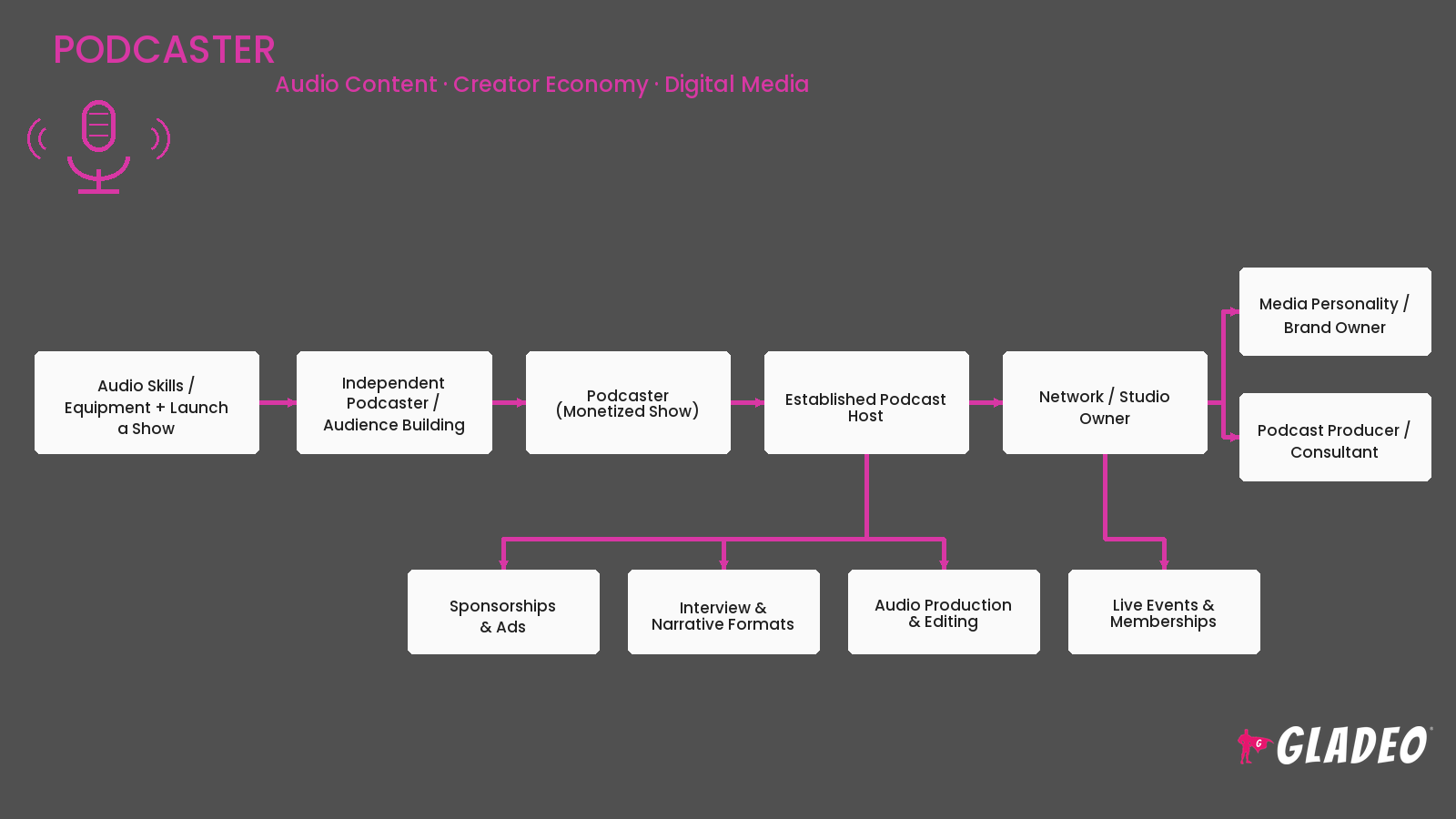
- Grow audience to unlock mid-roll ads and brand sponsorships
- Hire editors and writers to scale release frequency
- Join a network or sell licensing for broader distribution
- Expand into live events, courses, or books based on show IP
- Move into executive producer roles at media companies
- Launch a production agency serving multiple client podcasts
Websites:
- Spotify for Podcasters and Apple Podcasts Connect
- Podcast Movement and Radio Preservation job boards
- Transom — storytelling and audio craft resources
- NPR Training — audio journalism techniques
- School of Podcasting and Buzzsprout learning hub
- LinkedIn and Indeed media production listings
- Patreon creator resources
- Audio Engineering Society (AES)
- Bello Collective — industry news and analysis
- Reaper and Hindenburg tutorial communities
- Radio Television Digital News Association (RTDNA)
Books:
- Out on the Wire by Jessica Abel
- Podcasting For Dummies by Tee Morris and Evo Terra
- Sound Reporting by Nancy Updike (NPR)
- Made to Stick by Chip and Dan Heath
- This Is Marketing by Seth Godin
Related careers that use overlapping skills include:
- Radio Producer or Host
- Audio Engineer
- Content Marketing Manager
- Social Media Manager
- Journalist or Reporter
- Public Relations Specialist
- Voice Over Artist
- Video Editor
- Event Emcee or Speaker
- Digital Media Specialist
Newsfeed

Featured Jobs
Online Courses and Tools
Annual Salary Expectations
New workers start around $62K. Median pay is $103K per year. Highly experienced workers can earn around $140K.