






Spotlights
Fresh Produce Inspector, Quality Control Inspector, Agricultural Product Inspector, Food Safety Inspector, Produce Quality Specialist, Quality Assurance Inspector, Sorting Line Inspector, Crop Quality Inspector, Agricultural Grader, Postharvest Quality Inspector, Produce Safety Officer, Fresh Food Inspector
Imagine biting into a crisp apple or enjoying a fresh salad, knowing the produce was carefully checked to ensure it’s safe, fresh, and delicious. Produce Inspectors play a crucial role behind the scenes, making sure fruits and vegetables meet high quality and safety standards before they reach your table.
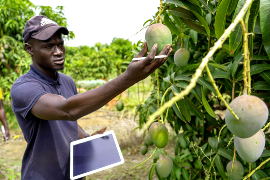
Produce Inspectors examine fruits and vegetables during and after harvest to identify defects, contamination, or spoilage. They work closely with farmers, packers, and food safety teams to grade, sort, and reject produce that doesn’t meet strict quality guidelines. Their work ensures that only the best and safest produce makes it to grocery stores, restaurants, and consumers.
Using magnifying lenses, moisture meters, and various testing tools, Produce Inspectors apply standardized grading methods and safety protocols. Their careful inspections protect public health and help maintain trust in the food supply, making their role essential in agriculture and food manufacturing industries.
- Knowing your efforts help prevent foodborne illnesses and keep families safe.
- Contributing directly to the quality and appearance of fresh produce that people enjoy every day.
- Working outdoors and interacting with farmers and agricultural teams in dynamic environments.
- Using your keen attention to detail and problem-solving skills to improve food safety and quality standards.
Working Schedule
Produce Inspectors often work full-time hours, typically during the growing and harvesting seasons which can include early mornings and extended shifts to match packing schedules. They may work outdoors in farms or greenhouses and indoors in packing facilities or warehouses. Seasonal peaks can bring busy, fast-paced periods, and some roles may require weekend or holiday hours to ensure continuous quality control.
Typical Duties
- Inspect incoming and outgoing fruits and vegetables for quality, size, color, and defects.
- Identify signs of pest damage, diseases, bruising, or spoilage in produce.
- Grade produce according to USDA or company standards and reject substandard items.
- Use specialized tools and equipment to test moisture levels, texture, and freshness.
- Document inspection results and prepare quality reports for supervisors and regulatory agencies.
- Collaborate with farmers, packers, and quality assurance teams to address quality issues.
- Ensure compliance with food safety regulations and company policies.
- Clean and maintain inspection tools and work areas to prevent contamination.
- Monitor storage conditions such as temperature and humidity to preserve produce quality.
- Assist in training new inspectors or packing staff on quality standards.
Additional Responsibilities
- Participate in audits by food safety or government inspectors.
- Recommend improvements to packing or handling processes based on inspection findings.
- Help develop or update quality control procedures and checklists.
- Report any suspected contamination or safety hazards promptly.
- Assist with inventory management related to produce quality grades.
- Support traceability efforts to track produce from farm to consumer.
- Maintain accurate records for certification and compliance purposes.
- Communicate with suppliers or farmers about quality feedback and corrective actions.
Morning often starts with reviewing inspection schedules and quality standards for the day, checking equipment, and coordinating with farm or packing teams about incoming produce shipments.
Midday is busy with hands-on inspections, sorting produce on conveyor belts, using magnifiers and moisture meters to identify defects, and documenting results. Inspectors might move between outdoor fields and indoor packing lines depending on the operation.
Afternoons involve compiling reports, discussing findings with supervisors or quality managers, and sometimes training or advising packing staff on quality control practices. End-of-day duties include cleaning tools and preparing for the next day’s inspections.
Soft Skills
- Attention to detail
- Strong observational skills
- Good communication
- Problem-solving mindset
- Integrity and honesty
- Physical stamina
- Teamwork and collaboration
- Adaptability
- Time management
- Patience
- Critical thinking
- Reliability
Technical Skills
- Understanding of agricultural grading standards
- Knowledge of food safety regulations
- Use of inspection tools (moisture meters, magnifiers)
- Data recording and reporting
- Basic quality control procedures
- Ability to identify pests and plant diseases
- Familiarity with temperature and humidity controls
- Knowledge of postharvest handling techniques
- Use of digital devices for documentation
- Understanding of traceability systems
- Field Produce Inspector: Conducts on-site inspections in farms to assess crop quality and detect issues early.
- Packing Facility Inspector: Works inside packing warehouses to ensure produce is sorted and packed according to standards.
- Organic Produce Inspector: Specializes in inspecting produce grown under organic certification standards.
- Postharvest Quality Inspector: Focuses on quality control after harvest during storage and transport.
- Food Safety Inspector: Emphasizes safety checks to prevent contamination and comply with regulations.
- Quality Control Technician: Supports inspection with lab testing and data analysis.
- Commodity Grader: Specializes in grading specific types of produce like citrus or berries.
- Regulatory Compliance Inspector: Works mainly with government agencies to enforce food safety laws.
- Fruit and vegetable farms
- Packing and processing facilities
- Food distribution centers
- Agricultural cooperatives
- Government food safety agencies
- Organic certification bodies
- Produce wholesalers
- Supermarket chains with quality control departments
- Agricultural inspection service providers
- Research institutions focused on agriculture
- Export companies dealing with fresh produce
- Agricultural extension services
Produce Inspectors often work in environments that can be physically demanding, including standing for long periods and working outdoors in varying weather conditions. Attention to detail is critical, as missing defects can lead to serious safety or quality issues.
Deadlines can be tight, especially during peak harvest seasons when large volumes of produce need quick inspection before shipping. This can create pressure to work efficiently without sacrificing accuracy.
The role requires a commitment to upholding strict standards, which can sometimes mean rejecting large batches of produce, leading to difficult conversations with farmers or suppliers. Inspectors must balance firmness with diplomacy to maintain good working relationships.
- Increasing automation with computerized sorting machines assisting inspections.
- Greater focus on food safety due to consumer demand and regulatory changes.
- Use of digital record-keeping and mobile devices for real-time data entry.
- Expansion of organic and specialty produce requiring specialized inspection knowledge.
- More training on identifying pesticide residues and chemical contaminants.
- Integration of traceability systems from farm to table.
- Growing role in sustainability practices and reducing food waste.
- Increased collaboration with scientists on postharvest technology.
- Use of AI and machine learning to improve defect detection accuracy.
- Rising standards for international export quality and safety compliance.
Many Produce Inspectors enjoyed spending time outdoors and had an early interest in plants, gardening, or farming. They were often curious about how food grows and what makes fruits and vegetables look and taste their best.
They also showed strong attention to detail, enjoyed sorting or organizing, and cared about cleanliness and safety. Early experiences with school science projects or volunteering on farms often sparked their interest in this career.
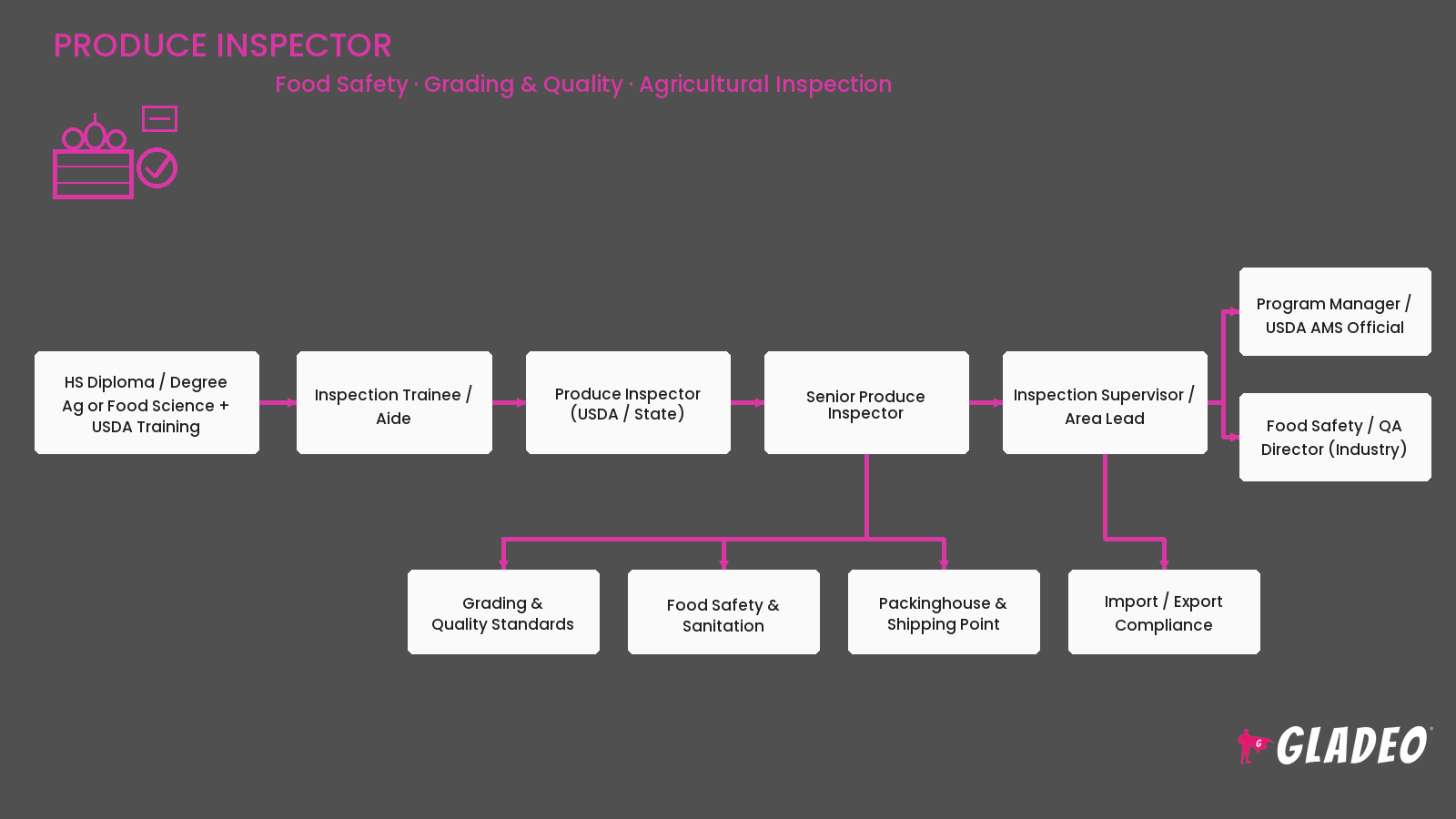
Becoming a Produce Inspector usually requires a high school diploma or equivalent, with additional training on the job or through specialized courses. Some positions may require knowledge of food safety regulations and agricultural science, which can be gained through certificate programs or associate degrees.
Students can take courses in relevant subjects such as:
- Agriculture Science
- Food Safety and Sanitation
- Plant Biology
- Horticulture
- Quality Control and Assurance
- Environmental Science
- Chemistry
- Microbiology
- Data Management
- Occupational Safety
Hands-on experience is essential for Produce Inspectors, and many start with internships or entry-level roles in farms or packing facilities. Building a strong portfolio of knowledge about produce quality and safety standards can open doors to more advanced positions.
- Take biology, chemistry, and agriculture classes in high school.
- Participate in FFA or 4-H agricultural programs.
- Volunteer or intern at local farms or food processing plants.
- Attend workshops on food safety and quality control.
- Develop strong math and data recording skills.
- Learn about plant diseases and pest management.
- Explore certifications like ServSafe or HACCP.
- Practice attention to detail through hobbies or school projects.
- Consider dual enrollment courses in agriculture or biology.
- Research local colleges offering agricultural technology programs.
- Look for programs with hands-on training in agricultural inspection.
- Choose courses covering food safety regulations and quality standards.
- • Check if internships or cooperative education opportunities are available.
- • Seek programs with strong connections to local farms or food producers.
- • Verify instructors have industry experience in produce inspection.
- • Find programs teaching use of inspection tools and technology.
- • Ensure curriculum includes training on pest and disease identification.
- • Look for certifications that can be earned during the program.
- • Prioritize programs that teach documentation and reporting skills.
- • Consider programs offering safety and hygiene training in food handling.
- • Evaluate programs that cover environmental and sustainability practices.
- • Find schools with good career services and job placement support.
- Apply for internships or entry-level roles at farms or packing facilities.
- Volunteer to assist with produce sorting and quality checks.
- Build a portfolio documenting your learning and inspection experience.
- Network with agricultural professionals and attend industry events.
- Seek certifications in food safety and quality control.
- Learn to use inspection tools like moisture meters and magnifiers.
- Practice detailed note-taking and report writing.
- Develop good communication skills for working with farmers and supervisors.
- Stay updated on food safety regulations and grading standards.
- Ask for mentorship or shadow experienced inspectors.
- Be willing to work early mornings or seasonal hours.
- Show reliability and strong attention to detail in every task.
- Gain certifications in food safety and quality management.
- Master advanced inspection tools and technology.
- Build strong relationships with farmers, packers, and supervisors.
- Pursue specialized training in organic or export produce inspection.
- Take on leadership roles training new inspectors.
- Expand knowledge of agricultural science and pest management.
- Stay current with industry regulations and compliance standards.
- Seek opportunities in government inspection agencies or quality control management.
Websites:
- United Fresh Produce Association (unitedfresh.org)
- Produce Marketing Association (pma.com)
- American Society for Quality (asq.org)
- Food Safety Preventive Controls Alliance (fspca.org)
- National Association of Agricultural Educators (naaee.org)
- Agricultural Marketing Resource Center (agmrc.org)
- Institute of Food Technologists (ift.org)
- USDA Agricultural Marketing Service (ams.usda.gov)
- Food Safety Magazine (foodsafetymagazine.com)
- International Fresh Produce Association (freshproduce.com)
- Produce Safety Alliance (producesafetyalliance.cornell.edu)
- National Institute of Food and Agriculture (nifa.usda.gov)
- Agricultural Inspection Association (aginspection.org)
- HACCP Alliance (haccpalliance.org)
Books:
- The Produce Contamination Problem: Causes and Solutions by John Smith
- Food Safety Management: A Practical Guide by Yasmine Motarjemi
- Postharvest Handling: A Guide for Fresh Produce Inspectors by David Kader
- Agricultural Quality Control Techniques by Maria Gonzalez
- The Science of Fruit and Vegetable Quality by Robert Thompson
If you enjoy working with food, quality control, or agriculture but want a different path, there are many related careers where your skills and interests can shine.
- Food Safety Specialist
- Agricultural Technician
- Quality Assurance Technician
- Farm Manager
- Food Microbiologist
- Supply Chain Coordinator
- Environmental Health Inspector
- Packaging Technician
- Laboratory Analyst
- Crop Consultant
Click here to download the infographic
Newsfeed

Featured Jobs
Online Courses and Tools