






Spotlights
Music Production Coordinator, Music Production Supervisor, Music Project Manager, Music Production Administrator, Music Operations Manager, Studio Production Manager, Music Production Lead, Audio Production Manager, Music Session Manager, Recording Production Manager, Music Production Director, Sound Production Manager
The music you love is not just created by artists alone; behind every hit song or album is a Production Manager who orchestrates the entire process to bring the sound to life. From coordinating studio sessions to managing budgets, these professionals ensure that the energy and creativity of musicians transform into polished tracks that audiences enjoy worldwide.
Production Managers in music oversee and guide every phase of recording projects. Their day-to-day involves planning schedules, booking studios, coordinating with artists, producers, engineers, and session musicians, and making sure deadlines and budgets are met. They act as the central hub connecting creative talent with technical teams to keep the music production running smoothly and efficiently.
Using project management software, budgeting tools, studio equipment knowledge, and strong communication skills, Production Managers handle logistics and problem-solving to keep music projects on track. Their role is crucial because without their leadership and coordination, the creative process could easily become chaotic or delayed, preventing great music from reaching listeners on time.
- Watching a music project evolve from concept to finished recording and knowing you helped make it happen.
- Collaborating with creative artists and technical experts to solve challenges and keep production flowing.
- Managing complex schedules and resources to deliver high-quality music within budget and deadlines.
- Being at the center of the music-making process and contributing to the soundtracks that move people emotionally.
Working Schedule
Production Managers often work full-time hours but must be flexible to accommodate studio session times, which can include nights, weekends, and holidays when artists are available. The environment is fast-paced and deadline-driven, especially as release dates approach. They may work for record labels, studios, or as freelancers, balancing multiple projects simultaneously and often dealing with last-minute changes or technical issues that require quick thinking.
Typical Duties
- Plan and coordinate all stages of music production, including recording, mixing, mastering, and post-production.
- Develop and manage detailed production schedules to meet project deadlines.
- Create and oversee budgets ensuring costs stay within approved limits.
- Hire and coordinate technical staff such as sound engineers, producers, and studio personnel.
- Book and prepare recording studios and ensure all necessary equipment and software are ready.
- Collaborate closely with artists, songwriters, and producers to understand their vision and requirements.
- Monitor progress during recording sessions, troubleshoot issues, and adjust plans as needed.
- Negotiate contracts and agreements with vendors, session musicians, and service providers.
- Ensure compliance with copyright, licensing, and legal requirements during production.
- Maintain clear communication among all team members to prevent misunderstandings and delays.
- Review final mixes and deliverables to ensure quality standards are met before release.
- Document all production activities and maintain project records for future reference.
Additional Responsibilities
- Facilitate communication between creative teams and technical staff to balance artistic goals with practical constraints.
- Manage risk by anticipating production challenges and developing contingency plans.
- Track inventory and maintenance schedules for studio equipment to avoid downtime.
- Coordinate logistics for remote or on-location recording sessions.
- Assist in marketing or promotional planning by providing production timelines and deliverables.
- Support post-release activities such as archiving master recordings and handling licensing requests.
- Stay updated on industry technology and trends to recommend improvements.
- Mentor junior production staff or interns to develop their skills.
A typical morning begins with reviewing the day's recording schedule, checking in with the studio manager and engineers to confirm equipment is set up and ready. The Production Manager reviews any last-minute changes from artists or producers and adjusts the plan accordingly.
Midday often involves coordinating recording sessions, troubleshooting technical or scheduling issues, and communicating with artists and engineers to ensure the session runs smoothly. They may also handle budget updates and negotiate vendor contracts during quieter moments.
In the afternoon and evening, the Production Manager wraps up by reviewing progress, updating stakeholders on milestones, and preparing for upcoming sessions or mixing deadlines. They often collaborate with mixing engineers and producers to align expectations and ensure quality control before project handoff.
Soft Skills
- Excellent communication to coordinate diverse teams and negotiate effectively.
- Strong organizational skills to manage complex schedules and multiple projects.
- Problem-solving ability to quickly resolve unexpected production challenges.
- Attention to detail to ensure high-quality output and adherence to budgets.
- Leadership to guide teams and maintain focus under pressure.
- Flexibility to adapt to changing priorities and last-minute adjustments.
- Time management to meet tight deadlines efficiently.
- Interpersonal skills to build trust with artists and technical staff.
- Decision-making under stress to keep production on track.
- Patience and diplomacy in handling creative differences.
- Collaboration skills to work seamlessly with varied personalities.
- Creativity to understand and support artistic goals while managing practical limits.
Technical Skills
- Proficiency with project management software like Trello, Asana, or Microsoft Project.
- Budgeting and financial tracking tools such as Excel or specialized software.
- Knowledge of recording studio equipment and software (e.g., Pro Tools, Logic Pro).
- Understanding of music production processes including tracking, mixing, and mastering.
- Familiarity with contract negotiation and vendor management.
- Basic technical troubleshooting related to audio equipment and software.
- Scheduling and calendar management tools for coordinating sessions.
- Digital communication platforms like Slack, email, and video conferencing.
- Data management for archiving and documentation of sessions.
- Awareness of copyright and licensing regulations.
- Studio Production Manager: Focuses on managing in-house recording studios and their daily operations.
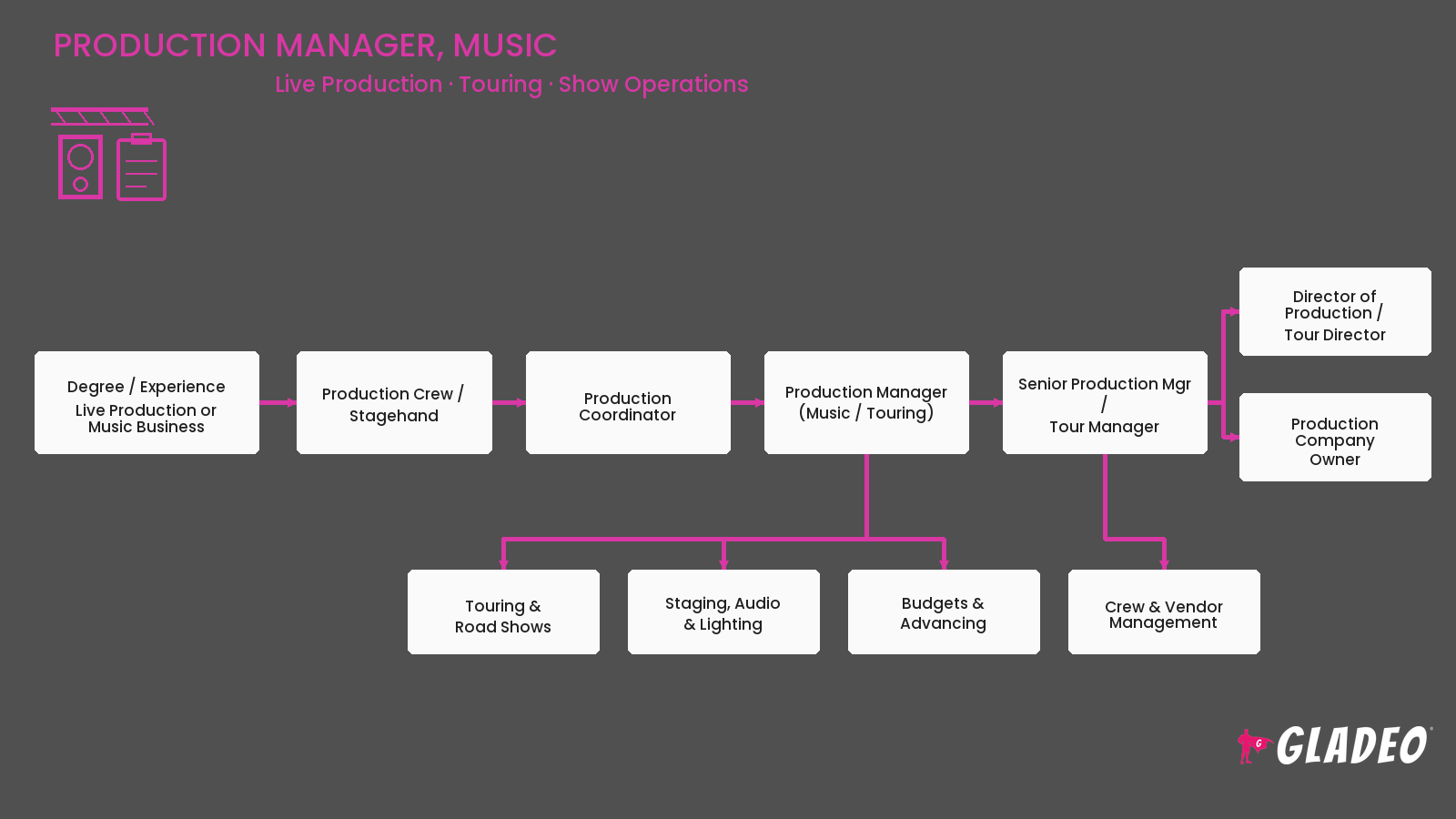
- Tour Production Manager: Coordinates music production logistics for live tours and performances.
- Post-Production Manager: Specializes in overseeing mixing, mastering, and final edits after recording.
- Independent Production Manager: Freelances across various projects or studios, managing multiple clients.
- Label Production Manager: Works within record labels to supervise production across signed artists.
- Session Production Manager: Manages individual recording sessions, ensuring technical and creative needs are met.
- Digital Production Manager: Oversees music projects delivered primarily through digital platforms and streaming.
- Film/TV Music Production Manager: Coordinates music production specifically for visual media projects.
- Record Labels
- Recording Studios
- Music Production Companies
- Broadcasting Networks
- Film and TV Studios
- Live Event Production Firms
- Independent Music Producers
- Music Publishing Companies
- Streaming Services
- Advertising Agencies
- Music Technology Firms
- Educational Music Institutions
Production Managers face significant pressure to deliver projects on time and within budget while balancing the creative demands of artists. The role requires multitasking and managing last-minute changes without compromising quality.
The work hours can be irregular, often extending into evenings or weekends to align with artist availability or meet release deadlines. Flexibility and stamina are essential to handle the unpredictable nature of music production schedules.
Sacrifices include high stress during peak production periods and the need to mediate between conflicting personalities or priorities. However, the role offers the satisfaction of bringing creative visions to life and seeing projects through from start to finish.
- Increasing use of remote collaboration tools allowing artists and producers to work from different locations.
- Growth of digital music distribution impacting production timelines and workflows.
- Adoption of advanced audio editing and mixing software with AI-assisted features.
- Sustainability practices influencing studio design and operations.
- Rising importance of data analytics in tracking project progress and market response.
- More diverse and global collaborations between artists and production teams.
- Integration of virtual and augmented reality technologies in music experiences.
- Emphasis on mental health and well-being for artists and production staff.
- Shift towards shorter production cycles to meet fast-paced streaming demands.
- Expansion of independent and home studio production increasing decentralization.
Kids who love organizing school music events, managing band rehearsals, or helping friends record songs often show early signs of a Production Manager’s skill set.
A natural interest in both music and logistics—like scheduling, problem-solving, and teamwork—can indicate a future in music production management. Hands-on experience with school or community music projects can spark this passion early.
Becoming a Production Manager in music typically involves a mix of formal education and hands-on experience. Many professionals start with degrees or certificates in music business, audio production, or project management, then build practical skills through internships and entry-level roles.
Students can take courses in relevant subjects such as:
- Music Production and Recording Techniques
- Project Management Fundamentals
- Audio Engineering
- Music Business and Marketing
- Budgeting and Finance for the Arts
- Communication and Negotiation Skills
- Digital Audio Workstations (Pro Tools, Logic Pro)
- Music Law and Copyright
- Event and Studio Management
- Team Leadership and Collaboration
Building a strong portfolio of projects and gaining real-world experience through internships or assistant roles is key. Continual learning about new technologies and trends helps Production Managers stay competitive and effective in their roles.
- Join or start a school music group or recording club to gain early teamwork experience.
- Take classes in music, business, and technology to build a broad foundation.
- Volunteer to help organize school concerts or events to develop coordination skills.
- Participate in internships at local recording studios or with music production companies.
- Learn basic audio recording and editing software to understand technical workflows.
- Attend music industry workshops, seminars, or summer programs.
- Network with local musicians, producers, and studio personnel to build connections.
- Develop strong communication and organizational skills through group projects.
- Explore courses in finance or accounting to prepare for budgeting responsibilities.
- Consider dual majors or minors in music and business for a well-rounded education.
- Build a portfolio of personal or school music projects showcasing production involvement.
- Stay current with music technology trends through online tutorials and resources.
- Look for programs combining music production and business management.
- Choose schools with strong connections to the music industry and internship opportunities.
- Verify availability of hands-on studio experience and access to professional equipment.
- Ensure curriculum covers both creative and logistical aspects of music production.
- Seek programs that teach current digital audio software and project management tools.
- Consider programs offering training in contract negotiation and legal aspects.
- Evaluate faculty experience and industry partnerships for mentorship potential.
- Look for smaller class sizes to get personalized instruction and feedback.
- Find programs with career services focused on music industry placements.
- Check for opportunities to work on real client projects or student productions.
- Assess the program’s reputation among music industry professionals.
- Find options that offer certifications or continuing education credits for ongoing skill development.
- Apply for internships or assistant roles at recording studios or music production companies.
- Volunteer to help organize or manage school or community music events.
- Build a portfolio by working on local band or artist projects, even unpaid.
- Learn and demonstrate proficiency in popular digital audio workstations.
- Network with producers, engineers, and artists through music events and social media.
- Assist with scheduling and coordinating studio sessions to gain practical experience.
- Shadow experienced Production Managers to understand daily workflows.
- Develop strong communication and organizational habits with every opportunity.
- Seek entry-level roles such as production assistant or studio coordinator.
- Prepare a professional resume highlighting music and project management skills.
- Practice negotiating small contracts or vendor agreements under supervision.
- Stay updated on music industry trends and technology to add value to teams.
- Master project management tools and budgeting software relevant to music production.
- Build strong relationships with artists, producers, and technical staff for referrals.
- Take on increasing responsibility managing larger or more complex projects.
- Develop expertise in contract negotiation and legal aspects of production.
- Expand technical knowledge of recording equipment and software advancements.
- Pursue certifications or advanced education in music business or production management.
- Seek mentorship from senior Production Managers or industry veterans.
- Leverage successful projects to build a reputation and advance to supervisory or director roles.
Websites:
- Music Business Worldwide (musicbusinessworldwide.com)
- Sound On Sound (soundonsound.com)
- Recording Academy (recordingacademy.com)
- Mix Magazine (mixonline.com)
- Music Producers Guild (mpg.org.uk)
- Audio Engineering Society (aes.org)
- Billboard (billboard.com)
- Music Managers Forum (mmf.org.uk)
- LinkedIn Music Groups
- Music Production Network (musicproductionnetwork.com)
- Disc Makers Resource Center (resources.discmakers.com)
- American Society of Composers, Authors and Publishers (ascap.com)
- CreativeLive Music Courses (creativelive.com)
- SonicScoop (sonicscoop.com)
Books:
- All You Need to Know About the Music Business by Donald S. Passman
- The Art of Music Production by Richard James Burgess
- Music Business Handbook and Career Guide by David Baskerville and Tim Baskerville
- This Business of Music by M. William Krasilovsky and Sidney Shemel
- Behind the Glass: Top Record Producers Tell How They Craft the Hits by Howard Massey
If managing music production isn't the perfect fit, many related careers still tap into your love for music, organization, and creativity.
- Music Producer
- Audio Engineer
- Music Supervisor
- Artist Manager
- Sound Designer
- Event Coordinator
- Music Publisher
- Studio Technician
- Tour Manager
- Music Licensing Specialist
Newsfeed

Featured Jobs
Online Courses and Tools
Annual Salary Expectations
New workers start around $78K. Median pay is $104K per year. Highly experienced workers can earn around $134K.