







Spotlights
Service Coordinator, Operations Associate, Customer Service Operations Specialist, Client Services Coordinator, Service Delivery Coordinator, Operations Support Specialist, Customer Operations Analyst, Service Management Coordinator, Client Operations Specialist, Operations Logistics Coordinator, Service Desk Coordinator, Customer Success Coordinator
Imagine a world where every customer’s experience is seamless—from the moment they place an order to the final delivery or service completion. Service Operations Coordinators make that happen by orchestrating the behind-the-scenes flow that keeps businesses running smoothly and customers happy.
Service Operations Coordinators handle day-to-day tasks that keep service teams efficient and responsive. They coordinate schedules, track service requests, communicate between departments, and solve problems to make sure everything from deliveries to customer support happens on time. Working closely with operations managers, customer service reps, logistics teams, and sometimes vendors, they ensure that services meet quality standards and customer expectations.
Using software like CRM platforms, scheduling tools, and data tracking systems, Service Operations Coordinators analyze workflows and identify bottlenecks. Their role is crucial because they turn complex operations into smooth processes that improve customer satisfaction, reduce delays, and support business growth.
- Knowing your work directly improves customers’ experiences and satisfaction.
- Collaborating with diverse teams to solve problems and streamline operations.
- Seeing the tangible impact of organized systems keeping a business running smoothly.
- Developing skills in communication, problem-solving, and project management valuable across many industries.
Working Schedule
Service Operations Coordinators typically work full-time during regular business hours in office environments, though some roles might require occasional evening or weekend availability to support urgent operational needs. Many are employed full-time, but freelance or contract opportunities also exist, especially in industries with fluctuating service demands. Deadlines and customer needs can create busy periods, but much of the work follows a predictable schedule with steady routines.
Typical Duties
- Coordinate daily service operations and schedules to meet customer demands.
- Communicate between customer service teams, operations managers, and external vendors.
- Monitor service delivery to ensure quality and timeliness.
- Track service requests and update status reports.
- Identify and resolve operational bottlenecks or issues promptly.
- Assist in developing and improving operational workflows.
- Prepare reports on service performance and customer feedback.
- Support training and onboarding for new service staff.
- Manage inventory or resource allocation related to service delivery.
- Use software tools to organize and document service activities.
- Respond to customer inquiries when escalated from frontline teams.
- Help implement new service policies or technologies.
Additional Responsibilities
- Participate in cross-departmental meetings to align service goals.
- Assist with budgeting or resource planning for service operations.
- Conduct quality checks and audits on service processes.
- Support compliance with company standards and regulations.
- Help develop contingency plans for service disruptions.
- Maintain documentation and records for operational procedures.
- Provide feedback to management on service improvements.
- Coordinate vendor relationships related to service delivery.
Your morning might start by reviewing the previous day’s service reports and checking for any unresolved issues. You prioritize tasks for the day and communicate with team members about changes or urgent requests.
Midday involves coordinating schedules, updating tracking systems, and handling any incoming customer or team inquiries. You might troubleshoot delays or resource conflicts and collaborate with logistics or customer service departments to keep everything on track.
Later in the afternoon, you prepare reports for managers, participate in planning meetings, and follow up on ongoing projects. You ensure that all operations documentation is up to date before wrapping up the day, ready for tomorrow’s challenges.
Soft Skills
- Strong communication and interpersonal skills
- Problem-solving and critical thinking
- Attention to detail and organization
- Time management and multitasking
- Adaptability and flexibility
- Customer service orientation
- Team collaboration
- Patience and diplomacy
- Decision-making under pressure
- Analytical thinking
- Conflict resolution
- Proactive mindset
Technical Skills
- Proficiency with CRM software (e.g., Salesforce, Zendesk)
- Scheduling and resource management tools
- Data entry and database management
- Microsoft Office Suite (Excel, Word, PowerPoint)
- Basic knowledge of logistics and supply chain systems
- Reporting and analytics software
- Familiarity with customer service platforms
- Use of communication tools (email, chat, video conferencing)
- Basic budgeting and financial tracking
- Workflow and process mapping tools
- Service Delivery Coordinator: Focuses on overseeing the delivery of services to customers and ensuring timeliness.
- Customer Service Operations Specialist: Concentrates on improving customer service processes and support.
- Logistics Service Coordinator: Handles coordination related to transportation and supply chain services.
- Technical Service Coordinator: Supports technical teams in service deployment and issue resolution.
- Field Service Coordinator: Manages schedules and resources for field-based service technicians.
- Client Services Coordinator: Acts as a liaison between clients and service teams to ensure satisfaction.
- Operations Support Specialist: Provides administrative support to broader operations functions.
- Vendor Relations Coordinator: Manages relationships and communications with service vendors and suppliers.
- Logistics companies
- Telecommunications providers
- Healthcare service providers
- IT and software companies
- Manufacturing firms
- Retail chains
- Hospitality and travel agencies
- Government agencies
- Consulting firms
- Financial services companies
- Educational institutions
- Nonprofit organizations
Service Operations Coordinators often face pressure to resolve issues quickly because delays can directly affect customer satisfaction and company reputation. They must juggle multiple priorities and adapt to last-minute changes or emergencies.
Typical work hours are standard business hours, but flexibility is important as occasional overtime or weekend work may be required to handle urgent situations or meet project deadlines. The role demands focus and stamina to manage a constant flow of communication and coordination.
Sacrifices may include working under tight deadlines and managing stress related to unexpected service disruptions. However, strong organizational skills and a proactive approach can help balance these pressures, making the role rewarding and dynamic.
- Increasing use of automation and AI to streamline service workflows.
- Growing reliance on data analytics for performance tracking and decision-making.
- Integration of cloud-based CRM and operations platforms for real-time updates.
- Emphasis on customer experience as a key business differentiator.
- Remote and hybrid work models changing how teams collaborate.
- Rising importance of sustainability in logistics and service delivery.
- Expansion of omni-channel communication (chat, social media, phone).
- Use of mobile apps for field service coordination.
- Demand for agility in responding to rapidly changing customer needs.
- Cross-training staff to handle multiple service functions.
Many Service Operations Coordinators enjoyed activities that involved organizing events or managing group projects during their younger years. They often liked helping friends or family solve problems and were natural planners who liked to keep things running smoothly.
They were curious about how businesses work behind the scenes and enjoyed using technology to communicate or track information. Early interests in teamwork, leadership roles in clubs, or coordinating sports teams often hinted at their future in operations coordination.
Service Operations Coordinators come from a range of educational backgrounds, often earning associate or bachelor’s degrees in business administration, management, logistics, or related fields. Some enter the field through specialized training programs or on-the-job experience that develops their coordination and communication skills.
Students can take courses in relevant subjects such as:
- Business Management
- Operations Management
- Logistics and Supply Chain
- Customer Service Fundamentals
- Project Management
- Communication Skills
- Data Analysis and Reporting
- Information Technology Basics
- Problem Solving and Decision Making
- Time Management
Hands-on experience through internships, part-time jobs, or cooperative education programs is highly valuable for building practical skills. Many employers look for candidates with a strong portfolio of organizational abilities and real-world examples of problem-solving. Continuous learning and certifications can also advance a coordinator's career.
- Join student clubs focused on business, leadership, or event planning.
- Take computer classes to build proficiency with software tools.
- Volunteer for roles that require organizing activities or managing teams.
- Explore internships or summer jobs in customer service or operations.
- Practice public speaking and communication skills.
- Enroll in AP or college-credit courses related to business or management.
- Develop skills in data entry and analysis.
- Work on projects that require multitasking and attention to detail.
- Attend career fairs to learn about operations roles.
- Seek mentorship from professionals in service industries.
- Use online platforms to learn about CRM and project management software.
- Participate in competitions like DECA or FBLA.
- Look for programs offering hands-on training with business and logistics software.
- Choose schools with strong internship placement support.
- Seek courses that combine management theory with practical applications.
- Prioritize programs that teach communication and customer service skills.
- Check for opportunities to learn data analysis and reporting.
- Find courses that expose you to project management fundamentals.
- Look for certifications in operations or supply chain management.
- Consider programs that offer exposure to multiple industries.
- Evaluate faculty experience in real-world service operations.
- Assess opportunities for team-based projects and collaboration.
- Ensure curriculum includes problem-solving and decision-making training.
- Find programs with strong employer connections for job placement.
- Apply for entry-level roles like operations assistant or customer service coordinator.
- Build a portfolio showing examples of organized projects or problem-solving.
- Network with professionals via LinkedIn and industry events.
- Volunteer to assist in school or community event logistics.
- Develop skills in software tools commonly used in operations.
- Prepare for interviews by practicing communication of your problem-solving experiences.
- Seek internships or apprenticeships in service or logistics companies.
- Show willingness to learn and adapt to fast-paced environments.
- Follow up on applications and demonstrate eagerness to contribute.
- Ask for feedback to improve your professional skills.
- Shadow experienced coordinators when possible.
- Use online courses to strengthen knowledge of business operations.
- Gain expertise in advanced operations software and analytics.
- Build strong relationships across departments and with clients.
- Pursue certifications like Certified Supply Chain Professional (CSCP).
- Take on leadership roles in projects or teams.
- Develop skills in budgeting and resource management.
- Seek mentorship from senior operations managers.
- Expand knowledge into related fields like logistics or customer success.
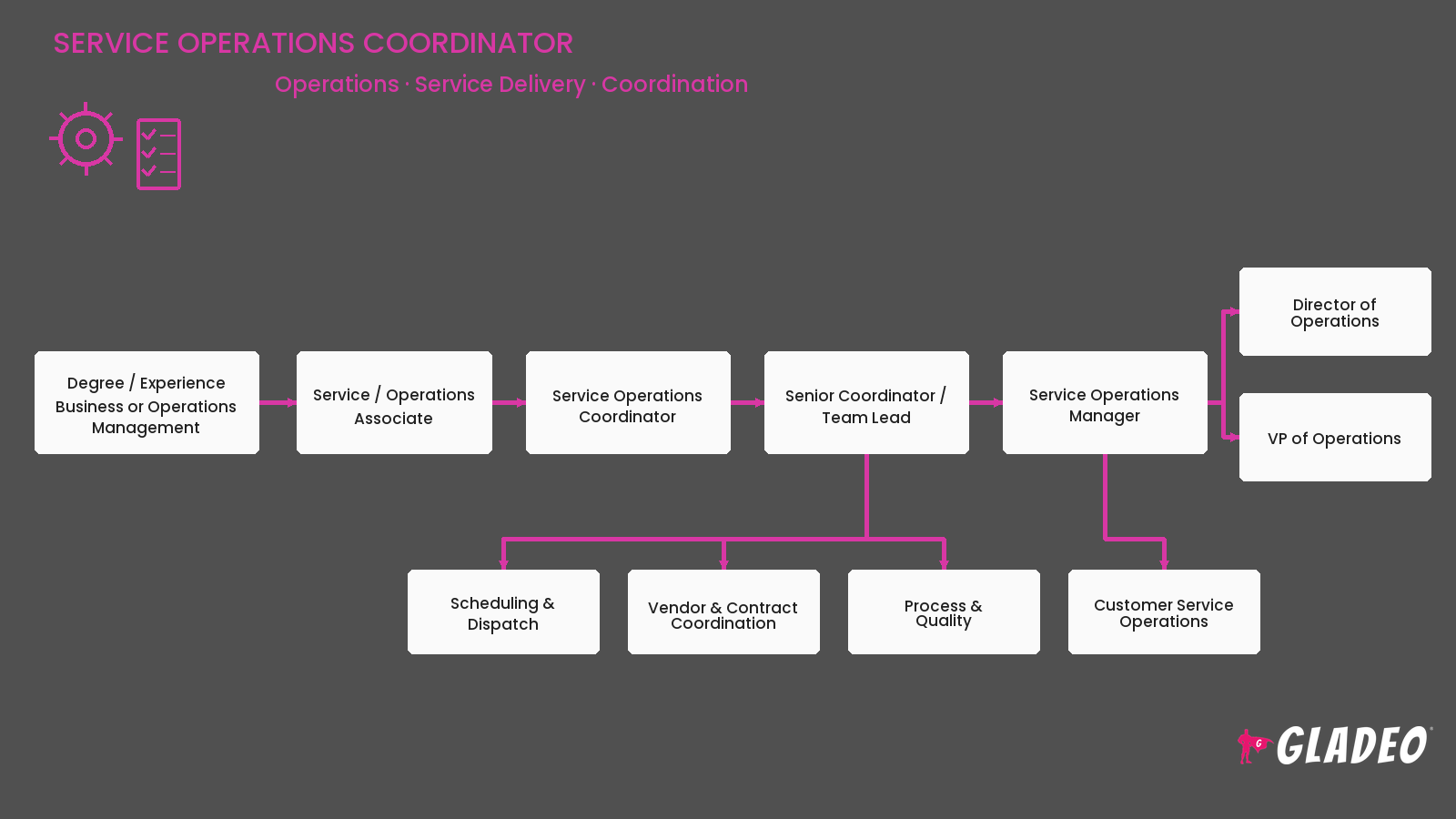
- Aim for promotions to operations manager or service director roles.
Websites:
- Association for Operations Management (APICS) - www.apics.org
- International Customer Management Institute (ICMI) - www.icmi.com
- Project Management Institute (PMI) - www.pmi.org
- Customer Service Institute of America - www.serviceinstitute.com
- National Association of Professional Women - www.napw.com
- Society for Human Resource Management (SHRM) - www.shrm.org
- LinkedIn Learning - www.linkedin.com/learning
- Glassdoor - www.glassdoor.com
- Indeed - www.indeed.com
- American Management Association - www.amanet.org
- Career Contessa - www.careercontessa.com
- Coursera - www.coursera.org
- Udemy - www.udemy.com
- Business News Daily - www.businessnewsdaily.com
Books:
- The Goal: A Process of Ongoing Improvement by Eliyahu M. Goldratt
- The Lean Startup by Eric Ries
- Getting Things Done by David Allen
- The 7 Habits of Highly Effective People by Stephen R. Covey
- Crucial Conversations by Kerry Patterson, Joseph Grenny, Ron McMillan, and Al Switzler
If Service Operations Coordination isn’t the perfect fit, your skills in organization, communication, and problem-solving can lead you to several related careers that also focus on keeping businesses running efficiently.
- Project Coordinator
- Customer Service Manager
- Logistics Coordinator
- Supply Chain Analyst
- Administrative Manager
- Event Planner
- Operations Analyst
- Sales Operations Specialist
- Quality Assurance Coordinator
- Business Analyst
Click here to download the infographic
Newsfeed

Featured Jobs
Online Courses and Tools