






Spotlights
Visual Display Specialist, Store Designer, Window Dresser, Retail Display Artist, Merchandise Displayer, Visual Merchandising Manager, Display Coordinator, Retail Stylist, Store Visual Manager, Trade Show Display Designer, Window Trimmer, Visual Merchandising Coordinator
That window display that makes you stop walking on the sidewalk and actually look, and the store layout that somehow leads you straight to exactly what you didn't know you needed, are not accidents. They are the work of a Visual Merchandiser, the person who turns a retail space into a story that makes people want to buy.
Visual Merchandisers design and build in-store displays, window installations, and product layouts that reflect a brand's identity while quietly guiding shoppers through the store. They work closely with retail management, buyers, and corporate visual or design teams, translating a brand's seasonal campaigns and new arrivals into physical spaces using mannequins, lighting, props, and carefully planned product placement, all timed around new deliveries, sales events, and holidays.
Using tools ranging from a drill and a ladder to design software like SketchUp or Adobe Illustrator, Visual Merchandisers combine artistic instinct with a real understanding of how people move through and shop in a space. Their work matters because it directly affects sales: a well-designed display can turn a passerby into a customer and a browsing shopper into someone who buys three things instead of one.
- Turning creative ideas into real, physical spaces that people walk through every day
- Seeing shoppers stop, notice, and react to a display you designed and built
- Blending artistic instinct with a real understanding of sales and business
- Working on a constant rotation of fresh, seasonal creative projects
Working Schedule
Visual Merchandisers typically work around store hours, but the most demanding work often happens before the doors open or after they close, since major floor resets and window changes need to happen without customers in the way. The job is physically active, mixing time on ladders and kneeling over displays with time at a desk planning layouts. Some work directly for a single retailer, while others freelance or consult across multiple stores and brands, and workloads spike hard around major holidays and seasonal changeovers.
Typical Duties
- Designing and building window displays that reflect current campaigns and seasons
- Planning floor layouts and planograms that guide customer traffic through the store
- Installing mannequins, props, signage, and lighting for new displays
- Coordinating with buying and marketing teams on new arrivals and promotions
- Sourcing props, fixtures, and materials within a set budget
- Maintaining visual brand standards consistently across one or multiple store locations
- Training store staff on how to maintain and restock displays correctly
- Tracking how display changes affect foot traffic and sales
- Managing a budget for props, materials, and seasonal decor
- Photographing finished displays for corporate review and social media
- Updating displays quickly for sales events, promotions, and new seasons
- Adjusting layouts based on real-time sales data and inventory levels
Additional Responsibilities
- Scouting design and fashion trends at trade shows and through industry publications
- Managing a visual merchandising calendar across multiple store locations
- Auditing stores for compliance with brand visual guidelines
- Training and mentoring junior merchandisers or store display staff
- Collaborating with a corporate visual team on national campaign rollouts
- Managing inventory of reusable props, fixtures, and mannequins
- Researching sustainable or reusable materials for displays
A Visual Merchandiser's day often starts early, sometimes before the store opens, checking overnight sales data and reviewing which items need to move to the front for a new promotion. Early morning is prime time for building a new window display or resetting a section of the floor without customers underfoot.
Midday shifts toward hands-on building: installing mannequins, adjusting lighting, styling a display table, or updating signage for a new arrival. If a shipment of new products just came in, the merchandiser has to figure out fast how it fits into the current layout without disrupting the customer flow that is already working.
Afternoons and evenings often involve training store staff on how to maintain a new display, photographing finished work for corporate review, and starting to plan the next changeover. During major seasonal transitions, like the shift from summer to back-to-school displays, the days can stretch much longer as an entire store gets reimagined at once.
Soft Skills
- Creativity and a strong visual imagination
- Attention to detail
- Spatial awareness and sense of composition
- Clear communication with store staff and corporate teams
- Time management under tight deadlines
- Adaptability to changing trends and last-minute changes
- Teamwork with buyers, marketers, and store managers
- Problem-solving when materials or space run short
- Business and sales awareness
- Physical stamina for standing, climbing, and lifting
- Patience through repetitive seasonal changeovers
- Strong organizational skills
Technical Skills
- Understanding of color theory and visual composition
- Planogram and floor-planning software
- Basic carpentry and hand tool use
- Lighting techniques for retail spaces
- Design software such as Adobe Illustrator, Photoshop, or SketchUp
- Ability to read and apply retail sales data
- Mannequin styling and prop assembly
- Sourcing and budgeting for props and fixtures
- Applying brand guidelines consistently across locations
- Window Display Specialist: focuses specifically on street-facing window installations
- Floor Set Merchandiser: plans and executes full in-store layout resets
- Trade Show and Exhibit Designer: builds temporary displays for conventions and events
- Freelance Visual Consultant: works independently across multiple retail clients
- Corporate Visual Merchandising Manager: sets national visual standards for a retail chain
- Pop-Up and Event Merchandiser: designs temporary retail spaces for brand activations
- E-commerce Visual Merchandiser: styles product photography and online store layouts
- Luxury Retail Visual Stylist: creates high-end, detail-driven displays for premium brands
- Department stores
- Boutique and specialty retailers
- Fashion and apparel brands
- Home goods and furniture retailers
- Shopping malls and retail centers
- Visual merchandising agencies
- Trade show and exhibit design companies
- Cosmetics and beauty retailers
- Grocery and supermarket chains
- E-commerce companies
- Museums and galleries with exhibit design needs
- Corporate retail headquarters
The work is physically demanding in a way many creative careers are not. Visual Merchandisers spend hours on their feet, climb ladders, lift props and fixtures, and often work early mornings or late nights to finish a reset before a store opens, which takes a real toll over time.
Deadlines are non-negotiable. A holiday window has to be ready by a set date no matter what, and a sales promotion cannot wait for inspiration to strike, which means the job demands consistent output even when the creative spark is not flowing. Merchandisers also have to balance their own artistic vision against corporate brand guidelines and sales data, which does not always agree with what looks best.
The seasonal rhythm of retail means some months bring intense crunch, especially around major holidays, while others are quieter. Anyone drawn to this career needs to be comfortable with that unevenness and with having creative decisions ultimately judged by whether they help sell product.
- Growth of sustainable and reusable display materials
- Integration of digital screens and interactive elements into physical displays
- Rise of experiential retail spaces designed for social media sharing
- Blending of online and offline visual merchandising strategy
- A shift toward minimalist, less-cluttered store layouts
- Increased use of sales data to guide display and layout decisions
- Faster changeover cycles driven by fast fashion and constant new drops
- Growing use of size-inclusive and diverse mannequins
- Early adoption of AR and VR tools to preview displays before building them
- More brands investing in pop-up and temporary retail experiences
Many Visual Merchandisers were the kids who could not stop rearranging their bedroom furniture, decorating for every holiday, or styling their closet like a boutique. Art classes, building with blocks or Legos, and flipping through fashion or design magazines were common early interests.
Others found their spark helping decorate for school events, dances, or family celebrations, or simply loving the experience of walking through a beautifully designed store. A sharp eye for how things look together, paired with genuine enthusiasm for shopping and retail spaces, often pointed toward this career long before it had a name.
Many Visual Merchandisers enter the field with an associate or bachelor's degree in visual merchandising, fashion merchandising, or design, though plenty of others start as a retail sales associate and work their way into display responsibilities through on-the-job experience. Formal education helps build a design vocabulary and technical skills faster, but a strong portfolio of real display work often matters just as much to employers.
Students can take courses in relevant subjects such as:
- Visual Merchandising
- Fashion Merchandising
- Retail Management
- Design Fundamentals and Color Theory
- Display and Exhibit Design
- Marketing Principles
- Studio Art
- Computer-Aided Design
- Business Basics
- Textiles and Materials
Hands-on experience is essential in this field. Working retail while building small display projects, whether that means a store window, a school event, or a personal styling project, gives students a real portfolio to show future employers. Internships with retailers, design studios, or visual merchandising agencies provide the on-the-job training that turns design theory into practical, buildable skill.
- Take studio art, design, or drafting classes whenever available
- Get a part-time retail job and ask to help with displays or store resets
- Practice styling and rearranging spaces at home, from your room to family holiday decor
- Build a portfolio of photos documenting any display or styling project you complete
- Study color theory and composition through free online resources
- Follow visual merchandisers and store design accounts on social media for inspiration
- Volunteer to help decorate for school dances, fundraisers, or community events
- Learn basic design software like Canva, Photoshop, or SketchUp
- Visit stores with strong visual merchandising and take notes on what works
- Enter art or design competitions to build a creative track record
- Learn basic tool use and simple carpentry for building props
- Research visual merchandising or fashion merchandising programs early
- Programs specifically in visual merchandising or fashion merchandising
- Access to real design software and physical display-building spaces
- Required internships with retailers or design agencies
- A capstone project where you design and build a real display or store concept
- Instructors with real retail or visual merchandising industry experience
- Coursework covering both artistic design and retail business fundamentals
- Strong relationships with local or national retail brands
- Career services that track job placement in retail and design fields
- Opportunities to build a professional portfolio before graduation
- Small class sizes that allow hands-on time with materials and tools
- Programs located near a strong retail or fashion industry hub
- Flexible scheduling for students working part-time in retail
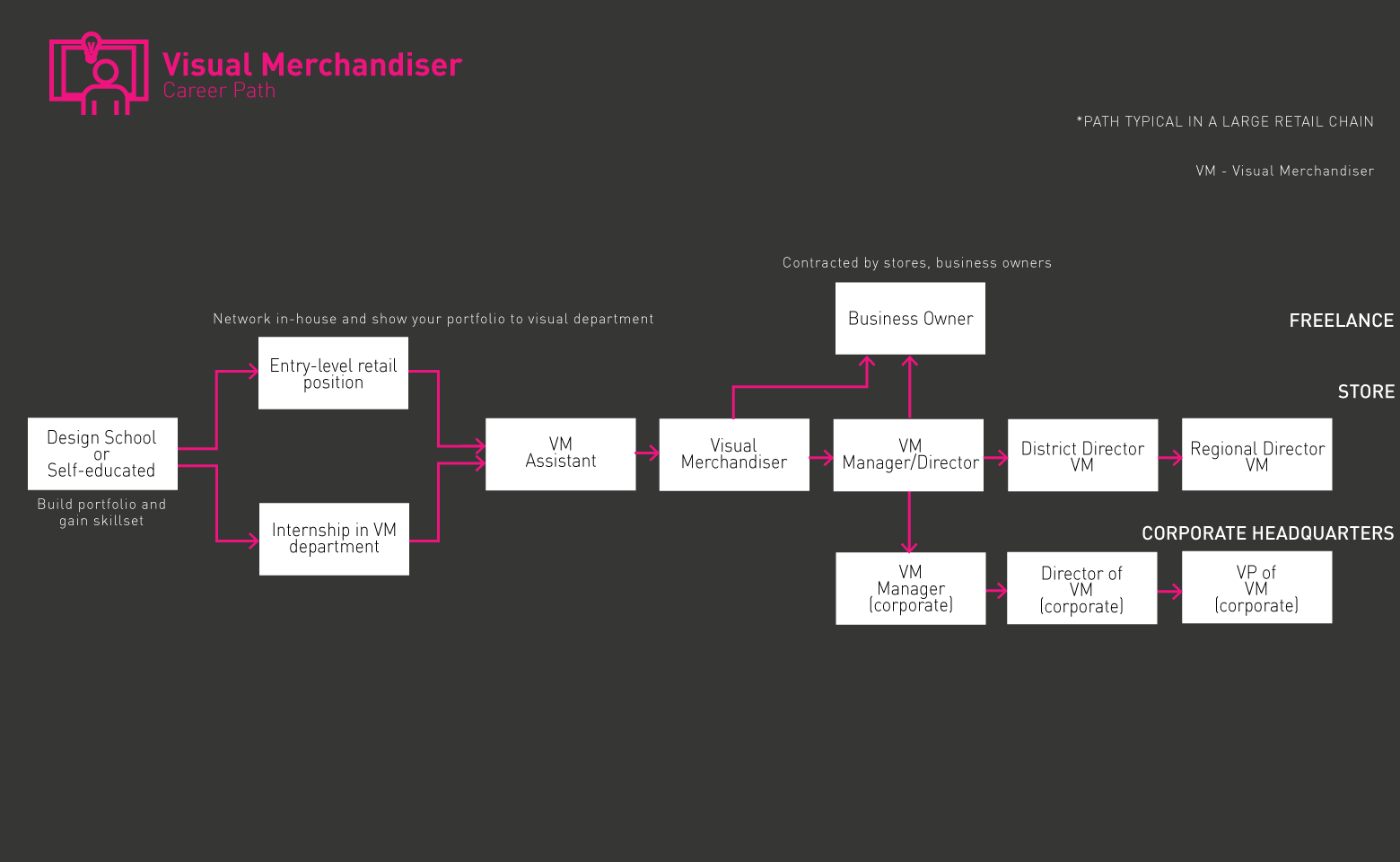
- Apply for entry-level titles like Visual Merchandising Associate or Display Assistant
- Take a part-time retail sales job and volunteer for any display-related tasks
- Build a portfolio of photos from every display or styling project you have completed
- Practice explaining the thinking behind a display, not just showing the finished result
- Network with visual merchandisers through internships or informational interviews
- Attend retail design trade shows or industry events when possible
- Highlight physical skills like basic carpentry, lighting, or prop-building on your resume
- Be ready to talk about how a display connects to sales and customer behavior
- Apply to both individual stores and corporate visual merchandising teams
- Follow up with a thank-you note that references something specific from the interview
- Show flexibility with early mornings, late nights, and physical work
- Demonstrate a genuine, specific point of view about design and retail spaces
“Start at the bottom and work up. That may mean at a retail store, an internship at a creative design company, or even at an art studio or becoming an assistant to someone in fashion. Begin working at the space you want to grow and be developed in. Even if it doesn’t begin in the position that you want, be vocal early about wanting to move up or learn more about the desired field you want to get into. The main goal is to work somewhere where you can be hands on and inspired as you continue to learn, grow and look for more competitive jobs.” Jennifer Welsch, Visual Specialist, Madewell
- Master planogram software and sales-data-driven layout decisions
- Take ownership of larger projects like full seasonal floor resets
- Build a reputation for finishing high-quality work on tight deadlines
- Move from a single store into a regional or multi-store visual role
- Pursue additional training in design software or exhibit design
- Develop training and mentoring skills to guide junior merchandisers
- Build relationships with corporate visual and marketing teams
- Move into corporate visual merchandising management or creative direction
Websites:
- Visual Merchandising and Store Design (VMSD) - vmsd.com
- Retail Design Institute - retaildesigninstitute.org
- National Retail Federation - nrf.com
- Retail Dive - retaildive.com
- Association for Retail Environments - shopassociation.org
- Storefront News - storefrontnews.co
- Adobe Creative Cloud Tutorials - adobe.com/creativecloud
- Pinterest Visual Merchandising boards - pinterest.com
- Instagram accounts of leading department stores and boutiques
- Retail TouchPoints - retailtouchpoints.com
- Shop! Global Association - shopassociation.org
- Design Milk - design-milk.com
Books:
- Visual Merchandising and Display by Martin M. Pegler
- Visual Merchandising: Windows and In-Store Displays for Retail by Tony Morgan
- Silent Selling by Judith Bell and Kate Ternus
- Retail Design by Lynne Mesher
If designing physical retail spaces isn't the right path for you, your creative and organizational skills carry over well into several related careers.
- Interior Designer
- Retail Store Manager
- Fashion Stylist
- Event Planner
- Set Designer
- Graphic Designer
- Retail Buyer
- Marketing Coordinator
- Product Stylist
- Exhibit Designer
“Never stop creating and always stay inspired…while you are in school, working as an unpaid intern, when you land your first job designing window displays at a retail store… continue to sketch, to observe, to create, to design, learn from others, to collaborate. Creativity and inspiration are like muscles and joints, one can’t function without the support of the other. Nurture them and you will produce great work.” Jennifer Welsch, Visual Specialist, Madewell
Newsfeed

Featured Jobs
Online Courses and Tools
Annual Salary Expectations
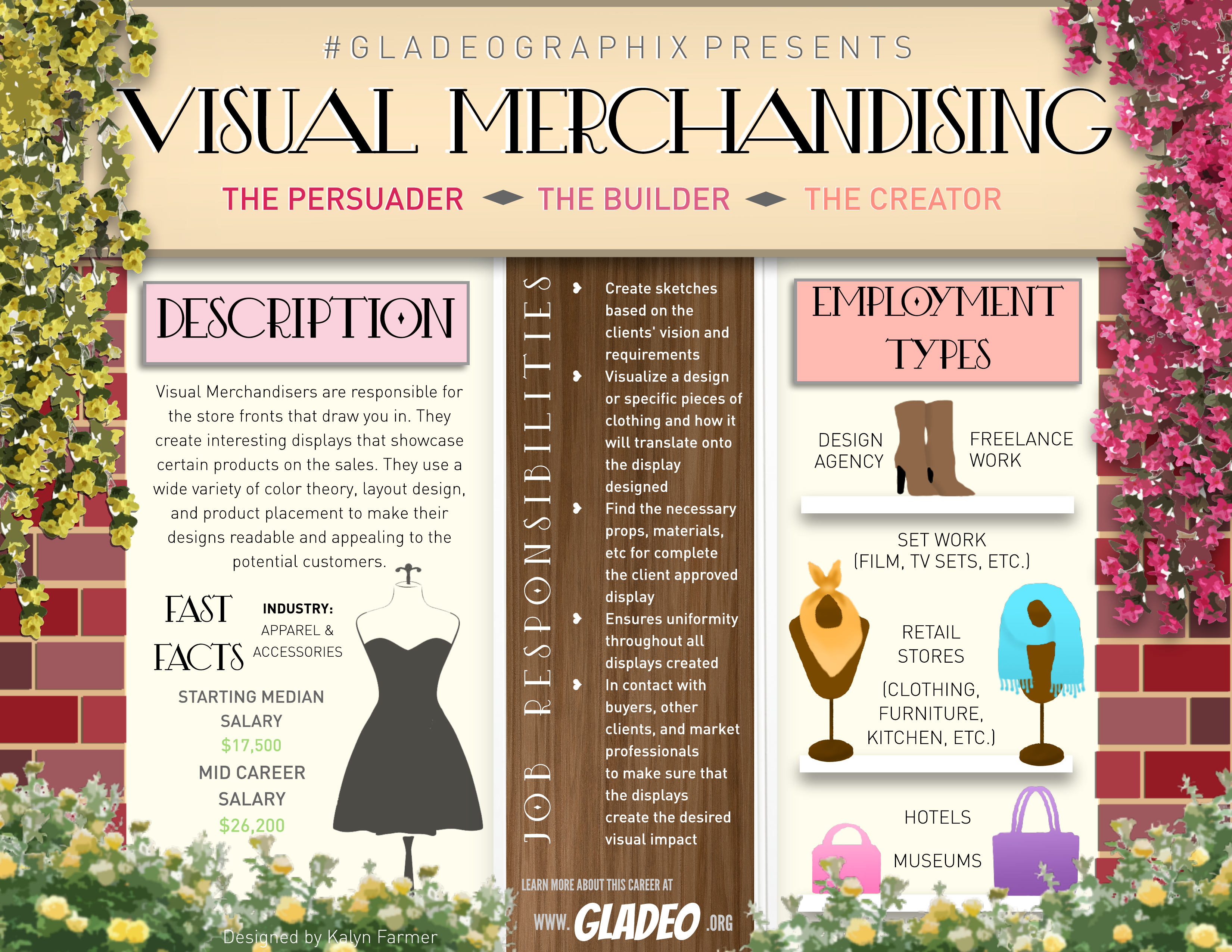
New workers start around $39K. Median pay is $44K per year. Highly experienced workers can earn around $46K.