






Spotlights
Invasive Species Specialist, Weed Management Specialist, Plant Control Technician, Vegetation Management Specialist, Ecological Restoration Technician, Noxious Weed Inspector, Invasive Plant Ecologist, Plant Biologist, Habitat Restoration Specialist, Environmental Weed Technician, Vegetation Scientist, Plant Invasion Analyst
Imagine hiking through a forest or walking along a riverbank and seeing vibrant native plants thriving without being choked out by aggressive invaders. That's the result of the work of Weed and Invasive Plant Specialists, who protect ecosystems and agricultural lands from harmful plants that disrupt natural balance.
Weed and Invasive Plant Specialists spend their days identifying invasive plant species, monitoring their spread, and developing strategies to control or eradicate them. They collaborate with environmental scientists, land managers, farmers, and government agencies to assess plant populations and implement management plans that restore native habitats and protect crops.
Using scientific tools, field surveys, herbicides, and mechanical removal techniques, these specialists analyze ecological data and apply targeted treatments. Their role is crucial to preserving biodiversity, preventing economic losses in agriculture, and maintaining healthy ecosystems for future generations.
- Helping protect native ecosystems and endangered species from invasive threats
- Seeing the tangible results of restored habitats and healthier natural areas
- Contributing to sustainable agriculture by controlling harmful weeds that damage crops
- Working outdoors in diverse environments and connecting with nature and communities
Working Schedule
Weed and Invasive Plant Specialists often work full-time, with hours that can extend beyond the typical 9-to-5, especially during planting or growing seasons when invasive species spread rapidly. Many work outdoors in forests, wetlands, farms, or urban green spaces, facing varying weather conditions. Some roles are seasonal or contract-based, while others are permanent positions with government agencies or environmental organizations. Travel to different sites is common, and urgent infestations may require quick response times.
Typical Duties
- Conduct field surveys to identify and map invasive plant populations
- Collect samples and monitor plant growth and health
- Develop and implement weed management and eradication plans
- Apply herbicides or coordinate mechanical removal of invasive plants
- Collaborate with ecologists, landowners, and regulatory agencies on control strategies
- Educate the public and stakeholders about invasive species impacts and prevention
- Maintain detailed records of treatments, progress, and ecological outcomes
- Use GPS and GIS technology to track infestations and treatment areas
- Assist in habitat restoration after invasive species removal
- Participate in research projects to improve management techniques
- Monitor treated areas to prevent re-infestation
- Prepare reports and presentations for supervisors and community groups
Additional Responsibilities
- Stay updated on new invasive species and control methods
- Train crew members or volunteers on safe herbicide use and removal techniques
- Help develop policies or guidelines for invasive species management
- Assist in grant writing or funding proposals for projects
- Coordinate with local, state, or federal agencies on compliance and reporting
- Manage equipment and supplies used for control efforts
- Promote conservation practices that reduce invasive plant spread
- Attend workshops, conferences, or training sessions to enhance expertise
A typical morning starts with reviewing maps and data collected from previous days, planning the day's fieldwork, and prepping equipment like GPS devices, herbicide sprayers, or hand tools. The specialist often meets with team members or landowners to discuss priorities and safety protocols.
Midday involves traveling to field sites, conducting plant surveys, and applying control methods such as cutting, pulling, or spraying invasive weeds. They carefully document locations and conditions, adjusting methods based on what they observe. Interaction with farmers or park staff helps coordinate efforts and address site-specific challenges.
In the afternoon and evening, the specialist analyzes collected data, updates management plans, and communicates progress with supervisors or stakeholders. They may attend meetings or training sessions to stay current on environmental regulations and innovative control techniques, preparing for upcoming projects.
Soft Skills
- Attention to detail
- Problem-solving
- Communication and public speaking
- Teamwork and collaboration
- Physical stamina and endurance
- Adaptability to changing environments
- Time management
- Critical thinking
- Patience and persistence
- Safety awareness
- Organizational skills
- Environmental stewardship
Technical Skills
- Plant identification and taxonomy
- GIS and GPS mapping
- Data collection and analysis
- Herbicide application and safety
- Mechanical removal methods
- Report writing
- Use of field survey equipment
- Knowledge of ecological restoration
- Understanding of environmental regulations
- Use of computer software for project management
- Field Specialist: Focuses on on-the-ground identification and removal of invasive plants across various landscapes.
- Research Specialist: Studies invasive species biology and control efficacy to develop improved management techniques.
- Policy Specialist: Works on creating regulations and guidelines to prevent invasive species introduction and spread.
- Education Specialist: Develops programs and materials to raise public awareness about invasive plants.
- Agricultural Specialist: Concentrates on managing invasive weeds that affect crop production and farm sustainability.
- Restoration Specialist: Combines invasive plant control with restoring native plant communities.
- Inspection Specialist: Conducts inspections to prevent invasive species entry through trade or transport.
- Consultant: Provides expert advice to landowners, governments, or businesses on invasive species management.
- Environmental protection agencies
- Agricultural departments
- Conservation nonprofits
- Forestry services
- National parks and wildlife reserves
- University research centers
- Land management companies
- Botanical gardens and arboretums
- Private agricultural firms
- Consulting environmental firms
- Municipal parks and recreation departments
- Invasive species councils or task forces
Weed and Invasive Plant Specialists often face physical demands such as hiking rugged terrain, carrying equipment, and working in all weather conditions. The role requires attention to safety, especially when handling herbicides or operating machinery. Specialists must be comfortable spending long hours outdoors and managing fatigue.
Deadlines and seasonal cycles can create pressure, especially when rapid response is needed to control fast-spreading invasives. There can be repeated cycles of treatment and monitoring to ensure effectiveness, requiring patience and resilience. Coordination with multiple stakeholders sometimes involves managing conflicting priorities.
Sacrifices include irregular hours during peak seasons and potential exposure to chemicals or rough environments. Travel to remote or multiple sites can mean time away from home. However, the deep satisfaction of protecting valuable ecosystems and agricultural lands often outweighs these challenges.
- Increasing use of drones and remote sensing for mapping infestations
- Development of targeted, environmentally friendly herbicides
- Greater emphasis on integrated pest management combining chemical, mechanical, and biological controls
- Expansion of citizen science programs for invasive species reporting
- Use of data analytics and AI to predict spread patterns
- Growing collaboration between government, NGOs, and private sectors
- Climate change influencing invasive species ranges and control strategies
- Advances in genetic research for biocontrol methods
- Public education campaigns becoming more widespread and engaging
- Stricter regulations on trade and transport to prevent new invasions
Many Weed and Invasive Plant Specialists found their passion early by exploring nature, collecting plants, or volunteering in environmental clubs. A curiosity about how plants grow and interact in ecosystems often signals a future in this field.
Hands-on experiences like gardening, hiking, or participating in local conservation projects help develop an interest in protecting natural spaces and learning about invasive species impacts.
Most Weed and Invasive Plant Specialists hold at least a bachelor's degree in fields like biology, ecology, environmental science, or agriculture. Some roles may require specialized certifications in herbicide application or invasive species management. Practical experience through internships, fieldwork, or volunteering is highly valuable.
Students can take courses in relevant subjects such as:
- Biology and Botany
- Ecology and Environmental Science
- Plant Taxonomy and Identification
- Soil Science
- Chemistry (especially related to herbicides)
- GIS and Remote Sensing
- Agricultural Science
- Environmental Policy and Law
- Data Analysis and Statistics
- Natural Resource Management
Completing internships or volunteer work with environmental organizations provides hands-on experience that is critical for building skills and a professional network. Many specialists continue learning through workshops and certifications to stay current with new control methods and regulations.
- Take advanced science courses like biology and chemistry in high school
- Join environmental clubs or volunteer for local conservation projects
- Develop computer skills, especially GIS and data analysis software
- Attend summer camps or programs focused on ecology or agriculture
- Look for college programs with strong fieldwork opportunities
- Seek internships with environmental agencies or nonprofits
- Build communication skills through presentations and writing
- Participate in citizen science or invasive species monitoring programs
- Explore courses in plant science and ecology early in college
- Network with professionals by attending conferences or seminars
- Choose programs with hands-on field experience and lab work
- Look for schools offering courses in invasive species management
- Seek opportunities for internships or cooperative education
- Evaluate faculty expertise in ecology and plant biology
- Check for partnerships with government or environmental organizations
- Consider programs offering training in GIS and herbicide application
- Find programs with strong support for research projects
- Look for certifications or licenses included or available post-graduation
- Assess availability of career services and job placement assistance
- Explore programs with active environmental clubs and community outreach
- Volunteer or intern with environmental nonprofits or government agencies
- Apply for field technician positions in invasive plant management
- Build a portfolio of plant identification and mapping projects
- Gain certification in herbicide use and safety
- Network with professionals through conferences and workshops
- Develop skills in GIS mapping and data collection
- Seek seasonal work in forestry, agriculture, or conservation
- Assist experienced specialists in the field to learn best practices
- Enhance communication skills by educating the public or landowners
- Stay informed about local invasive species threats and regulations
- Participate in citizen science projects to gain experience
- Pursue continuing education and certifications
- Master advanced plant identification and ecological assessment techniques
- Gain expertise in multiple control methods including biological and mechanical
- Build leadership skills to manage teams and projects
- Develop strong relationships with agencies and stakeholders
- Contribute to research publications or policy development
- Expand knowledge of environmental laws and regulations
- Become certified in pesticide application and safety
- Pursue advanced degrees or specialized training for senior roles
Websites:
- Invasive Plant Atlas of the United States (invasiveplantatlas.org)
- National Invasive Species Information Center (invasivespeciesinfo.gov)
- The Nature Conservancy Invasive Species Program (nature.org)
- Society for Ecological Restoration (ser.org)
- Association of Natural Resource Extension Professionals (anrep.org)
- Weed Science Society of America (wssa.net)
- USDA National Invasive Species Council (invasivespecies.gov)
- Environmental Protection Agency Invasive Species (epa.gov/invasivespecies)
- Plant Conservation Alliance (plantconservation.org)
- International Union for Conservation of Nature Invasive Species Specialist Group (iucn.org)
- Ecological Society of America (esa.org)
- Botanical Society of America (botany.org)
- National Wildlife Federation Invasive Species Resources (nwf.org)
- Center for Invasive Species and Ecosystem Health (bugwood.org)
Books:
- Invasive Plant Medicine: The Ecological Benefits and Healing Abilities of Invasive Plants by Cassandra Leah Quave and John D. Mitchell
- Ecology and Management of Invasive Plants by Timothy D. Center and James H. Miller
- Invasive Species Management: A Handbook of Principles and Techniques by Mick N. Clout and Peter A. Williams
- Plant Invaders by Charles L. Perrings
- Biological Invasions: Theory and Practice by Nanako Shigesada and Kohkichi Kawasaki
If you love plants and the environment but want to explore related fields, there are several careers that share skills and interests with Weed and Invasive Plant Specialists.
- Environmental Scientist
- Forestry Technician
- Agricultural Extension Agent
- Ecological Restoration Specialist
- Wildlife Biologist
- Soil Scientist
- Horticulturist
- Park Ranger
- Conservation Officer
- Natural Resource Manager
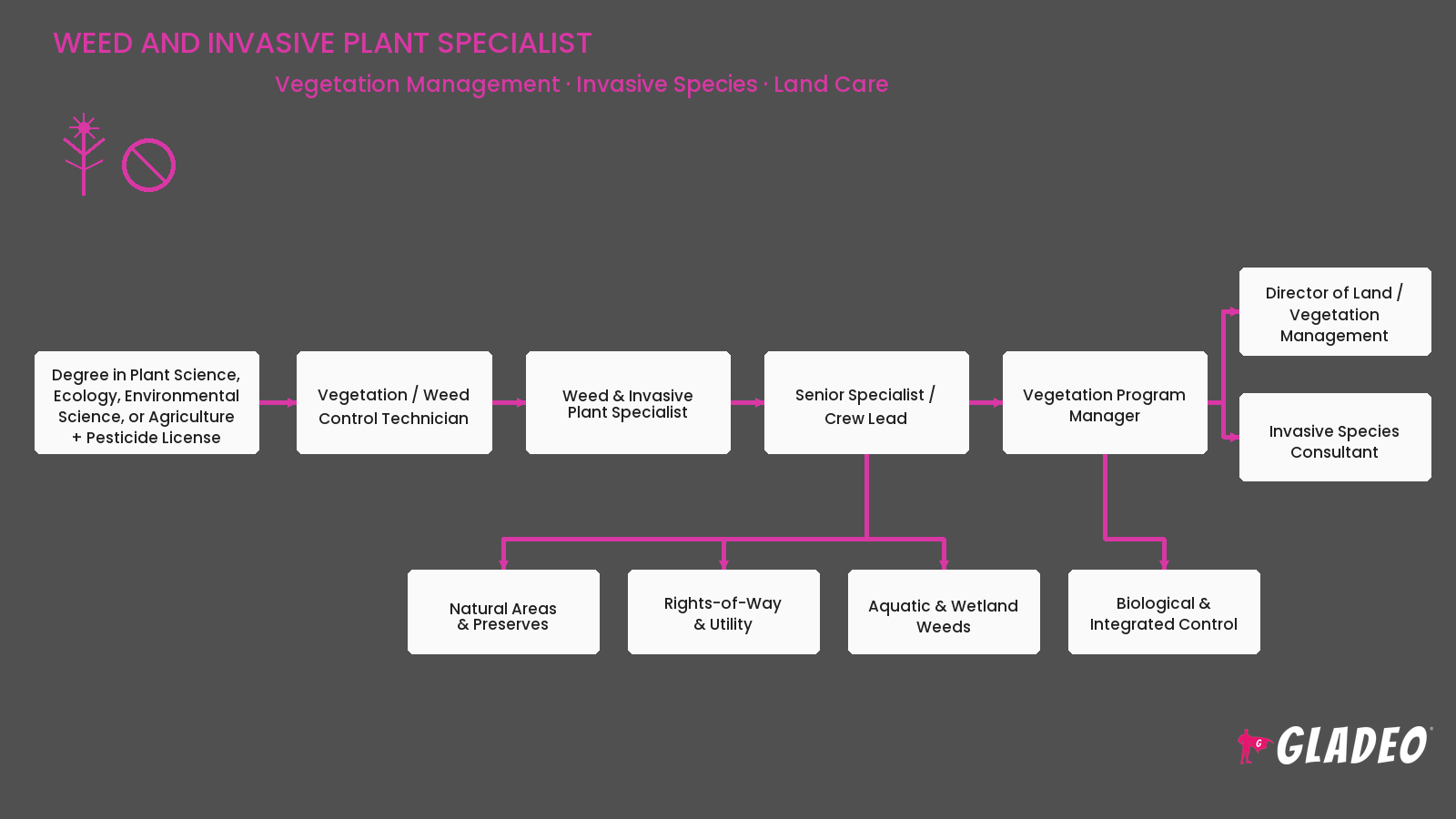
Click here to download the infographic
Newsfeed

Featured Jobs
Online Courses and Tools