






Spotlights
Brewing Scientist, Fermentation Specialist, Brewmaster, Fermentation Technologist, Brewing Technician, Master Brewer, Fermentation Scientist, Beverage Scientist, Craft Brewer, Brewing Chemist, Industrial Brewer, Brewery Operator
Every sip of your favorite craft beer, cider, or specialty beverage is the result of precise science and art combined. Zymurgists ensure that the fermentation process transforms simple ingredients into flavorful drinks that delight millions.
Zymurgists study the science of fermentation, managing the complex chemical reactions that turn grains, fruits, or other raw materials into alcoholic beverages. They collaborate closely with brewers, quality control teams, microbiologists, and production managers to develop recipes, monitor fermentation conditions, troubleshoot issues, and ensure consistent taste and safety in every batch.
Using tools like fermenters, spectrometers, pH meters, and chromatography equipment, zymurgists analyze yeast activity, sugar levels, and other critical factors. Their expertise ensures products meet flavor and quality standards, making their role essential to brewing operations from small craft breweries to large beverage companies.
- Crafting unique flavors that customers enjoy and remember
- Solving biological and chemical puzzles during fermentation to perfect recipes
- Playing a key role in creating a beloved product that brings people together
- Watching a beverage evolve from raw ingredients to finished drink under your guidance
Working Schedule
Zymurgists typically work in brewery or lab settings, often during regular business hours but sometimes nights or weekends to monitor fermentation cycles or meet production deadlines. Work can be a mix of hands-on lab time, data analysis, and team meetings. Many zymurgists hold full-time positions, though some work as consultants or for multiple breweries on a project basis.
Typical Duties
- Design and conduct fermentation experiments to optimize beverage flavor and quality
- Monitor fermentation progress by measuring sugar, alcohol, pH, and yeast activity
- Identify and resolve fermentation problems like contamination or off-flavors
- Collaborate with brewers and quality control to adjust recipes and processes
- Maintain laboratory and production equipment calibration and cleanliness
- Analyze raw materials and finished products for quality assurance
- Document and report fermentation data for regulatory compliance and product consistency
- Develop new fermentation techniques and yeast strains for innovation
- Train brewery staff on fermentation best practices and safety protocols
- Ensure adherence to health and safety regulations in fermentation processes
Additional Responsibilities
- Research emerging brewing and fermentation technologies
- Source and evaluate yeast and bacterial cultures for various beverage styles
- Participate in product development meetings and marketing discussions
- Contribute to sustainability efforts by optimizing waste and energy use in fermentation
- Assist with sensory evaluations and taste testing panels
- Maintain records for regulatory inspections and audits
- Educate customers or staff about fermentation science and brewing processes
Morning often begins with reviewing fermentation tanks’ conditions and analyzing overnight data from sensors and lab tests to ensure processes are on track.
Midday is spent conducting lab experiments, taking samples, measuring chemical properties, and troubleshooting any fermentation irregularities with the brewing team.
Afternoons include meeting with production managers to discuss batch scheduling, documenting results, adjusting fermentation parameters, and preparing reports for quality assurance and regulatory compliance.
Soft Skills
- Attention to detail
- Problem-solving mindset
- Communication skills for cross-team collaboration
- Curiosity and willingness to experiment
- Patience for long fermentation cycles
- Critical thinking for analyzing complex data
- Adaptability to changing production needs
- Teamwork and interpersonal skills
- Organizational skills for tracking many batches
- Safety awareness and responsibility
- Creativity in recipe development
- Time management under production deadlines
Technical Skills
- Knowledge of microbiology and biochemistry
- Proficiency with lab equipment and instrumentation
- Data analysis and interpretation
- Understanding of brewing and fermentation processes
- Familiarity with quality control standards
- Ability to operate fermentation tanks and sensors
- Experience with recipe formulation software
- Regulatory compliance knowledge
- Use of chromatography and spectrometry techniques
- Sensory evaluation methods
- Craft Brewery Zymurgist: Focuses on small-batch, innovative brews with artisanal methods
- Industrial Zymurgist: Works in large-scale production facilities ensuring consistent product quality
- Research Zymurgist: Conducts experiments to develop new yeast strains or fermentation techniques
- Quality Control Zymurgist: Specializes in monitoring and maintaining product standards
- Distillation Zymurgist: Applies fermentation knowledge in spirits and distilled beverages
- Brewpub Zymurgist: Combines brewing and customer engagement in a restaurant setting
- Consultant Zymurgist: Advises breweries and beverage companies on fermentation optimization
- Academic/Instructor Zymurgist: Teaches fermentation science and brewing technology
- Craft breweries
- Large commercial breweries
- Distilleries
- Beverage manufacturing companies
- Research labs
- Agricultural product companies
- Food science laboratories
- Universities and technical colleges
- Government food safety agencies
- Consulting firms specializing in brewing
- Brewpubs and taprooms
- Biotechnology firms
Zymurgists face pressure to maintain consistent product quality through each fermentation cycle, which can be sensitive to environmental changes and microbial contamination. Mistakes can affect large batches resulting in costly losses.
Work hours can vary; while much is during normal business hours, fermentation is ongoing, so zymurgists may need to monitor or troubleshoot during off-hours, especially in smaller operations.
The job requires patience and physical stamina for lab and brewery work, including standing for long periods and handling chemicals and equipment safely. Continuous learning is essential due to evolving brewing technologies and regulatory standards.
- Growth of craft and specialty beverages increasing demand for skilled zymurgists
- Use of advanced sensors and automation in fermentation monitoring
- Development of new yeast strains for unique flavors and health benefits
- Sustainability efforts reducing waste and energy in brewing
- Integration of biotechnology for improved fermentation control
- Expansion into non-alcoholic fermented beverages
- Greater emphasis on data analytics and digital record-keeping
- Cross-disciplinary collaboration between microbiologists and brewers
- Increased regulatory scrutiny on safety and labeling
- Interest in ancient and alternative fermentation methods
Many zymurgists enjoyed science and biology classes, especially topics involving microbes and chemical reactions, from a young age. They often loved cooking or experimenting with flavors and fermentation at home, like making homemade yogurt or kombucha.
A natural curiosity about how things change and develop over time, combined with a passion for food and beverages, often pointed them toward exploring brewing science in college or hands-on brewing clubs during high school.
Becoming a zymurgist typically involves specialized education in brewing science, microbiology, food science, or biochemistry. Many professionals start with an associate or bachelor's degree and enhance their skills through internships and hands-on training in breweries.
Students can take courses in relevant subjects such as:
- Biology and Microbiology
- Chemistry (General and Organic)
- Fermentation Science
- Food Science and Technology
- Brewing Technology
- Biochemistry
- Quality Assurance and Control
- Safety and Sanitation Practices
- Data Analysis and Statistics
- Sensory Evaluation
Hands-on experience through internships or cooperative education programs is crucial for mastering fermentation techniques and brewery operations. Building a portfolio of lab work and brewing projects helps graduates stand out for entry-level positions.
- Take advanced science courses like biology, chemistry, and physics to build a strong foundation
- Join or start a brewing or fermentation club at school if available
- Volunteer or intern at local breweries or food labs to gain hands-on experience
- Develop computer skills for data tracking and analysis
- Attend workshops or seminars on brewing and fermentation
- Seek out summer programs focused on food science or microbiology
- Build a portfolio documenting scientific experiments and brewing projects
- Network with professionals through industry events or social media
- Explore online courses or certifications in brewing science
- Consider college programs with strong brewing science or fermentation technology curricula
- Choose programs with accredited brewing science or food science degrees
- Look for schools offering lab facilities and access to professional breweries
- Prioritize curricula that include microbiology, chemistry, and fermentation training
- Seek internships or cooperative education opportunities integrated with coursework
- Check for faculty with industry experience and research connections
- Evaluate programs that support student participation in brewing competitions
- Consider schools with strong industry partnerships for job placement
- Look for access to modern lab equipment and fermentation technologies
- Find programs that teach regulatory and quality control standards
- Choose programs encouraging innovation and research in fermentation
- Select schools offering workshops on sensory evaluation and product development
- Seek education that balances theory with practical brewery experience
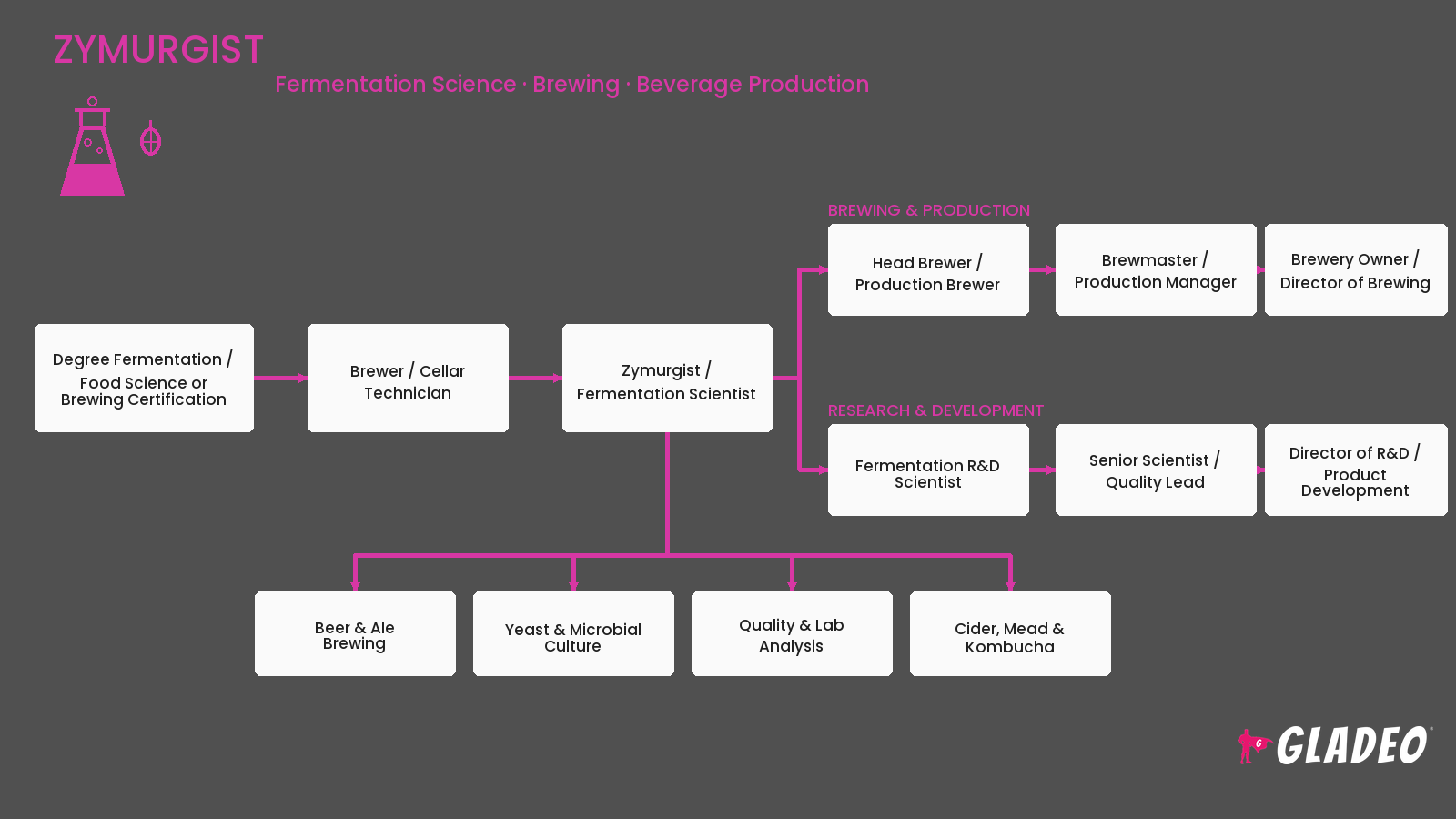
- Apply for internships or assistant roles in breweries or food labs to gain practical experience
- Build a portfolio showcasing fermentation experiments and brewing projects
- Network at local breweries, industry events, or online brewing communities
- Prepare for interviews by studying basic brewing science and safety protocols
- Seek entry-level jobs like Brewing Assistant, Lab Technician, or Quality Control Analyst
- Volunteer at beer festivals or brewing events to make contacts
- Use social media to connect with zymurgists and brewers for mentorship
- Practice documenting lab results and fermentation data clearly
- Learn to operate basic lab and brewing equipment confidently
- Stay updated on brewing trends and technologies
- Demonstrate enthusiasm for fermentation science in interviews
- Attend brewing workshops and certification courses to enhance credentials
- Master advanced fermentation techniques and stay current with brewing science research
- Build strong relationships with brewers, quality control, and production teams
- Seek leadership roles such as Head Brewer or Quality Control Manager
- Pursue advanced certifications in brewing or fermentation science
- Develop expertise in product development and sensory evaluation
- Expand knowledge into related areas like distillation or biotechnology
- Contribute to research projects or publish findings
- Consider starting your own craft brewery or consulting business
Websites:
- Brewers Association (brewersassociation.org)
- Master Brewers Association of the Americas (masterbrewers.org)
- American Society of Brewing Chemists (asbcnet.org)
- Institute of Brewing and Distilling (ibd.org.uk)
- Craft Beer & Brewing Magazine (beerandbrewing.com)
- The Pink Boot Society (pinkbootsociety.org)
- Brewing Science Institute (brewingscienceinstitute.com)
- Siebel Institute of Technology (siebelinstitute.com)
- Brewing Technical Institute (brewingtech.com)
- Fermentation Association (fermentationassociation.org)
- Beer Judge Certification Program (bjcp.org)
- Society of Wine Educators (wineeducators.com)
- BJCP Study Materials (bjcp.org/study)
- Brewing Network (brewingnetwork.com)
Books:
- Yeast: The Practical Guide to Beer Fermentation by Chris White and Jamil Zainasheff
- Brewing Science and Practice by Dennis Briggs et al.
- The Complete Joy of Homebrewing by Charlie Papazian
- How to Brew by John J. Palmer
- Designing Great Beers by Ray Daniels
If becoming a zymurgist feels out of reach or you want to explore other options, many related careers use similar science and production skills but focus on different products or industries.
- Food Scientist
- Microbiologist
- Quality Control Technician
- Brewmaster
- Distillation Technician
- Biotechnologist
- Fermentation Technician
- Laboratory Technician
- Agricultural Scientist
- Beverage Production Manager
Click here to download the infographic
Newsfeed

Featured Jobs
Online Courses and Tools